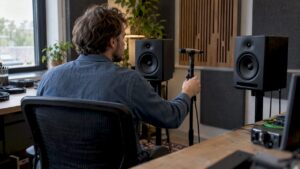
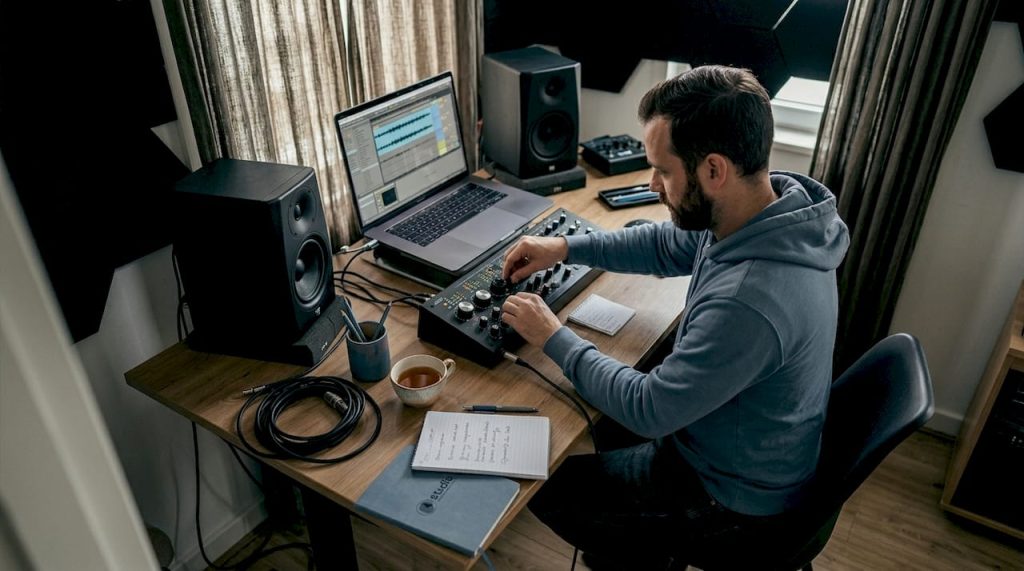
TL;DR:
- Acoustic treatment is essential to prevent bad recordings and address room and room modes.
- Good monitor placement and the use of measurement tools such as REW significantly improve sound.
- Treating physical acoustics and optimizing workflow are crucial before applying software calibration.
Many musicians and producers invest thousands of dollars in new microphones, interfaces or plug-ins, when the real cause of bad recordings is simply the room itself. An untreated room with hard walls, sharp corners and incorrect monitor placement sabotages every mixing decision you make. A good studio setup list prevents exactly that. This article will give you a concrete overview of the criteria that really count: from acoustic treatment to monitoring, from workflow to software calibration. That way you won’t miss a step and build a studio that works for your sound.
Table of contents
- Key criteria for studio design
- Acoustic treatment: priority and practice
- Monitoring and listening position: the optimal setup
- Workflow and software: why calibration doesn’t solve everything
- This is what most studio facilities lack: our view
- Getting started right away: recommended products and solutions
- Frequently Asked Questions
Key Insights
| Item | Details |
|---|---|
| Treat space first | Acoustic problems are always the starting point and most effective to address immediately. |
| Monitoring setup counts | Proper placement of monitors and listening position determines the reliability of your mix. |
| Equipment is not a substitute | Even the best interface or microphone cannot compensate for a bad space. |
| Workflow prevents errors | An established DAW template and project workflow saves time and prevents forgetting moments. |
| Measure and treat at edge cases | In small/complex spaces, an incremental approach works better than blind panel placement. |
Key criteria for studio design
After the introduction, we’ll explore what criteria should guide your studio design. Because without a clear framework, you run the risk of investing blindly in things that make little difference.
A good studio furnishing list is more than a shopping list. It is a structured framework that helps you make the right decisions step by step. According to the 2025 Checklist, a complete studio setup list always includes the following four pillars: space and acoustics, monitoring and listening position, equipment chain from interface to microphone, and an established workflow with templates.
This is the order in which you should address them as well:
- Space and acoustics. The shape, size and materials in your room determine how sound behaves. Hard surfaces reflect, soft ones absorb. These are the basic principles of acoustics that directly affect your workflow.
- Monitoring and listening position. You can have the best monitors in the world, but if they’re positioned wrong, you’ll hear a colored version of your mix. Symmetry and spacing are crucial.
- Equipment chain. From audio interface to preamp to microphone, each link in the chain affects signal noise, dynamic range and recording quality.
- Workflow and templates. A fixed DAW template with consistent routing, track names and plug-in chains saves time and reduces errors.
“A studio setup list for musicians and producers always includes room/acoustics, monitoring/listening position, the full equipment chain and an established workflow with templates.
”
For a thorough room analysis as the basis of your studio setup, it is wise to start with an impulse measurement or simple clap-test in your room. Clap your hands and listen to the aftertone. Do you hear a long, metallic aftertone? Then there are too few absorbing surfaces. Do you hear nothing? Then the room may be too dead, which also causes problems.
Pro-tip: Use a free measurement program like REW (Room EQ Wizard) to measure your room before you hang even one panel. That way you treat based on data, not feel.
Each step in your studio setup list builds on the previous one. Skip one, and you pay the price in poor mixing decisions, fatigue and frustration.
Acoustic treatment: priority and practice
After the criteria comes the most important step: acoustic treatment. This is the part where most beginners and even advanced producers go wrong, simply because it is less visible than a shiny new unit.
Acoustic treatment is more effective than just better equipment because reflections and room modes interfere with your mixing decisions. A room mode is a frequency that is amplified or attenuated by the room geometry. In an untreated room, you will hear way too much bass in some places, and almost none in others.
These are the two biggest acoustic problems you need to solve first:
- Early reflections (early reflections). These are sounds that bounce back from walls, ceiling or floor to your ears just milliseconds after the direct sound. They color stereo playback and make it difficult to judge the proper depth and width in a mix.
- Room modes and bass accumulation. Low frequencies accumulate in corners of the room. This makes for unreliable bass response in your monitors.
Here is a comparison of the most commonly used acoustic treatment materials:
| Material | Effectiveness low | Effectiveness medium/high | Thickness needed | Cost |
|---|---|---|---|---|
| Foam panels | Low | Medium | 5-10 cm | Low |
| Mineral wool (e.g., Rockwool) | High | High | 10-15 cm | Medium |
| Rigid glass wool panels | High | High | 8-12 cm | Medium/High |
| Bass traps (corner traps) | Very High | Medium | 20-30 cm | Medium/High |
Foam is the most commonly sold solution in consumer stores, but offers little protection from bass. Mineral wool and rigid panels work better over a wider frequency spectrum. Start with effective acoustic panels based on proven materials, not price.
The proper order of treatment looks like this:
- Place bass traps in all four vertical corners of the room.
- Treat the first reflection points on the side walls (use the mirror method, see the next section).
- Hang a ceiling cloud above your listening position.
- Treat the back wall with diffusion or deep absorption, depending on your room type.
Pro-tip: Don’t buy all the panels at once. Treat step by step, remeasure after each step, and only then move on. This will prevent you from over-treating a room, leading to an unpleasant, overly dry sound.
Good acoustics studio design also takes into account the depth of panels. A 5-cm absorption panel won’t thicken below 500 Hz. If you also want to address low mids, you need at least 10 to 15 cm of material.
Monitoring and listening position: the optimal setup
Now that your room has been treated, the exact setup of monitoring and listening position follows. This is the point where many producers think they are done, but the placement of your monitors is just as important as the treatment of the room itself.
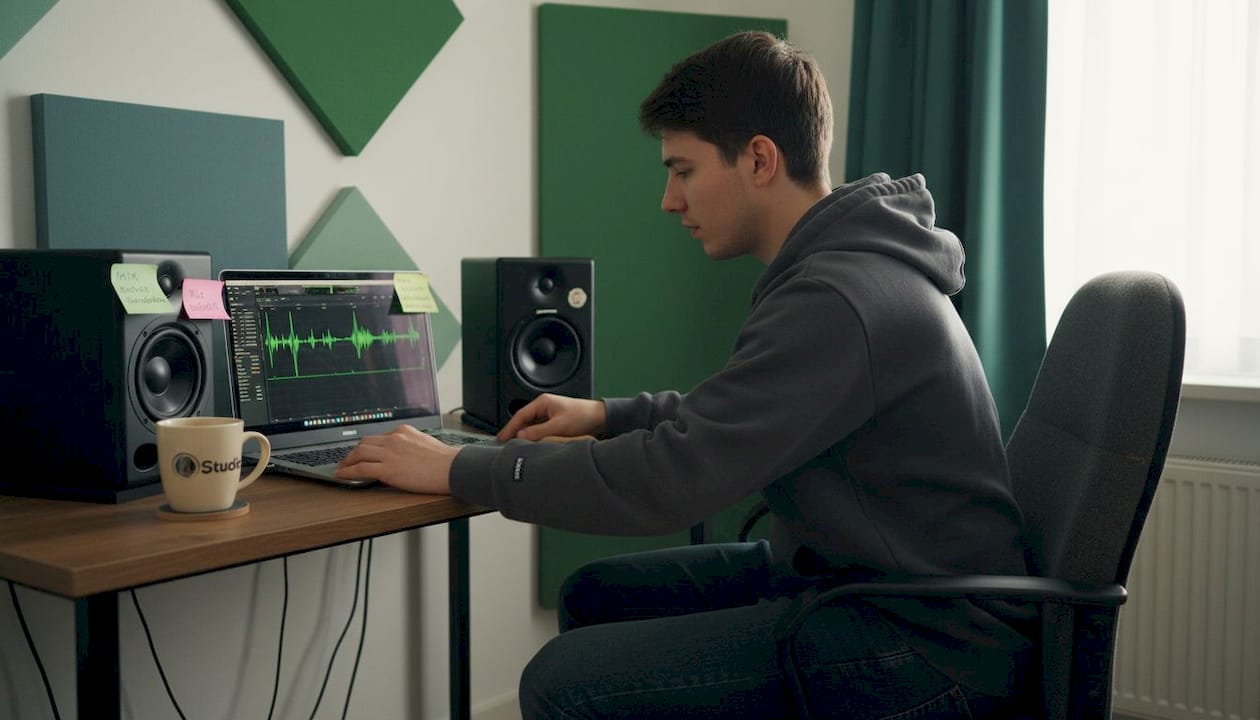
The basic rule is simple: place your monitors in an equilateral triangle with your listening position. This means the distance between the two monitors equals the distance from each monitor to your ears. Tweeters at ear level, slight inward angle of 10 to 30 degrees.
Here are the practical placement rules in a row:
- Equilateral triangle: distance monitor to monitor = distance monitor to listening position
- Tweeter at ear height: put monitors on tripod or stand if table height is not right
- Symmetry in the room: your listening position is exactly in the middle of the width
- Distance from back wall: at least 50 cm distance between monitor and back wall to avoid bass accumulation
- Mirror method for reflections: sit in listening position, have someone slide a mirror along the side wall; everywhere you see the monitor is a first reflection point
“Use the mirror method to find reflection points; place bass traps in all four vertical corners; hang a ceiling cloud above the listening position; treat the back wall with diffusion or deep absorption depending on the room type.”
Here is a practical table for the ideal monitor setup by room size:
| Room size | Recommended monitor distance | Bass trap priority | Ceiling Cloud |
|---|---|---|---|
| Small (up to 12 m²) | 1 to 1.2 meters | Very high | Optional |
| Medium (12 to 25 m²) | 1.2 to 1.8 meters | High | Recommended |
| Large (25 m² and more) | 1.8 to 2.5 meters | Medium | Strongly recommended |
For more detailed options, view the monitor setups overview to see which configuration fits your space.
A common mistake is placing monitors in a corner or too close to the back wall. Corners are the worst places for bass reproduction. Even if you acoustically treat the corners, a monitor in a corner is still a problem. Give your monitors the space they need.
For production studios in smaller spaces, there are also smart home acoustics solutions that you can apply without major remodeling, such as freestanding bass trap stands and mobile reflection filters.
The listening position itself should ideally be one-third of the room length. This helps to avoid the worst room modes. Don’t sit with your back against the back wall.
Workflow and software: why calibration doesn’t solve everything
Finally, how workflow and software complete the picture. Software is tempting. A calibration plug-in like Sonarworks SoundID or ARC System promises that your room will sound like a perfect studio. But there’s a fundamental limitation to it.
Software calibration does not replace acoustic treatment: treatment reduces physical problems, calibration merely compensates for residual response. Calibration acts on frequency response. But room modes also have a temporal character: they are too long in the room. An EQ correction in software can adjust tonal balance, but not remove the unnecessary aftertone caused by a room mode.
These are the rules for using calibration in your workflow:
- First treat the room physically as well as possible
- Measure the space again after treatment
- Apply calibration in addition to treatment, not as a replacement
- Never use calibration as a reason to skip acoustic treatment
Now to the workflow itself. A consistent DAW template is one of the most underrated productivity tools in a studio. Here’s why:
- You start every project with the same signal routing, so you always know where everything is
- Standardized track color coding enables quick navigation
- Standard plug-in chains by track type (drums, vocals, bass) provide a consistent starting point
- Markers and structure template (intro, verse, chorus) prevent structure errors
Pro-tip: Keep your DAW template as two versions. One for recording sessions with active monitor routing and headphone mixing, and one for production and mixing with all the return buses already done. This will save you from resetting your session every time.
Also, check the equipment checklist for your studio to make sure your complete signal path is in order before you deploy calibration. After all, a noise in your interface, a bad cable or an undersized converter has no calibration solution.
A well-appointed home studio combines the physical treatment of the space with a tight digital workflow. Only when both are correct does calibration really give you an advantage. Then a tool like SoundID can eliminate residual coloration in your monitor response and give yourself a more accurate reference.
This is what most studio facilities lack: our view
With the list and rules in place, we now share a unique vision and approach.
In our practice, we see one pattern that keeps recurring: producers who know the acoustical rules but apply them too rigidly. They buy diffusers for a 9-square-meter room, hang panels symmetrically without measuring, and then wonder why it doesn’t work.
Small and irregular rooms play by different rules. In small or irregular rooms, the “more panels and diffusion” approach can be counterproductive: instead, small rooms need bass control and early reflection treatment, and require a step-by-step, measurement-driven approach.
Diffusion works well only when there is sufficient distance between the diffuser and the listener. In a small room, you simply don’t have that distance. What you get then is a room that sounds like a box, not a studio.
Our approach: measure first, then treat. Always start with bass control in the corners, then add absorption at the first reflection points, and measure again. Each treatment step is an experiment. Those who take that seriously achieve better results than those who simply order a standard package of panels.
Invest in good measurement microphone and REW before you spend a single dollar on acoustical equipment. That measurement is the truest picture of what your room is really doing, and always be your studio acoustics improvement based on facts.
Getting started right away: recommended products and solutions
Want to get concrete? Check out these recommended solutions.
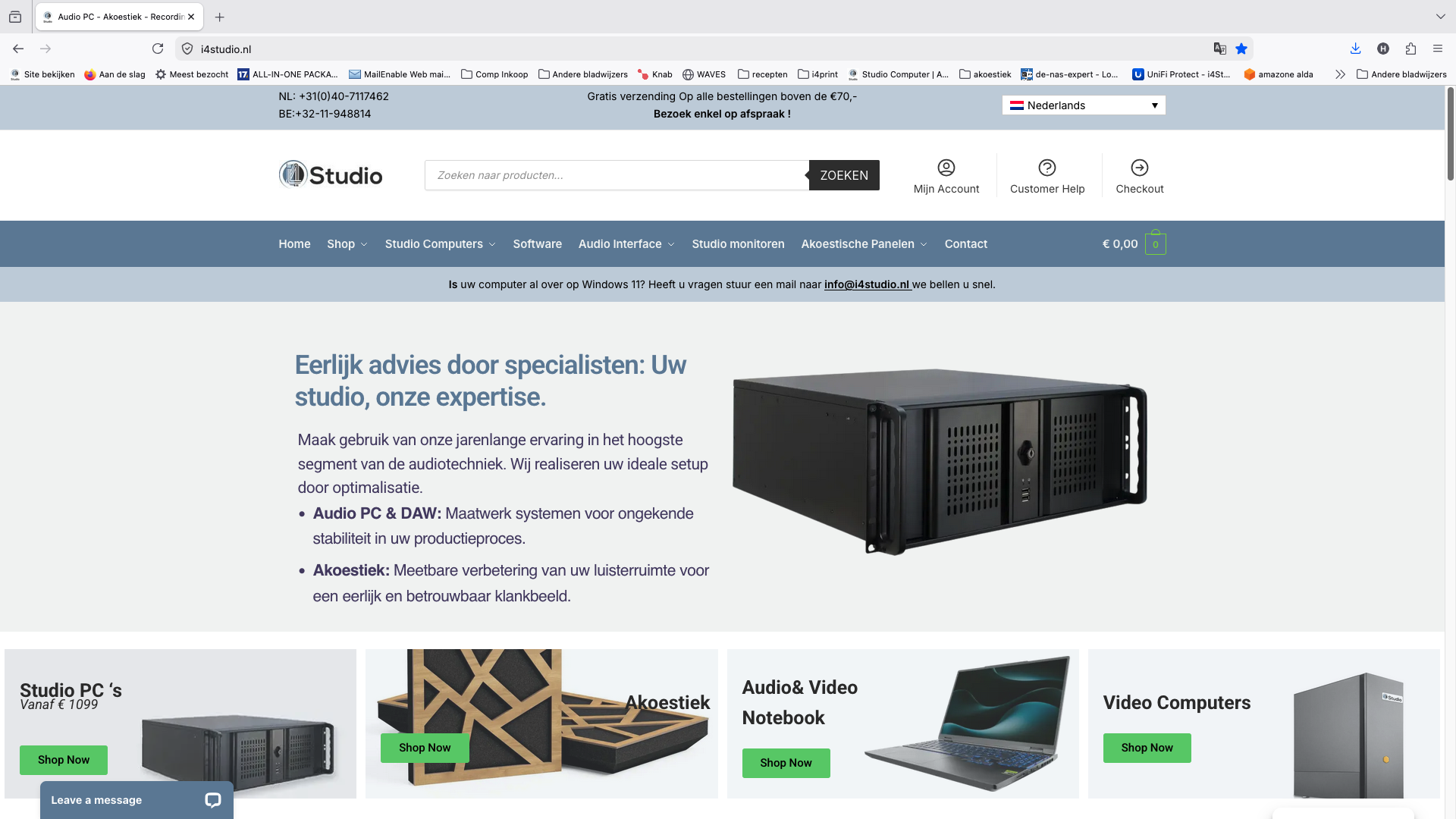
If you follow the steps in this article, you’ll know exactly what your room needs. The next question is: where do you find the right products? At i4studio, you’ll find a complete assortment for every step of your studio setup list. Check out all the studio gear you need as a starting point, from interfaces and monitors to acoustic gear. For the acoustic treatment of your space, our acoustic diffusers are an excellent choice for medium-sized rooms. Unsure which approach is best for your situation? Our specialists are ready at i4studio.co.uk for personal advice.
Frequently Asked Questions
What is the most important part of a studio furnishing list?
Acoustic treatment of the room is the foundation, because sound reflections and room modes have the greatest influence on your mixing decisions and recording quality.
Does software calibration make sense without acoustic treatment?
No, because calibration only compensates for the remaining response problems; the physical causes such as room modes and reflections remain otherwise.
What are bass traps and why are they so important?
Bass traps absorb low frequencies that accumulate in corners of the room; always start with bass traps and first reflection points before adding other treatments.
How do I determine the right place for monitors?
Place your monitors in an equilateral triangle with your listening position and use the mirror method to find the first reflection points on the side walls.
What do I do if my studio is small and irregular in shape?
Focus first on bass control and early reflections and treat incrementally with measurements in between; diffusion in small rooms is often counterproductive.
Recommendation
- Music studio setup: step by step the best sound
- Practical Home Studio Setup Ideas For Musicians And Producers – https://i4studio.nl/
- Studio Design Tips: Practical Guide For Audio and Video Studios – https://i4studio.nl/
- Studio Acoustics Improvement: Practical Guide For Professional Sound Spaces – https://i4studio.nl/