A music producer creates, shapes, and directs recorded music from the initial idea to the finished release. You’re a creative mind, a technical sound engineer, and a project manager all at once. Want to get started today? Then follow these three steps:
- Buy a computer and install a DAW (Digital Audio Workstation).
- Complete one simple project from start to finish within two weeks—from concept to exported file.
- Then, build out your skills and equipment systematically using the learning path and gear checklist later in this article.
Key Insights
A music producer isn’t made by expensive equipment, but by consistent practice, a trained ear, and completed projects that together build a portfolio.
| Item | Details |
|---|---|
| Start with the basics | A computer, DAW, headphones, or speakers are all you need to create your first tracks. |
| Choose a learning path carefully | Compare self-study, online courses, and intensive training programs such as MasterTheMix based on practical projects and portfolio requirements. |
| Think in terms of years, not months | You can learn basic skills in a few months, but reaching a professional level takes years of practice. |
| Settle Rights in Advance | Establish copyright and master rights in writing for every collaboration. |
| Invest Wisely in Hardware | I4studio provides custom studio PCs and acoustic panels tailored to your DAW workflow. |
Table of contents
- What exactly does a music producer do?
- What skills and tools does a producer need?
- How do you learn music production: which path is right for you?
- What should a good music production program offer?
- What equipment do you really need to get started?
- How long does it take, and how much does it cost to get started?
- What kind of studio PC and acoustics do you need as a producer?
- How do you build a portfolio and land your first gigs?
- Copyright and Rights Management in Music Production
- Where can you get studio PCs and acoustic equipment for your setup?
- Resources
- Frequently Asked Questions
What exactly does a music producer do?
A producer combines three roles that are rarely all equally well-developed in a single person. As a creative director, you determine the direction of a song: its mood, instruments, and structure. As a technical engineer, you ensure that recordings come in clean and sound good. As a project manager, you monitor deadlines, communicate with artists, and keep track of versions and files.
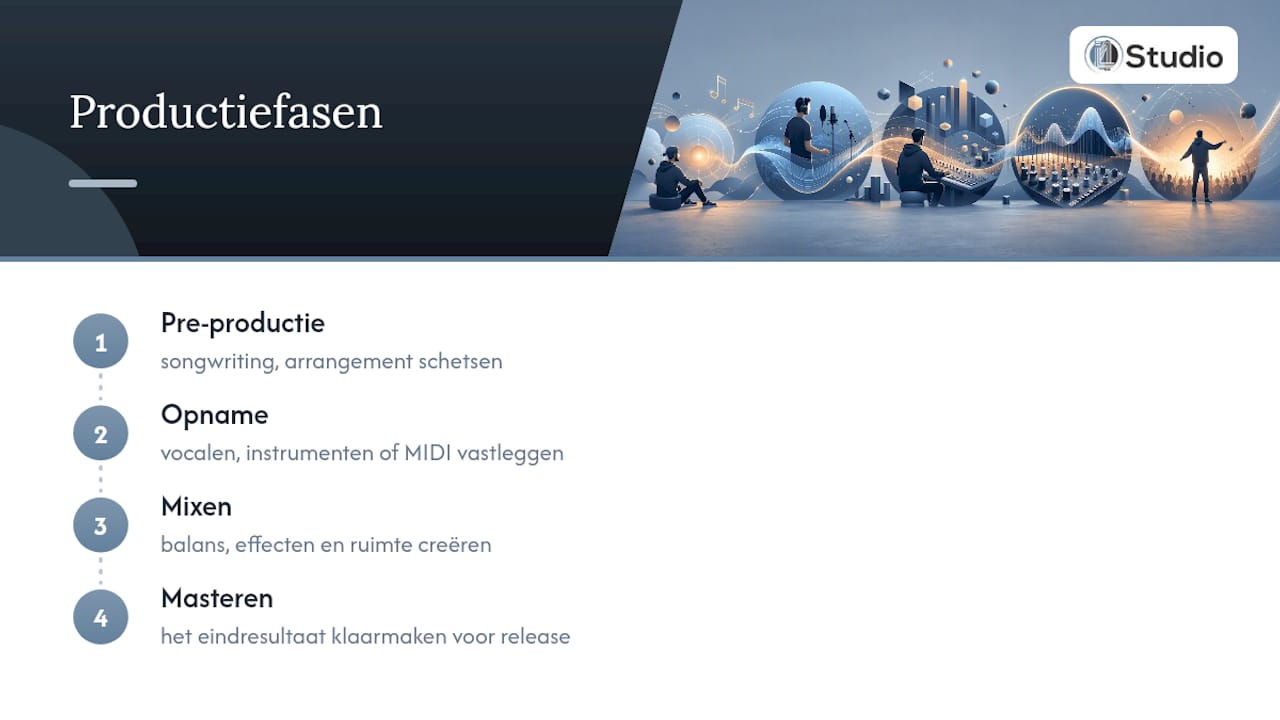
In practice, a production goes through specific phases: pre-production (songwriting, sketching out arrangements), recording (capturing vocals, instruments, or MIDI), mixing (balancing sounds, applying effects, and creating space), and mastering (preparing the final result for release). Music production involves precisely this combination of technical knowledge and creative insight, as is evident from how music production works in practice.
The difference between these roles becomes clear when you look at an example. A beatmaker provides an instrumental foundation: a pulsing beat, a bassline, maybe a melody. An executive producer does something different: they oversee the entire album, select which songs will be included, and steer the overall artistic vision. Both are producers, but their responsibilities are worlds apart.
What skills and tools does a producer need?
In music production, technique and creativity are constantly intertwined. You need both, and one enhances the other.
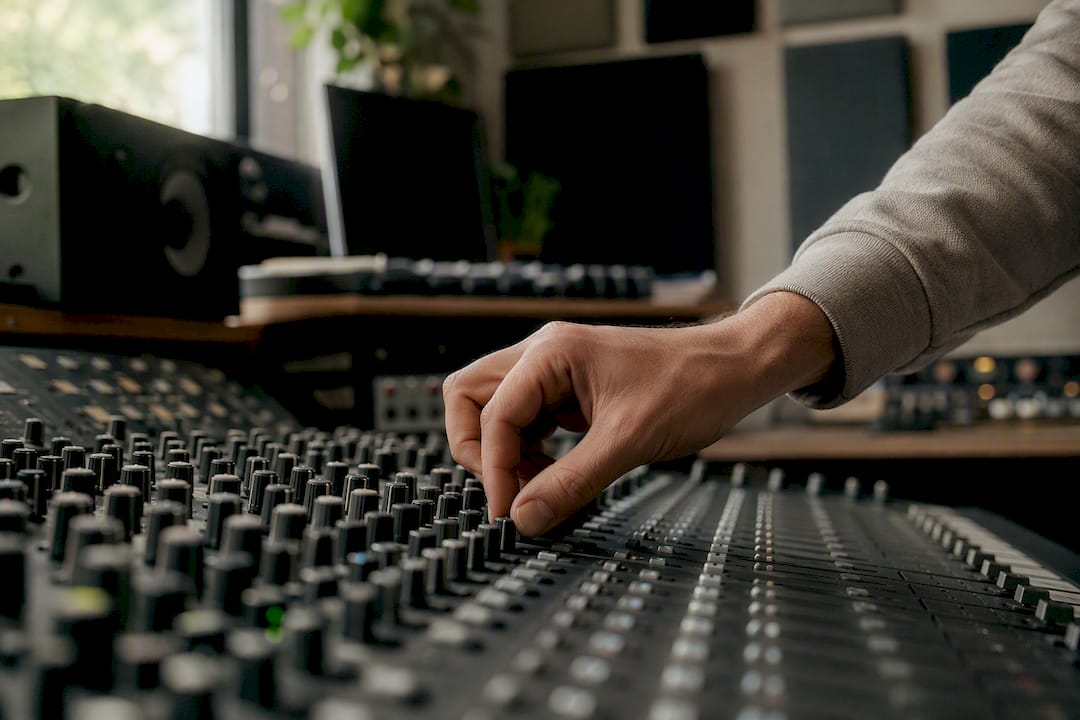
From a technical standpoint, it’s all about understanding your signal path: how audio flows through your system, where to set gain, how EQ and compression work, and how to route channels effectively. Gain staging is one of the most underrated fundamental skills in this regard. Incorrect signal levels lead to distortion or insufficient headroom, while consistent gain staging throughout your entire signal chain systematically prevents that problem.
From a creative standpoint, you need a sense of arrangement, sound design, and a basic understanding of music theory. Composing from a musician’s perspective often leads to better production decisions than working purely by ear without any knowledge of harmony and keys.
When it comes to tools, you can get a lot done with:
- A DAW: Ableton Live, FL Studio, Logic Pro, or Pro Tools.
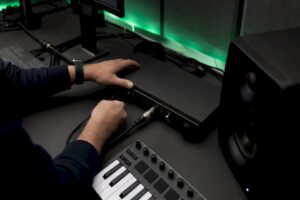
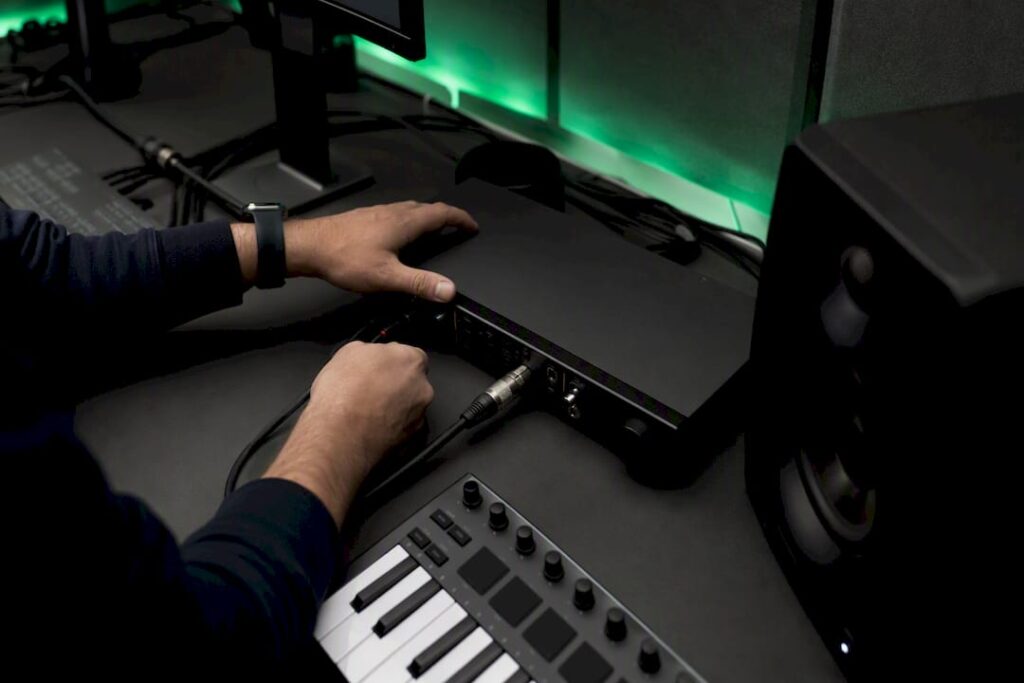
- An audio interface for low-latency recording.
- Studio monitors or a good pair of headphones for accurate mixing.
- A MIDI controller to develop ideas more quickly.
Pro tip: Invest first in ear training and a consistent workflow, and only then in expensive hardware. A well-trained ear will get more out of a mid-range interface than an untrained ear will get out of top-of-the-line equipment.
How to Learn Music Production: Which Path Is Right for You?
There are roughly five ways to learn music production, and they vary greatly in pace and depth.
- Self-study via YouTube, forums, and experimentation. Free, but slow and without feedback.
- Online courses with structured modules. Affordable and flexible, but often lack personal guidance.
- Part-time lessons at a local music school or with a private instructor.
- Intensive one-year programs such as those offered by MasterTheMix or the Summa Music Production Lab, with daily hands-on practice.
- Vocational andhigher vocational education programs and internships at studios or record labels.
Before you spend money on a program, go through this checklist:
- Are the learning objectives for each module or semester clearly defined?
- Will you be working on real-world projects that culminate in a portfolio requirement?
- Are the instructors industry professionals, or just academics?
- Do you actually get recording time in a professional studio?
Self-study works great if you’re mainly interested in pursuing this as a hobby and have plenty of time to make mistakes. A paid course becomes worthwhile as soon as you want to reach a professional level within a specific timeframe, or when you’re looking for access to a network and studio infrastructure that you can’t build on your own.
What should a good music production program offer?
Not every course is worth the money. A strong program has a curriculum that goes beyond just “learning the ropes” and builds toward a well-rounded portfolio.
Key components of the curriculum include:
- DAW workflows in at least one professional software package, with a focus on efficiency.
- Recording techniques: microphone placement, signal flow, noise reduction.
- Mixing and mastering as a separate discipline, not just an afterthought.
- Sound design and creating your own presets or patches.
- Building a portfolio as an explicit end goal, not as a fluke.
Programs such as MasterTheMix or the Summa Music Production Lab typically involve specific hands-on assignments. Examples include:
- Produce a release-ready song entirely on your own, from demo to master.
- Record and edit a collaboration with a real vocalist.
- Record a live session in a professional studio under time pressure.
When considering admission through auditions or entrance exams, keep in mind that some programs screen for basic knowledge, while others accept everyone and build from the ground up. Also ask about the duration (often nine to twelve months for intensive programs), what you’ll have to show for it upon completion (a portfolio, sometimes an internship), and whether alumni have actually secured releases, record deals, or studio internships.
What equipment do you really need to get started?
You need less than most beginners think. The essentials are a computer, a DAW, and reliable monitoring equipment: that’s all you need to get started making music.
Recommended additions once you’re ready to move on:
- An audio interface for recording vocals, guitar, or other instruments.
- A condenser microphone for vocals and acoustic instruments.
- A MIDI controller to play melodies and chords more quickly.
- Basic acoustic treatment of your room, even if it’s just a single panel behind your monitors.
Start with a laptop and a good pair of headphones, and build up your setup step by step. For a complete overview of music studio essentials, find out which order of purchases will give you the most value.
Pro tip: Never buy your audio interface before you have good headphones or monitors. A mediocre recording made with a great interface will still sound mediocre if you can’t mix it properly.
How long does it take, and how much does it cost to get started?
Most people learn the basics of a DAW within a few months, but reaching a professional level requires years of practice and real-world projects. Music production is a long-term learning process—it’s not something you can master in a weekend course.
In terms of costs, you can expect to spend a few hundred euros on a computer, a DAW license, and headphones. An intensive hands-on training program costs considerably more, and prices vary depending on the institution and the duration of the program. For government-funded MBO programs, there are fixed rates for tuition and course fees that vary depending on the type of program.
- Basic equipment: laptop, DAW, headphones.
- Training: Part-time course or an intensive program lasting nine to twelve months.
- Acoustics: Start with one or two panels; no need for a complete studio renovation.
Prioritize listening training and workflow over expensive hardware. You’ll hear that difference in your mixes sooner than you would with a pricey microphone.
What kind of studio PC and acoustics do you need as a producer?
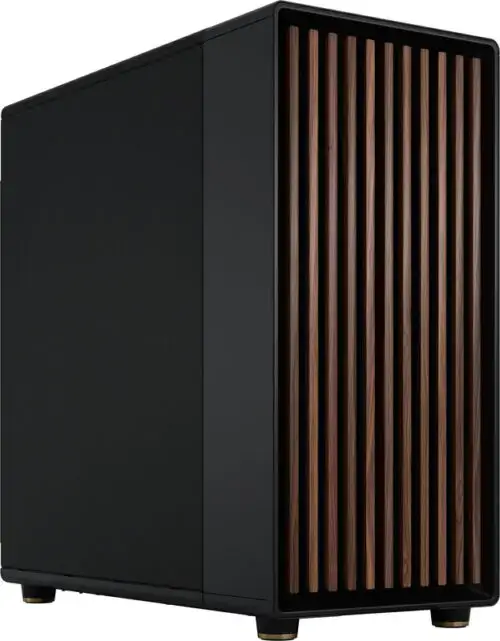
A DAW is only as good as the hardware it runs on. To ensure smooth operation with plugins and multiple audio tracks, keep three things in mind: enough CPU cores for real-time processing, at least 16 GB of RAM (32 GB if you work with a lot of sample libraries), and a fast SSD for project files to minimize audio latency. Check the exact thresholds in the guide on specifications for a good studio PC before building a system.
When it comes to acoustics, you don’t start with a complete renovation, but with the first reflection points next to your monitors and a bass trap in a corner of the room. Position your monitors at ear level in an equilateral triangle with your listening position; that makes more of a difference than any panel ever could.
Pro tip: Choose your PC configuration based on your workflow. If you mainly work with resource-intensive plugins and synthesizers, CPU power is more important than storage. If you work with a lot of sample-based productions, fast SSD storage should be your priority. You can find sample configurations for different budgets in the overview of studio PC examples.
How do you build a portfolio and find your first assignments?
A portfolio without finished tracks is worthless. Here’s how to go about it:
- Finish three complete tracks to a standard you’ll be proud to share, including a clean export of the stems and a dry/wet version of your mix.
- Ensure correct metadata and professional delivery: file names, sample rate, and bit depth should match the recipient’s requirements.
- Actively share your work on social media, within local scenes, and through industry networks. Opportunities often arise through contacts in the performing arts and music industries rather than through cold applications.
Revenue models vary: a fixed fee per project, beat licenses where you sell the same beat to multiple artists, or a profit-sharing arrangement for collaborations. Starting rates are usually low, and that’s normal—you have to build a reputation first before you can raise your prices.
Pro tip: Use reference tracks for every project and explicitly document what role you played: beatmaker, mixing engineer, or full-service producer. This prevents confusion with future clients.
Copyright and Rights Management in Music Production
Any production raises copyright issues as soon as multiple creators are involved. As a producer, you are often entitled to a share of the copyright if you make a substantial creative contribution, such as a melody, chord progression, or distinctive sound element. Purely technical work, such as mixing alone, generally does not entitle you to a share of the copyright, unless other arrangements have been made in advance.
Therefore, for every collaboration, establish in advance who receives what percentage of the copyrights and master rights. Copyrights pertain to the underlying composition (melody, lyrics, chords), while master rights pertain to the specific recording itself. This distinction is essential: an artist can re-record a song without your permission as the producer, as long as they have secured the composition rights, but they may not simply use your specific master recording.
In the Netherlands, rights management for performances and broadcasts is handled by organizations such as Buma/Stemra. Register new works as soon as possible after completion, and always use a written split sheet for collaborations. A verbal agreement on percentages almost always leads to disputes once a song becomes successful.
Beat licenses are a separate category: with a non-exclusive license, you sell the same beat to multiple artists; with an exclusive license, you transfer the rights to a single buyer for a higher fee. Always put license terms in writing, including usage rights for streaming, synchronization in videos, and commercial use.
A Creator’s Personal Perspective
What stands out about creators who stick with it: they don’t practice perfection; they practice finishing. Every completed project teaches you more than ten half-hearted attempts. Start small, work together, and finish what you start.
Where can you get studio PCs and acoustic equipment for your setup?
As soon as you want to go beyond a laptop and headphones, choosing the right hardware and acoustic setup becomes the deciding factor in how much time you’ll waste on technical frustrations instead of making music. I4studio specializes in exactly that: custom studio PCs tailored to your DAW and plugin load, and acoustic panels that make your space sound natural without having to remodel your studio.
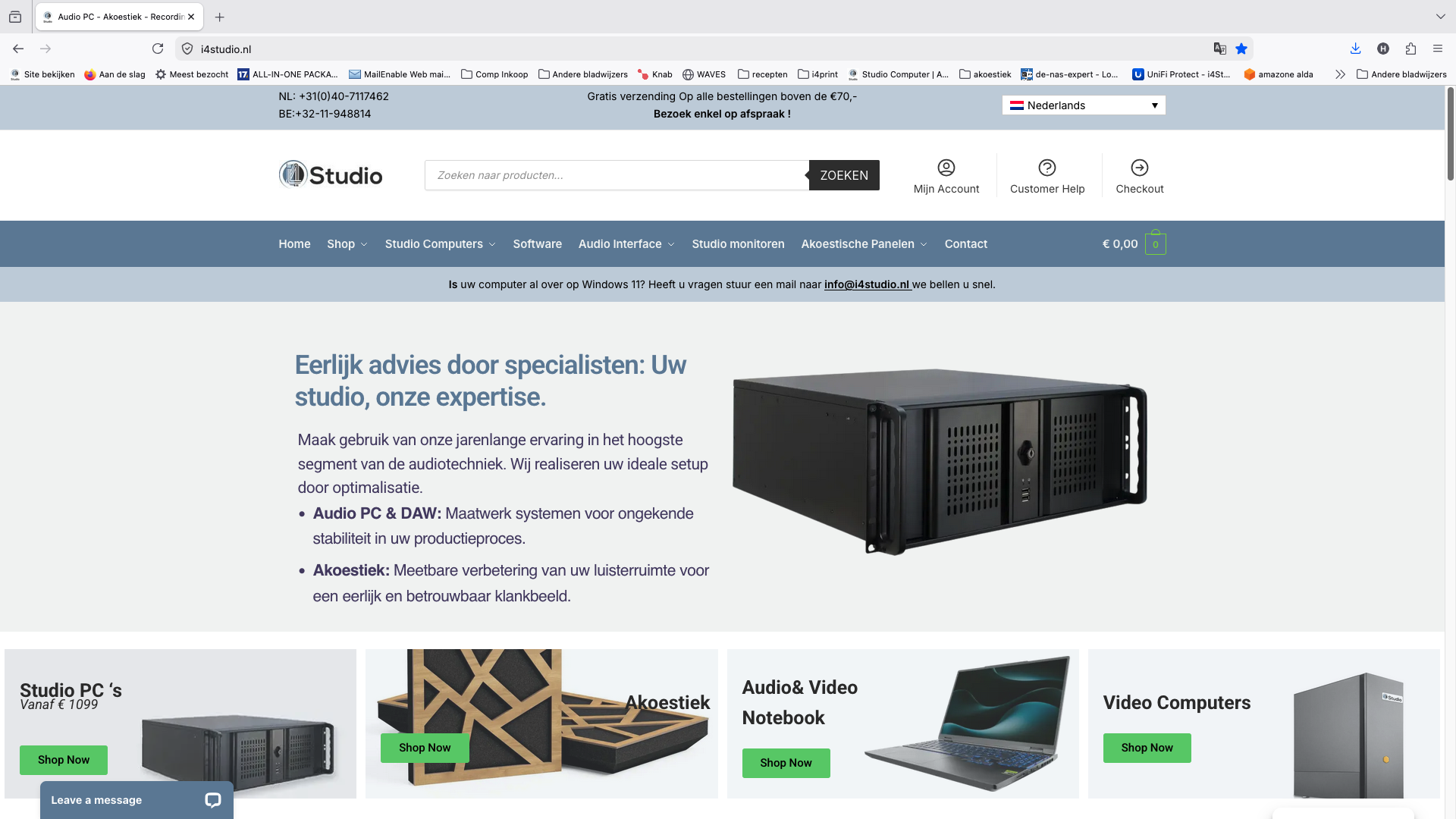
Instead of buying a generic off-the-shelf PC that isn’t optimized for audio latency, at I4studio you can build a configuration that fits your workflow—whether you primarily work with large sample libraries or CPU-intensive synthesizers. Not sure which starter kit is best for you? Check out the guide to studio gear for beginners and use it to put together your first order, or ask for advice on a studio PC that perfectly matches your production process.
Sources
- Music Production for Beginners | Pro Audio Education
- Music Production Explained | emastered Blog
- What Are the Basics of Learning to Produce Music? | Wisseloord
- Gain Staging: What It Is and How to Do It | iZotope
Frequently Asked Questions
What does a music producer do?
A producer sets the creative direction for a song, oversees recording sessions, supervises the mix, and manages the entire production process from concept to finished release.
What is the difference between a producer and a DJ?
A producer creates and edits music in the studio, while a DJ mixes existing tracks live and performs them for an audience. Some people do both, but they require different skills.
How much do you earn as a music producer?
Earnings vary widely depending on the assignment, ranging from a fixed fee per project to beat licenses and profit-sharing on collaborations. Beginning producers usually earn a modest fee, which can increase with experience and a growing portfolio.
Who are some well-known producers?
The Netherlands has produced internationally recognized artists, including Roselilah, who won a Grammy Award for her work with Kendrick Lamar. Around the world, you work with many of the same tools as these producers, such as Ableton Live, FL Studio, Logic Pro, or Pro Tools.
Do I need an expensive studio PC to get started?
No, a regular laptop is enough to get started. Once you start working on more demanding projects with more plugins and tracks, a studio PC with enough CPU cores and RAM becomes essential for stable performance.