
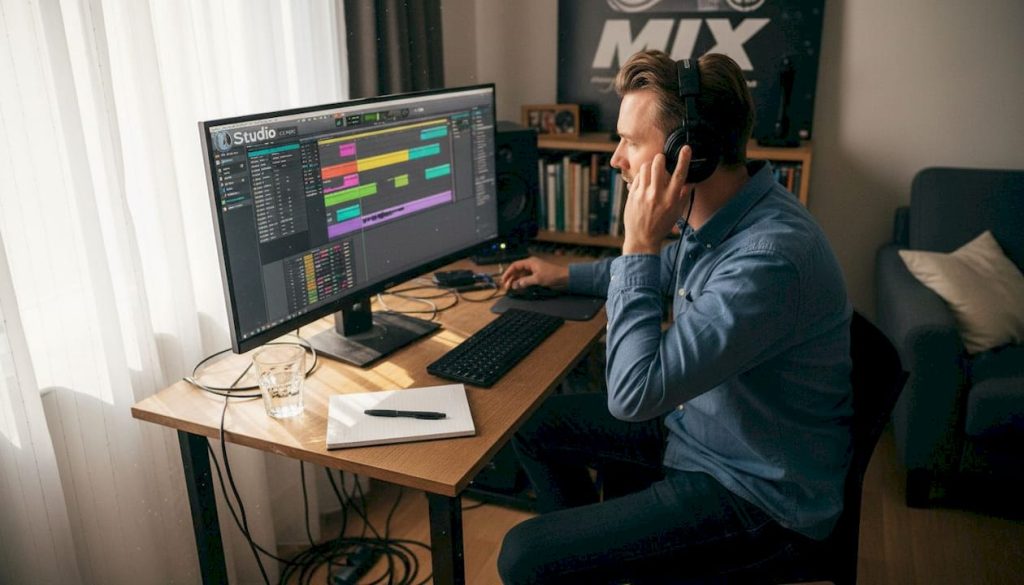
TL;DR:
- Consumer headphones have a colored sound reproduction that can mislead mixing. Neutral studio headphones are essential for accurate and reliable mixing decisions. For optimal workflow, combine closed-back and open-back models and pay attention to comfort and technical specifications such as impedance.
Ordinary consumer headphones sound good, but they lie. They boost the bass, soften the high mids and give your music a sheen that isn’t actually there. The result? You mix based on a false image, and the final mix sounds disappointing on other systems. For musicians and producers who are serious about working in their home studio, good studio headphones are not a luxury but a necessity. In this article, you’ll learn why neutral sound reproduction is the foundation of professional work, which design suits your workflow, and how to smartly tailor comfort and technical specs to your situation.
Table of contents
- The importance of neutral sound reproduction
- Closed-back vs open-back: which design for which task?
- Comfort and build quality: working for hours without fatigue
- Impedance, compatibility and practical applications in the home studio
- Our vision: why every home studio needs at least one studio headphone
- Complete your home studio with the right equipment
- Frequently Asked Questions
Key Insights
| Item | Details |
|---|---|
| Neutral reproduction essential | Only studio headphones provide a fair and accurate sound image for professional results. |
| Choose design by workflow | Closed-back for recording, open-back for mixing: use both whenever possible for optimal results. |
| Comfort remains crucial | Lightweight and soft ear cushions make long sessions last without fatigue. |
| Pay attention to impedance | Tuning with your interface prevents noise and delivers the best sound. |
The importance of neutral sound reproduction
If you’re mixing on headphones that exaggerate the bass, you’re automatically going to push that bass back into your mix. The result on a neutral system? A thin, empty low end. This is the classic problem of colored consumer headphones, and it’s the reason that neutral frequency response is the absolute basis for accurate mixing and recording.
Flat frequency response means that the headphones reproduce all frequencies as evenly as possible, without artificially amplifying or attenuating certain bands. It sounds boring, but it’s exactly what you need to make reliable decisions. When you hear what’s really in your mix, you can make corrections based on facts rather than timbre.
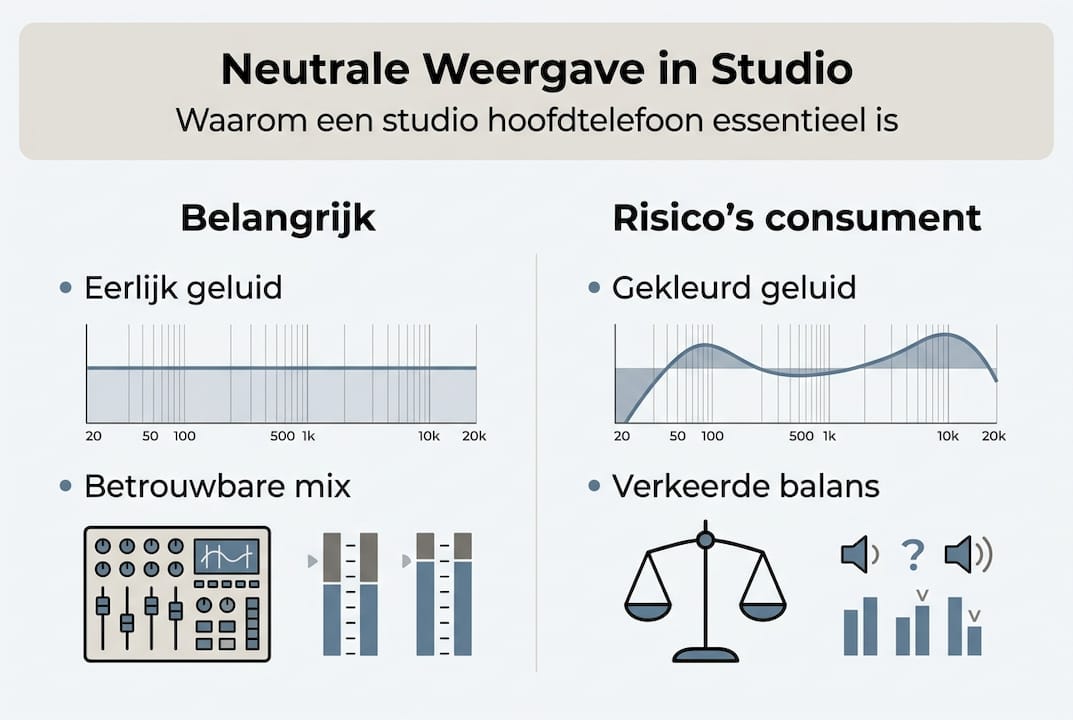
A good example is the Shure SRH1540 analysis, which stays within ±3dB over the 170Hz to 17kHz range. That’s an impressively consistent reproduction for a closed-circuit model. Compare that to popular consumer models that sometimes deviate 10dB or more in the low frequencies.
What are the concrete risks of colored headphones?
- Unpleasant surprises in the final mix: your track sounds good on your own headphones but bad in the car or on speakers.
- Wrong EQ decisions: you correct problems that aren’t there, or miss problems that are.
- Unreliable stereo balance: colored reproduction also affects how you judge the width of your mix.
- Waste of time: you work longer on a mix that doesn’t come out well on other systems anyway.
“A studio headphone is not an instrument that makes your music more beautiful. It’s a measuring instrument that tells you the truth.”
The Beyerdynamic DT 990 Pro is a good example of an open-back model that stands for its honest reproduction, even in the higher frequencies. Producers who switch from consumer models to true studio headphones often describe it as a revelation: suddenly you hear details that you completely missed before.
Closed-back vs open-back: which design for which task?
Once you know why neutrality is essential, the question of which design best suits your situation follows. The difference between closed-back and open-back is not just a matter of taste; it is a functional choice that depends on what you do in your studio.
Closed-back designs offer high isolation, blocking ambient noise and preventing sound from the headphones from leaking into the microphone. This makes them indispensable when recording. Think of singers hearing a playback as they sing: with an open-back model, that sound would leak right into the microphone.
Open-back models offer a wider soundstage and a more natural stereo image, making them ideal for mixing and mastering. Ventilation in the ear cups creates less pressure on the ears, reducing ear fatigue during long sessions. The downside is that they are not suitable in noisy environments or when recording.
| Feature | Closed-back | Open-back |
|---|---|---|
| Insulation | High | Low |
| Sound leaks | Minimal | Present |
| Soundstage | Smaller | Wide |
| Ear fatigue | More with long use | Less |
| Best application | Recording, tracking | Mixing, mastering |
| Examples | Beyerdynamic DT 770 Pro | Beyerdynamic DT 990 Pro |
The Beyerdynamic DT 770 Pro is one of the most widely used closed-back models in professional studios worldwide, thanks in part to its strong isolation and reliable reproduction. More background on the different headphone types will help you make the right trade-off.
What characteristics are decisive by type?
- Closed-back: isolation, low bleed, more compact sound, suitable for recording and night work.
- Open-back: spacious sound, better depth of sound, suitable for long mixing sessions.
Pro-tip: Invest in both types over time. Use closed-back for recording vocals or instruments, and switch to open-back once you start mixing. That way you get the benefits of both designs in one workflow.
Comfort and build quality: working for hours without fatigue
Now that you know the technical differences, details like comfort over prolonged use determine your productivity. Technically perfect headphones that hurt after two hours are worthless in practice. Comfort is not an afterthought; it is a productivity criterion.
What do you look for when buying?
- Weight: lighter models reduce pressure on the skull during long sessions.
- Ear pads: velour pads breathe better than synthetic leather and are more comfortable for prolonged use. The Sennheiser HD 490 PRO comes with two sets of pads for different applications.
- Headband: an adjustable and well-padded headband prevents pressure points.
- Cable length and connection: a detachable cable is practical and extends the life of the headphones.
A major concern is that closed-back models get hotter on the ears, which can lead to more fatigue in long sessions. This is an edge case that many producers underestimate, especially in a hot home studio without air conditioning.
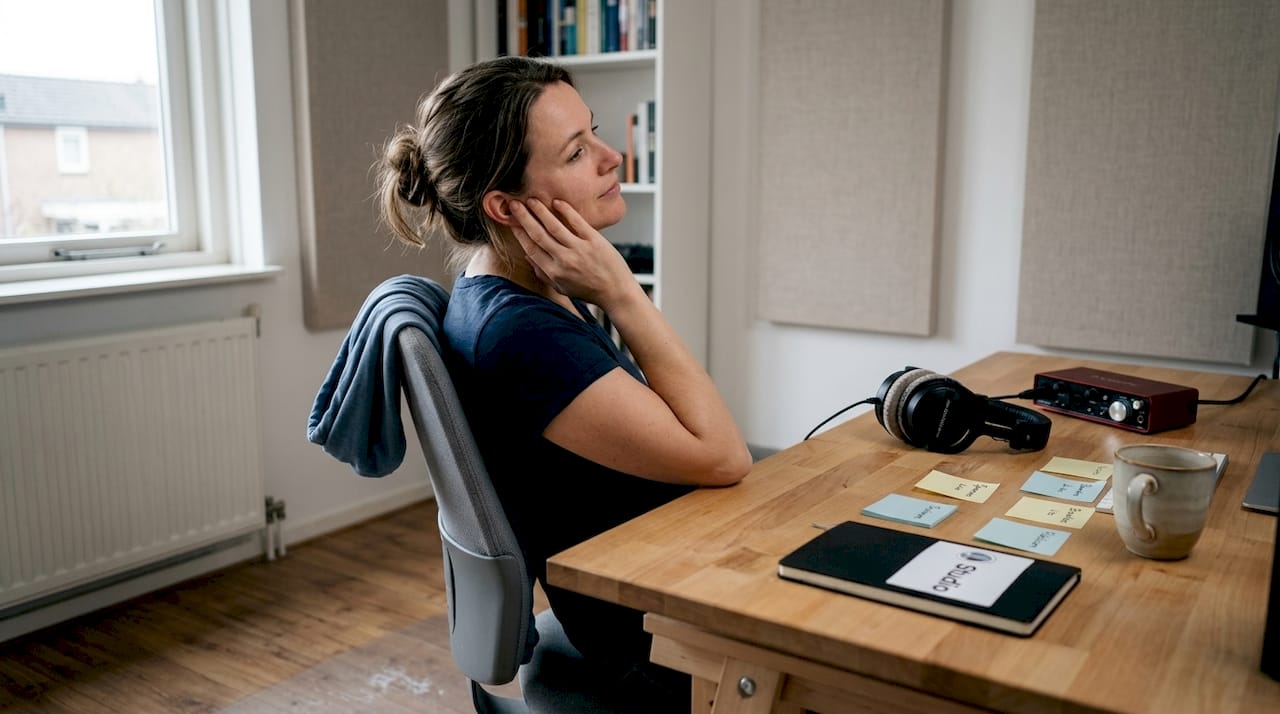
The Beyerdynamic DT 770 Pro scores well on comfort thanks to its soft velour pads and lightweight construction. Still, we recommend taking regular breaks even with this model. Ear pads also wear out over time and affect both comfort and sound reproduction. Replace them promptly.
Pro-tip: Set a timer from 45 to 60 minutes during long mixing sessions. Take the headphones off for a while, move around for a while. Your ears will recover and you’ll make better decisions after a short break.
Choosing the right essential studio equipment starts with tools that you can actually use for hours at a time without physical discomfort. Comfort and quality go hand in hand.
Impedance, compatibility and practical applications in the home studio
Besides wearing comfort, technical specifications are decisive for optimal performance in your studio. Impedance is one of the most underestimated factors when buying studio headphones.
Impedance, measured in ohms (Ω), indicates the electrical resistance of the headphones. The higher the impedance, the more power you need to drive the headphones correctly. Higher impedance such as 250Ω works optimally with studio interfaces and headphone amplifiers. Lower impedance is compatible with more devices, but may introduce noise if your interface’s output is too strong.
“Choose your impedance based on your interface, not on what the manufacturer calls ‘universally compatible.'”
Here is an overview of commonly used models and their impedances:
| Model | Impedance | Recommended use |
|---|---|---|
| Beyerdynamic DT 770 Pro | 80Ω / 250Ω | Interface or direct connection |
| Beyerdynamic DT 990 Pro | 250Ω | Studio interface or amplifier |
| Sennheiser HD 490 PRO | 150Ω | Interface, versatile |
| Audio-Technica ATH-M50x | 38Ω | Directly to laptop or interface |
Practical steps for making the right choice:
- Check the output impedance of your interface or amplifier.
- Choose headphones whose impedance is at least eight times higher than the output impedance of your device.
- For high impedance models, always use a dedicated headphone amplifier if your interface is low power.
- Always test at volume: if you are already at 80% of volume to get sufficiently loud, your combination is not optimal.
You’ll find more technical background in practical reviews on impedances. Good tips for home studio work will also help you bring all the technical aspects together into a working setup.
Our vision: why every home studio needs at least one studio headphone
Many producers think that good monitors are the only real reference. But monitors have a major drawback: they are affected by room acoustics. Room modes, early reflections and standing waves color what you hear, sometimes more than consumer headphones do.
Studio headphones give you an acoustically neutral reference that does not depend on the room. That makes them indispensable, especially in home studios where acoustics are rarely perfect. At the same time, you should never rely on headphones alone. Cross-referencing, comparing your mix on multiple systems, is the only way to guarantee a professional result.
Our recommendation for a hybrid workflow: record with a closed-back model, mix with an open-back model, and always check the final mix on speakers. Also, use regular earbuds or a Bluetooth speaker as a quick reality check. What many producers do wrong is work too long on one system and discover too late that their mix is not transferable. Also, invest in good acoustics in your studio to get the full picture right.
Complete your home studio with the right equipment
Good studio headphones are the first step to a professional workflow, but they are rarely the only thing you need.
At i4studio you will find a carefully curated selection of studio headphones from top brands such as Beyerdynamic and Sennheiser, tailored to the needs of producers and musicians. In addition to headphones, we also offer custom music production PCs and everything you need for a complete home studio. Want to know which essential studio components your setup is still missing? Explore our full range and take the next step toward professional sound.
Frequently Asked Questions
Why are consumer headphones less suitable for mixing?
Consumer headphones color the sound with exaggerated bass or bright treble, causing you to make wrong mixing decisions based on an inaccurate soundstage.
Are open-back or closed-back headphones better in a home studio?
Closed-back is ideal for recording because of its isolation, while open-back offers a more natural stereo image, making it better suited for mixing and mastering.
Does impedance matter much with studio headphones?
Yes, higher impedance like 250Ω works optimally with studio interfaces, while too low impedance combined with a powerful interface can cause noise.
Can I work long hours without suffering from head or ear pain?
Choose a lightweight model with soft velour pads and an adjustable strap, and take short breaks every 45 to 60 minutes to minimize fatigue during long sessions.
Recommendation
- Home Studio Setup Tips: Complete Guide To A Professional Studio At Home – https://i4studio.nl/
- Microphone For Home Studio: The Complete Guide To Choosing, Placing And Recording – https://i4studio.nl/
- Recording Equipment For Home: Complete Guide For The Home Studio – https://i4studio.nl/
- Home Studio for Content Creators: From Space to Professional Recording – https://i4studio.nl/