Briefly:
- In 2026, acoustic trends will be dominated by sustainable materials, nanotechnology, and preventive design. These innovations improve performance, speed up installation, and integrate acoustics as an essential part of the design. Sustainable, high-performance panels make professional studios more environmentally friendly and efficient.
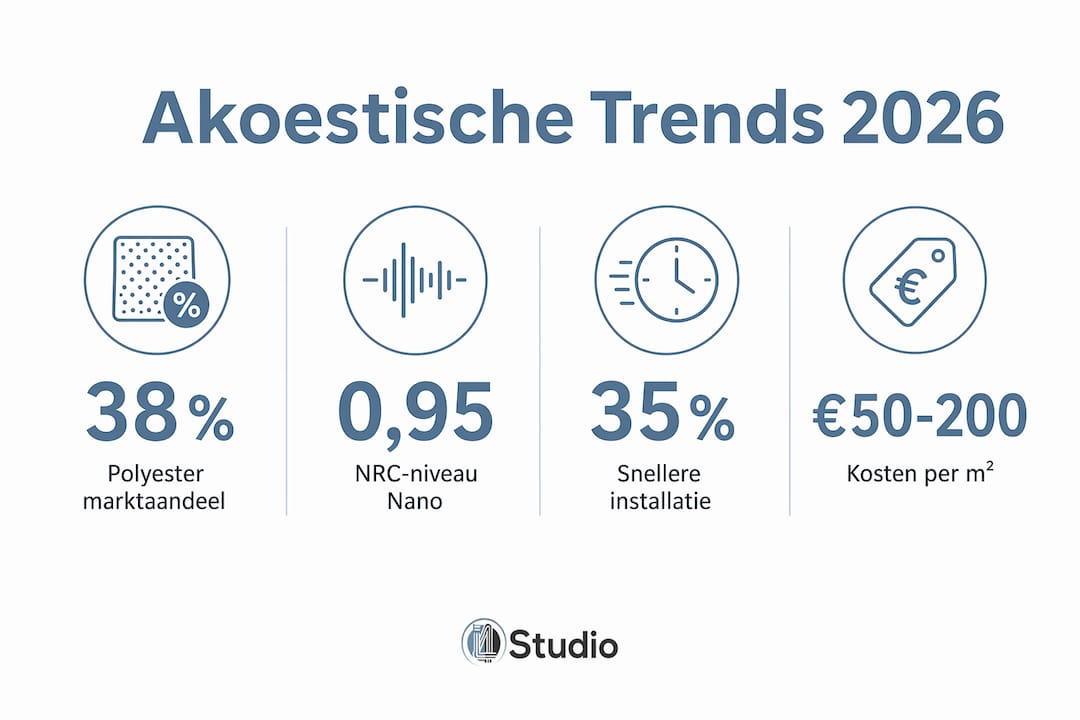
Acoustic trends for 2026 are dominated by three forces: sustainable materials, nanotechnology, and preventive design. Whereas studio owners used to treat acoustics as an afterthought, it is now a core component of every professional studio project. Polyester-based panels account for 38% of the market, while bio-based and recycled alternatives have become mainstream. At the same time, nano-modification technology achieves NRC values of up to 0.95—a performance improvement that seemed unattainable until recently. For music producers, studio designers, and acoustic consultants, this is a complete game-changer.
Which sustainable materials will dominate the acoustic market in 2026?
Sustainable acoustic solutions are no longer a niche market. They have become the new standard in professional studio design. The shift toward polyester, bio-based fibers, and recycled materials is driven by both environmental concerns and improved performance.
| Material Type | Market Share | NRC Coverage | Certifications |
|---|---|---|---|
| Polyester (PET) | 38% | 0.70–0.90 | Cradle to Cradle, REACH |
| Bio-based fibers | Growing | 0.65–0.85 | FSC, PEFC |
| Recycled materials | Mainstream | 0.60–0.85 | GreenGuard, EPD |
| Mineral wool | Stable | 0.75–0.95 | CE marking |
Polyester panels are popular because they are lightweight, moisture-resistant, and easy to install. They meet strict European standards and are suitable for both wall panels and ceiling solutions. Bio-based alternatives, such as panels made from hemp fiber or mycelium, are gaining ground in projects that require a fully circular design.
The costs of sustainable acoustic solutions vary. Professional installations cost approximately €50–€200 per m², depending on the material, thickness, and finish. That may seem like a wide range, but the difference lies in the NRC value and the aesthetic finish.
The benefits of sustainable materials go beyond environmental considerations:
- Lower VOC emissions: A healthier indoor environment in the studio, less chemical exposure for users.
- Better acoustic performance per kilogram: Lighter structures with comparable or better absorption values.
- Easier installation: Polyester panels can be cut, bent, and easily installed without special tools.
- Longer service life: Recycled and bio-based materials are often more resistant to moisture and temperature fluctuations.
Pro-tip: When making a purchase, always ask for the panel’s EPD (Environmental Product Declaration). This document provides precise data on the environmental impact and helps you compare products based on more than just price.
How do new technologies improve acoustic performance?
Acoustic Technology 2026 focuses on nanomodification and modular systems. Both innovations address two classic problems: insufficient absorption at low frequencies and time-consuming installation.
Nano-modification takes NRC values to a new level
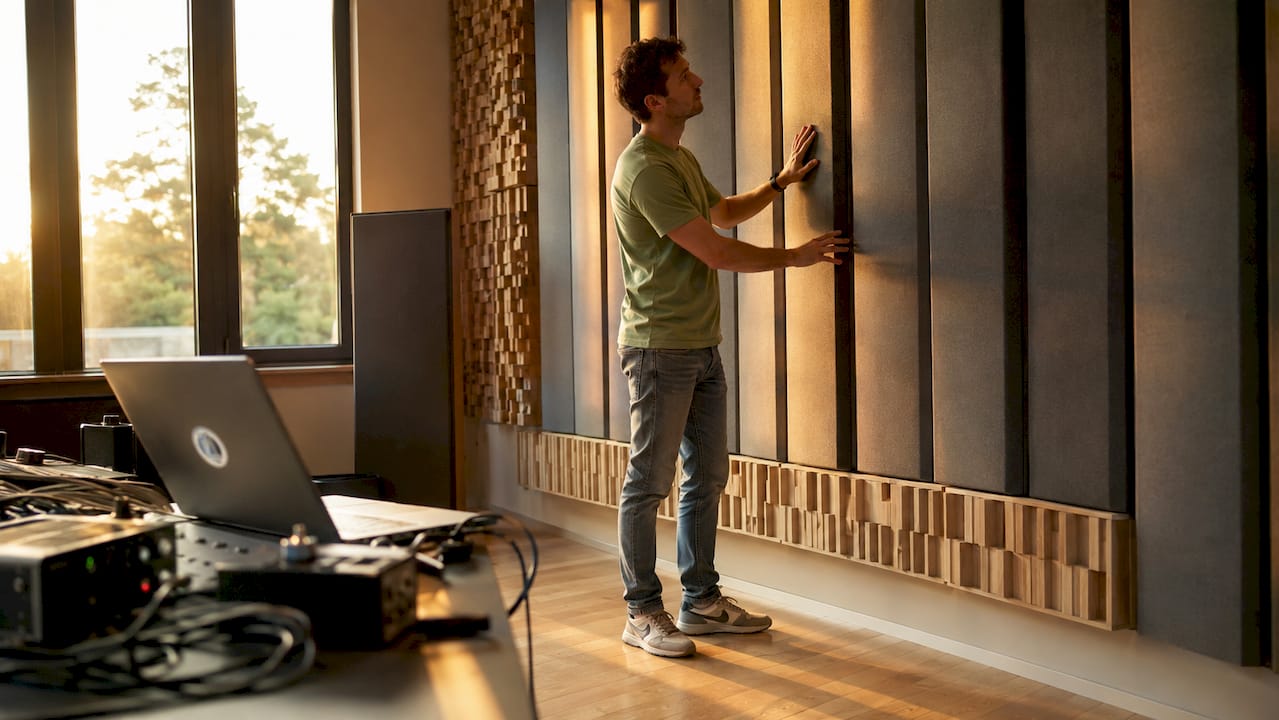
Nano-modification technology raises the NRC score to 0.95, whereas the standard for professional environments has been 0.60–0.70 for years. An NRC of 0.95 means that 95% of the incident sound is absorbed. That’s the difference between a dry, controllable mix and a room that colors your recordings with unwanted reflections.
The technology works by integrating nanoparticles into the foam structure. This increases the effective surface area for sound absorption without making the panels thicker or heavier. For studios with limited space, this is a tangible benefit.
Modular systems significantly reduce installation time
- Preparation: Modular panels are custom-manufactured and delivered as ready-to-install sets, including mounting hardware.
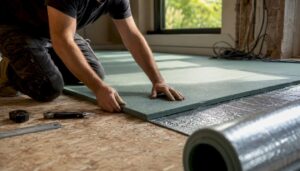
- Installation: Click systems and magnetic fasteners have replaced traditional adhesive methods. No drying time, no chemical fumes in the studio.
- Adjustment: The panels can be repositioned. You can adjust the acoustic treatment without damaging the walls.
- Expansion: As your studio grows, you can add modules without replacing the existing system.
Modular installation takes 35% less time than traditional methods. In practice, this means that an average control room of 25 m² can be fully treated in one day instead of two to three days.
The broader market confirms this trend. The market size in the acoustics sector is growing rapidly, with a value of 38.6 billion yuan, driven by the construction, transportation, and export markets. This scale is attracting investment in further product development, which is accelerating the innovation cycle.
Pro-tip: Combine nano-modified absorbers with an acoustic ceiling for maximum control over low frequencies. Ceiling treatment is still too often overlooked, even though it makes the greatest contribution to a flat frequency response.
Why is acoustics now part of the design process?
Acoustics is shifting from reactive to preventive design, integrated into architecture and interior design from the very first sketch phase. This is a fundamental change in how studios are built and renovated.
In the past, the process was predictable: get the studio ready, start recording, identify problems, and install panels. That reactive approach leads to compromises. You treat the symptoms rather than the causes. Early integration of acoustics minimizes the need for later corrections and structurally improves the user experience.
“Acoustics isn’t just a finishing touch. It’s an architectural parameter that belongs in the design process just as early as electrical systems or ventilation.” This is the essence of the shift that architects and studio designers are implementing in 2026.
Collaboration between architects and acoustic consultants yields tangible benefits:
- Better room proportions: The ratio of length, width, and height determines the modal frequencies of a room. An acoustic consultant can optimize these proportions before construction begins.
- Integrated structural elements: Double walls, floating floors, and decoupled ceilings are more effective and cost-efficient when incorporated during the construction phase.
- Aesthetic freedom: When acoustics are incorporated early in the design process, you don’t have to compromise between appearance and function. Panels become part of the interior design concept, not a corrective measure.
Acoustics as a design parameter also makes good economic sense. Retrofitting costs, on average, two to three times more than preventive measures. For a professional studio, that’s an argument any investor can understand.
A good place to start is a thorough analysis of your studio space before you order even a single panel. To measure is to know, and no panel can fix a poorly designed space.
What are the latest panel and design trends for studios?
Acoustic innovations for the future aren’t just about performance. They’re also about how a studio looks and feels. The line between acoustic materials and interior design elements will blur in 2026.
Wood Types, 3D Felt, and Modular Patterns
Brands such as Loopwood and BAUX demonstrate that acoustic panels can serve as both design and technical elements. Woodworkers and furniture makers are increasingly integrating these panels into custom furniture, wall systems, and partition walls.
| Panel type | Aesthetics | NRC range | Application |
|---|---|---|---|
| 3D Felt Panels | Tall, sculptural | 0.70–0.90 | Walls, ceilings |
| Wooden louvered grille | Warm, organic | 0.55–0.75 | Back panels, furniture |
| Modular foam panels | Functional, customizable | 0.80–0.95 | Control rooms, booths |
| Perforated plaster | Sleek, minimalist | 0.60–0.80 | Ceilings, office studios |
3D felt panels are particularly popular in hybrid workspaces and home studios. They combine an NRC of 0.70–0.90 with a sculptural appearance that complements modern interior design styles. Installation is simple, and the panels are available in virtually any color.
Wooden slat grilles offer a warmer aesthetic and work well as diffusers on back walls. They diffuse sound rather than absorbing it completely, which contributes to a more natural-sounding space. This is exactly what you want in a control room where you spend hours behind the monitors.
The woodworking industry is increasingly using acoustic panels as unique design and functional elements. Custom acoustic furniture, such as bookcases with built-in absorbers or partition walls with felt panels, is a growing category.
Pro-tip: Be mindful when combining absorbers and diffusers. A room that only absorbs sound will sound lifeless and tiring. Use this rule of thumb: 60% absorption, 40% diffusion for lively yet controlled acoustics.
Sound Insulation vs. Absorption: The Difference That Matters
Insulation prevents sound transmission, while absorption affects the reverberation time within a room. This distinction is fundamental to every architectural decision. Simply attaching panels to the wall will not solve the problem of sound leakage into the neighboring room. To do that, you need mass, decoupling, and airtightness.
Soundproofing trends for 2026 show that more and more studio owners understand this distinction. They are investing in both layers: first, structural insulation, then acoustic treatment. That is the correct order.
Key insights
The 2026 acoustic trends show that sustainable materials, nanotechnology, and preventive design are collectively setting the standard for professional studio acoustics.
| Item | Details |
|---|---|
| Sustainable materials dominate | Polyester panels hold a 38% market share; bio-based and recycled options have become mainstream. |
| Nanotechnology Boosts Performance | NRC values of up to 0.95 are achievable thanks to nanomodification, far exceeding the old standard of 0.60–0.70. |
| Modular systems save time | Installation time is 35% shorter than with traditional methods, resulting in immediate cost savings. |
| Preventive design is more effective | Integrating acoustics early in the design process prevents costly corrections later on. |
| Insulation and absorption are not the same thing | Insulation blocks sound transmission; absorption regulates the reverberation time within a room. |
My Perspective on Acoustic Innovations in 2026
After years of working with studio owners and producers, one thing has consistently struck me: most acoustic problems aren’t caused by poor-quality products, but by unrealistic expectations. People buy panels because they think they’ll keep sound out. They don’t. Panels absorb reflections. That’s something entirely different.
What really stands out to me this year is the leap in quality of affordable modular systems. Two years ago, you had to make a significant investment to achieve an NRC above 0.85. Now you can achieve that with polyester panels that you can install yourself in an afternoon. That’s democratizing professional studio acoustics in a way I hadn’t expected.
At the same time, I see a pitfall. The emphasis on aesthetics is growing rapidly, and that’s a good thing. But I also see studios opting for attractive wooden louvered grilles without checking whether the NRC value is suitable for their intended use. A panel that looks great but has an NRC of 0.45 won’t solve mixing problems. Technical specifications such as NRC values should always be the starting point, not the final step in the decision-making process.
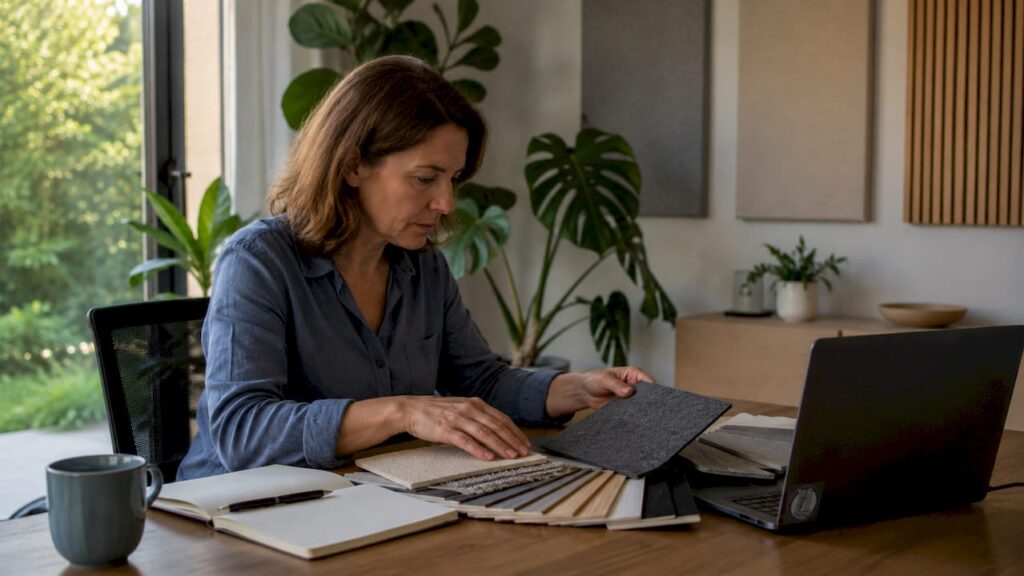
My advice: First, choose your NRC target based on the space and its intended use. Then select the material that meets that target. Only then should you consider aesthetics. In that order. And if you’re expanding a studio, be sure to use panels from a single manufacturer throughout. Compatibility and consistent performance are worth it.
– harold
Improve your studio with the right acoustic products
The trends are clear: sustainable materials, high NRC values, and modular installation are the norm for professional studios in 2026. I4studio supplies products that meet this standard.
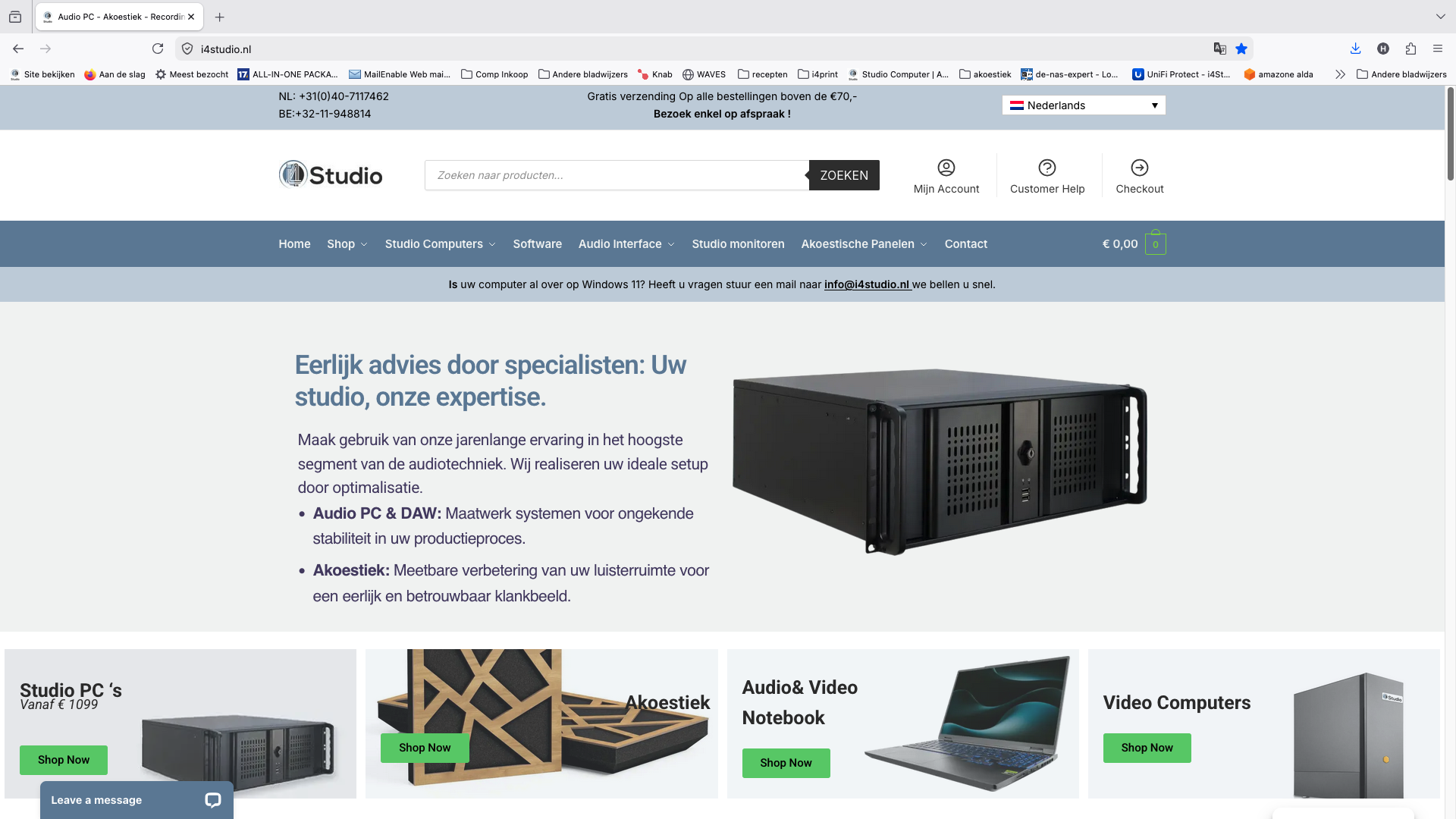
Whether you’re treating a control room or setting up a recording booth, at I4studio you’ll find professional acoustic diffusers and complete wall panel sets that meet the latest performance requirements. Combine your acoustic upgrade with the right studio equipment. Check out the complete overview of studio gear to see what else you need to make your studio complete. From acoustic panels to custom studio PCs: I4studio has everything under one roof.
Frequently Asked Questions
What is the best NRC value for a professional studio?
An NRC of 0.80 or higher is the standard for professional control rooms and recording booths. Nano-modified panels now achieve values as high as 0.95.
What is the difference between sound insulation and sound absorption?
Sound insulation prevents sound from passing through walls, floors, or ceilings. Acoustic absorption reduces reflections and reverberation within the room itself.
How much do sustainable acoustic panels for a studio cost?
The cost ranges from €50 to €200 per square meter, depending on the material, thickness, and finish. Polyester panels offer the best value for money for most studio applications.
When should acoustics be considered in the design process?
Acoustics should be addressed during the initial design phase, along with electrical systems and ventilation. Corrective measures taken after the fact cost, on average, two to three times more than preventive measures.
Are modular acoustic systems suitable for professional use?
Yes. Modular systems achieve the same NRC values as traditional installations and can be installed 35% faster. They are also repositionable, making them ideal for flexible studio layouts.