Briefly:
- Professional studio lighting requires a high CRI value, flexible dimming capabilities, and the correct color temperature for color accuracy. LED lamps with a CRI of at least 90 and a color temperature of 5600 to 6000 Kelvin are the standard, with softboxes and other light modifiers providing the desired light. Good layout and cable management make the studio safe and versatile, especially when using dimmable lighting and DMX control for maximum control.
Studio lighting options are the building blocks of any professional studio, where a high CRI, flexible dimming, and the right color temperature determine whether your work looks and feels right. Good lighting is no afterthought. For music producers, video editors, and studio owners, lighting directly determines the atmosphere, the color accuracy of your screens, and the quality of your recordings. LED technology, DMX control, and light modifiers such as softboxes are the standards on which you base your choices. This article provides a concrete overview of all relevant options, techniques, and practical tips for a studio that will be ready for professional work in 2026.
1. What are the main studio lighting options?
LED lighting is the standard for professional studios. LED lights use little energy, generate little heat, and last a long time. This makes them ideal for long sessions where you don’t want to deal with overheating or changes in light color.
The color temperature of your lighting determines how colors appear in the room. For studios, a color temperature of 5600–6000 K is considered ideal, as it mimics daylight and ensures color accuracy. Artificial light that mimics daylight also helps prevent fatigue during long work sessions.
Another equally important metric is the CRI, or Color Rendering Index. Professional LED spotlights offer a CRI of at least 90, ensuring that colors are rendered accurately. A CRI below 80 visibly distorts colors, which immediately causes problems with color correction during video editing.
In addition to LEDs, there are two main categories: continuous light sources and flash lights. Continuous light sources remain on constantly and are ideal for video recording and work lighting. Flash lighting produces a short, powerful burst of light and is primarily suited for photography. For a multifunctional studio, it’s best to choose dimmable continuous LED lighting.
Pro-tip: Do not buy lighting that does not list a CRI value on the packaging. A CRI of 90 or higher is the minimum standard for color-critical work.
2. What lighting modifiers do you use in a studio?
Light fixtures determine the quality and direction of the light. They are just as important as the bulb itself.
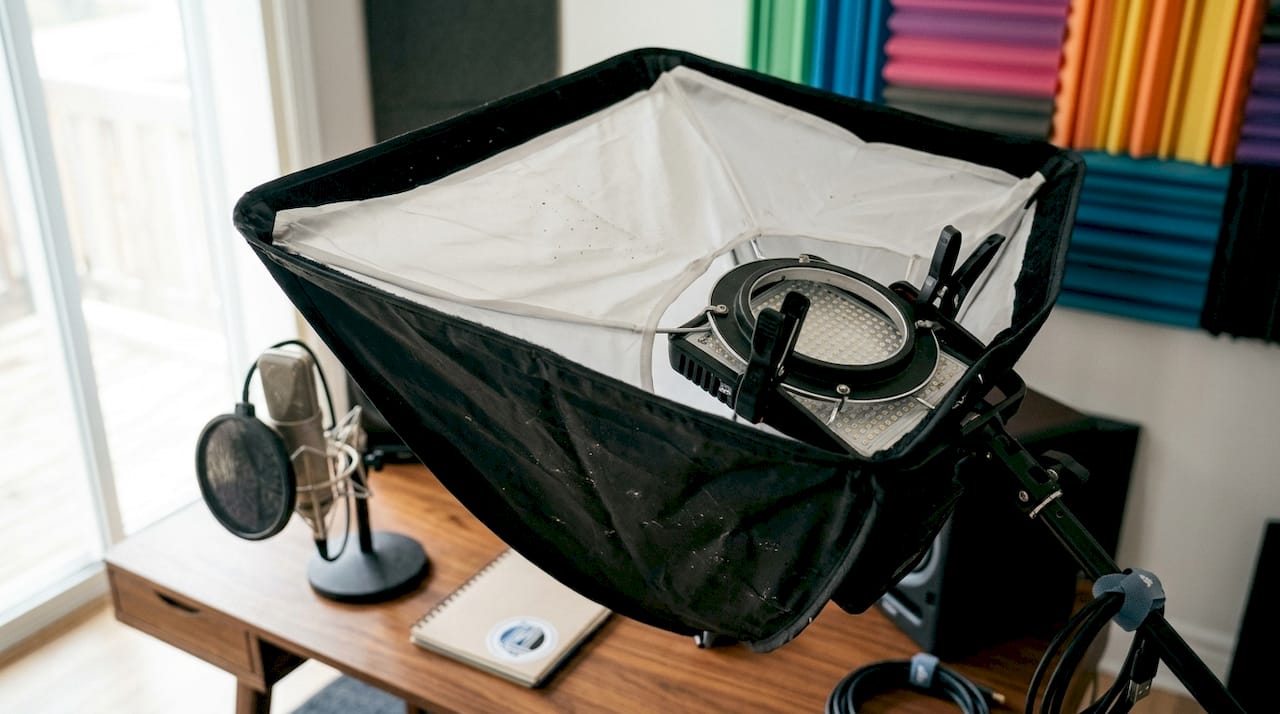
- Softbox: Creates soft, even light without harsh shadows. The larger the softbox, the softer the light. Ideal for portraits and product photography.
- Umbrella: Cheaper than a softbox and quick to set up. Provides a wider light spread, but less control over the direction of the light.
- Beauty dish: Provides a sharper, more structured light than a softbox. Popular for portrait photography with distinct shadow definition.
- Reflector: Not a light source, but a tool for reflecting light onto shaded areas. White provides soft fill light, while silver provides harsher and brighter light.
- Snoot and grid: Narrow the light beam to a narrow beam. Useful for accent lighting or illuminating a specific object.
The choice of lighting modifier depends on the type of work. Video editors who shoot their own footage are best served by using a large softbox as their main light. Music producers who want to create a stage-like atmosphere are more likely to opt for directional spotlights with a grid.
3. How do you use three-point lighting in your studio?
Three-point lighting is the standard setup for professional studio photography. The system consists of three light sources, each with its own function.
- Key light: The primary light source, positioned at a 45-degree angle in front of and to the side of the subject. This light determines the basic exposure and the direction of the shadows.
- Fill light: Positioned on the opposite side of the main light. The fill light softens the shadows created by the main light without completely eliminating them.
- Backlight (or hair light): Positioned behind the subject, directed at the neck or shoulders. This light visually separates the subject from the background and adds depth to the image.
Reflective screens act as a fourth element in this setup. They bounce light back toward the shaded side without requiring an additional light. This keeps your setup simple and your energy consumption low.
One technique that many videographers overlook is “negative fill.” This involves using black material to absorb excess light and intentionally create deeper shadows. Using black material to absorb light adds drama and contrast to the image. This works well for music videos or artistic portraits where atmosphere is more important than even lighting.
Pro-tip: Use a dome light meter to measure the incident light at your subject’s position. A dome light meter provides an accurate reading regardless of the color or reflectivity of the material.
4. How do you choose dimmable lighting and DMX control?
Dimmable lighting isn’t a luxury in a multifunctional studio. It’s a practical necessity. You don’t always work at full brightness. Sometimes you want a calm atmosphere for a creative session; other times, you need maximum brightness for a video shoot.
DMX control and dimmable LED solutions make it possible to centrally control multiple light sources and create lighting zones. DMX is the standard protocol for professional stage and studio lighting. With a DMX controller, you can adjust the brightness, color temperature, and sometimes even the color for each lamp.
RDM (Remote Device Management) is an extension of DMX. With RDM, you not only send signals to lights, but you also receive feedback from the equipment. This makes it easier to diagnose and manage large lighting systems.
Light zones are the practical application of this technology:
- Work Area: Bright, neutral lighting (5000–6000 K) for computer work and color correction.
- Shooting Zone: Dimmable and adjustable for color temperature during video or photo shoots.
- Relaxation Zone: Warmer light (2700–3000 K) for breaks or creative brainstorming sessions.
A studio with fixed, non-dimmable lighting forces you to always work at the same brightness level. That’s tiring and impractical. Invest in dimmable LED fixtures with a CRI of at least 90 and a color temperature range of 2700–6500 K for maximum flexibility.
5. How do space, color, and safety influence your choice of lighting?
The physical characteristics of your studio largely determine how your lighting works. White walls reflect light more evenly than dark walls. Dark walls absorb light, so you’ll need more power to achieve the same brightness. For a studio with a limited budget for lighting equipment, white or light gray walls are the smartest choice.
Ceiling height also plays a role. A low ceiling limits the options for floor-standing lighting stands and makes it harder to direct light from above. A ceiling height of at least 2.5 meters gives you enough space for a full three-point lighting setup.
| Factor | Effect on lighting | Recommendation |
|---|---|---|
| White walls | High light reflectance | Fewer lights needed |
| Dark walls | Light absorption | Requires more power |
| Low ceiling (< 2.5 m) | Limited setup options | Choose wall mounting |
| High ceiling (> 3 m) | More flexibility | Use a tripod or rail |
| Windows | Variable natural light | Blackout curtains |
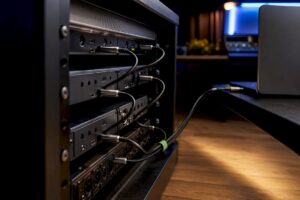
Cable management is a safety requirement that many studio owners underestimate. Cable trays and cable ties keep cables organized and prevent tripping hazards. In a studio with a lot of equipment, there can easily be dozens of meters of cable on the floor. Not only is that unsafe, but it also looks unprofessional.
Pro-tip: Always run lighting cables along the wall or ceiling and use cable trays. This will keep the floor clear for your tripod and give you room to move around.
Glare is another consideration. Never aim lights directly at screens or at the operator’s position. Use a grid or snoot to limit the light beam and prevent unwanted reflections.
6. What accessories and trends are relevant for studio owners?
Slim-profile track lighting combines design with flexibility. Slim track systems let you mount spotlights in any position you want without disrupting the interior. You can easily slide a spotlight along the track and adjust its direction without tools. For studios that frequently change their layout, this is the most practical solution.
Flexible track lighting is the future because of its easy installation and minimalist design. This is certainly true for professional studio lighting in the audiovisual sector, where flexibility and quick adjustments are standard requirements.
Essential accessories for a complete studio setup:
- Dimmer or DMX controller: For centralized control of multiple light sources.
- Tripod with light arm: Gives you freedom in positioning and height.
- Background screen or chroma key backdrop: For video recordings with changing backgrounds.
- Reflective Screen (5-in-1): White, silver, gold, black, and transparent—all in one product.
- Light Meter: For accurate exposure control independent of the camera.
For studio owners just starting out, here’s one piece of practical advice: start with one good light and build from there. Experimenting with light positions is more rewarding than immediately purchasing a complete system that you don’t yet understand. A single dimmable LED light with a softbox is all you need to achieve professional results for portrait and video shoots.
There are budget options available, but pay attention to the CRI value. A cheap light with a CRI below 80 will cost you more time in post-processing than you save on the purchase price. It’s better to choose a light from a well-known manufacturer with a guaranteed CRI of 90 or higher.
Key insights
The most effective studio lighting options combine a CRI of at least 90, a color temperature of 5600–6000 K, and dimmable LED fixtures with flexible control for optimal color accuracy and working comfort.
| Item | Details |
|---|---|
| CRI of at least 90 | A CRI below 90 distorts colors and increases post-production time for video and photography. |
| Color temperature 5600–6000 K | This value mimics daylight and prevents color distortion and eye strain during long sessions. |
| Dimmable LED with DMX | DMX control allows for different lighting zones for working, recording, and relaxing in a single room. |
| White walls save energy | Light-colored walls reflect light more evenly, so you need fewer lights. |
| Cable Management Is Safety | Cable trays and cable ties prevent tripping hazards and keep the studio looking professional and organized. |
What I’ve Learned from Years of Working with Studio Lighting
Lighting is the aspect of a studio that most people take seriously last—and notice is missing first—when it’s not right. I’ve experienced this myself. You buy good monitors, a solid audio interface, acoustic panels to control sound reflection, and then you find yourself working under a fluorescent light with a CRI of 70. Your color correction is off, your eyes are already tired after two hours, and the atmosphere in the room feels clinical.
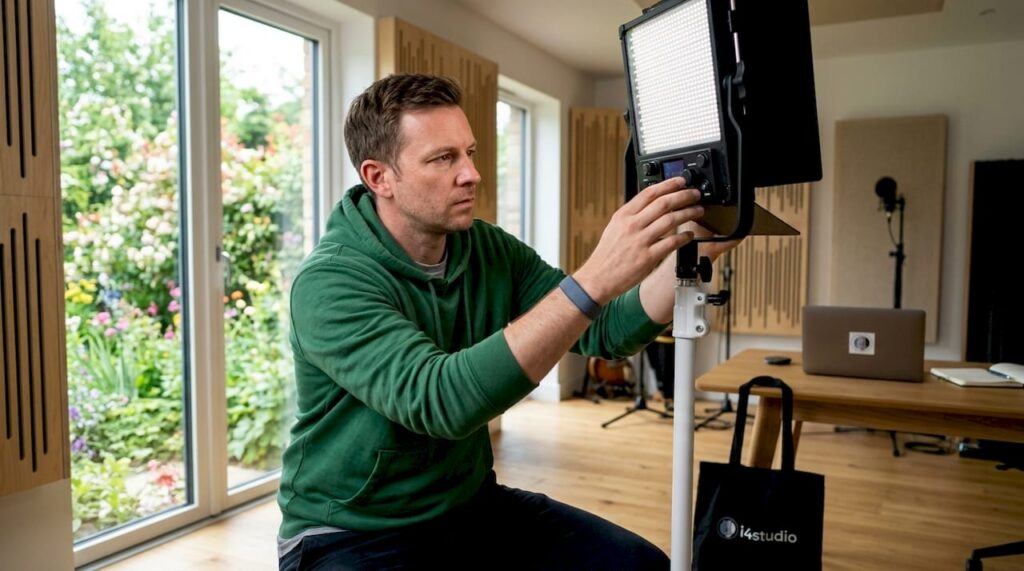
The turning point for me was the moment I set up a single dimmable LED lamp with a softbox and set the color temperature to 5600 K. The difference was immediate—not only in how the space looked, but also in how I worked. A well-lit studio encourages concentration.
Another thing I had underestimated was cable management. In a studio with multiple light sources, tripods, and extension cords, the floor quickly becomes an obstacle. Installing cable channels along the wall takes an afternoon’s work but provides years of convenience.
My advice to every studio owner: don’t start with the most expensive system. Start with one light, one softbox, and a dimmer. Experiment with different positions. Learn how light behaves in your space. Only then should you scale up to track lighting, DMX, or additional light sources. Setting up your studio is a process, not a one-time purchase.
– harold
Lighting Solutions for Your Studio at I4studio
A good studio starts with the right foundation. I4studio helps music producers, video editors, and studio owners with the equipment that really matters.
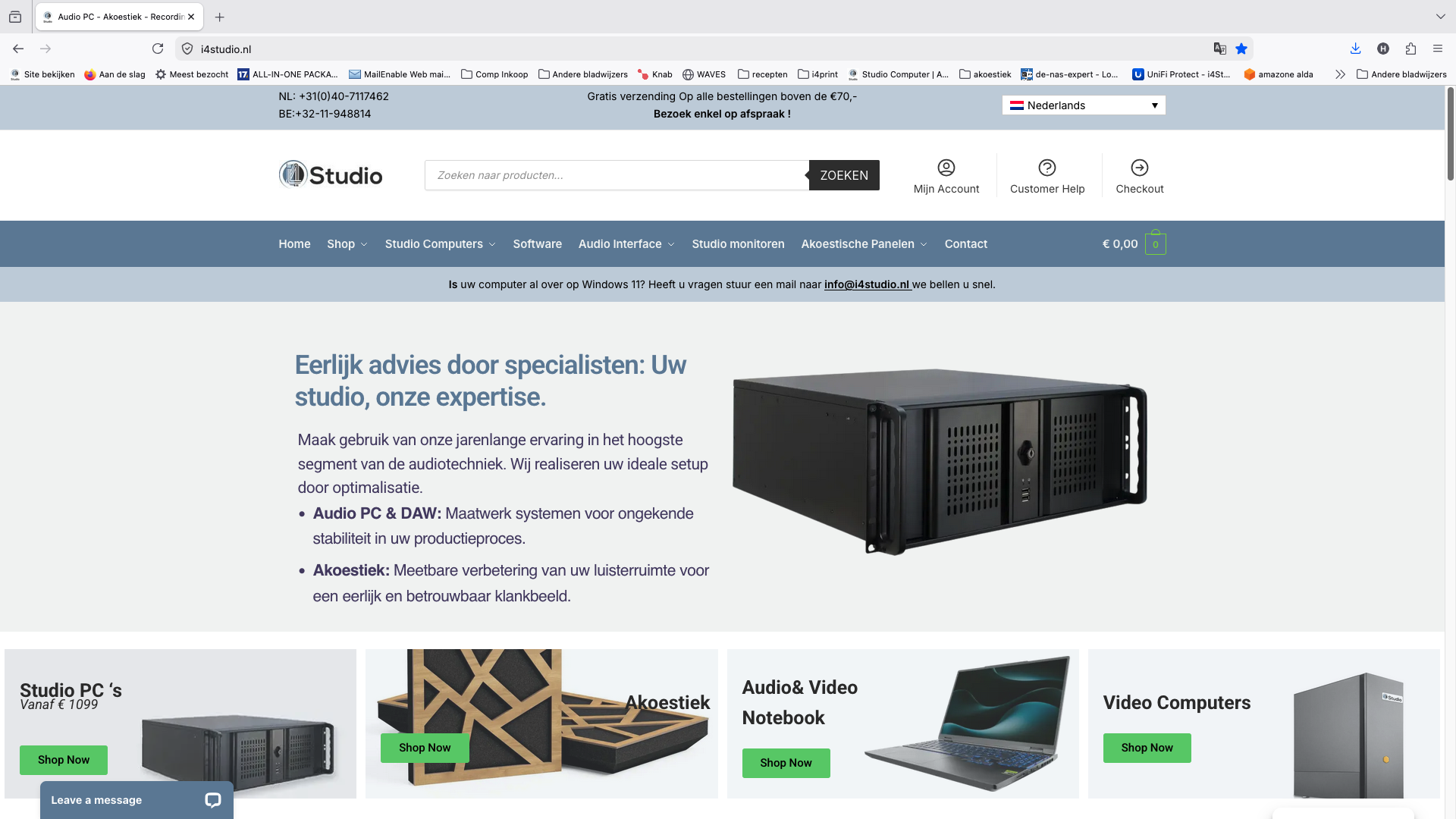
Whether you’re just starting out or looking to upgrade your existing studio, I4studio’s guide to studio gear for beginners gives you a clear overview of what you really need. From lighting to acoustics and studio PCs, I4studio delivers quality that fits your workflow and budget. Be sure to check out the home studio for content creators page for practical setup tips that align with the lighting principles covered in this article.
Frequently Asked Questions
What is a good CRI value for studio lighting?
A CRI of at least 90 is the standard for color-critical work in studios. Professional LED spotlights with a CRI of 90 reproduce colors accurately, which is essential for video editing and photography.
What color temperature do you use in a studio?
A color temperature of 5600–6000 K mimics daylight and is ideal for studios. This value ensures color accuracy and reduces eye strain during long work sessions.
What is the difference between DMX and a regular dimmer?
A standard dimmer controls the brightness of a single light. DMX is a protocol that allows you to control multiple light sources centrally and adjust the brightness and color temperature for each light individually. DMX is the standard in professional studio and stage lighting.
Is track lighting suitable for a home studio?
Track lighting with a slim rail profile is ideal for home studios. You can mount spotlights at any desired position along the rail and adjust their direction without tools, providing maximum flexibility for changing setups.
How can you prevent glare from studio lighting?
Never point lights directly at screens or the operator’s work area. Use a grid or snoot to limit the light beam. Dimmable lighting also gives you the ability to adjust the intensity to suit the situation.