
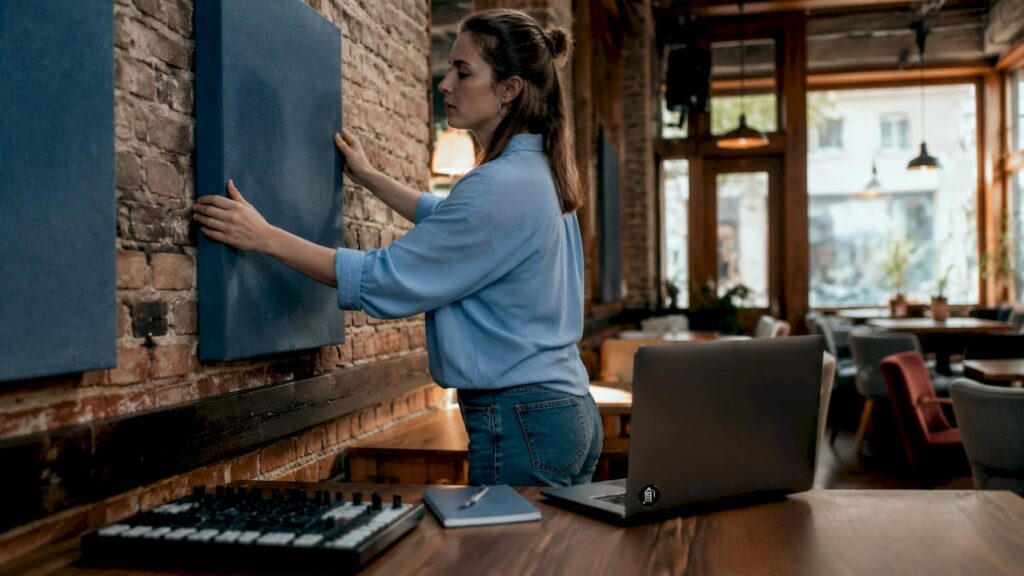
Briefly:
- Studio design involves the systematic planning of multifunctional spaces, where functions such as living, working, and relaxing come together harmoniously. The design process begins with the traffic flow and the largest piece of furniture to ensure efficient use of space and good acoustics, without fixed partitions. Smart furniture choices and visual zoning create a practical, inspiring, and creative environment tailored to personal needs.
Studio design is the thoughtful process of arranging a multifunctional space so that work, living, and relaxation come together efficiently in a single compact environment. For music producers and video editors, studio design goes beyond simply placing furniture. It directly involves acoustics, ergonomics, cable management, and zoning. Whether you’re setting up a 25m2 home studio or a professional recording space, the principles are the same: start with function, finish with atmosphere.
What is the definition of studio interior design?
Studio design is the technical term for the systematic planning and arrangement of a studio as an independent, multifunctional space. The industry also refers to this as spatial programming: the assignment of functions to zones within a single open living space.
A studio is a self-contained living space with its own kitchen and bathroom in a single open living area, without a separate bedroom. This immediately makes the design challenge more complex than with a regular apartment. Every square meter serves multiple functions at once.
This is especially true for music producers and video editors. The space must serve as a recording studio, editing suite, listening environment, and sometimes even a living room all at once. That calls for an approach that starts with functionality, not aesthetics.
What sets a studio apart from other types of housing?
The characteristics that define a studio also directly determine the design strategy:
- A single open living space with no partition walls or separate bedroom
- Private bathroom and kitchen integrated into the same space
- Compact floor area, often between 20 m² and 50 m²
- No clear functional distinction between sleeping, working, and relaxing
- Furniture and layout must offer a high degree of flexibility
Studios offer efficient solutions for single-person households, with lower housing costs than multi-room apartments. For creative professionals, this means that every design choice has a direct impact on the space’s functionality.
The biggest mistake people make is furnishing a studio as if it were an apartment with separate rooms. That leads to inefficient use of space and a cluttered result. The smart approach starts with accepting the open layout and using it to your advantage.
How can you efficiently plan the layout of a studio?
The order in which decisions are made when designing a studio determines the final result. Anyone who starts with decoration and ends with the layout will get stuck. The correct order has been established by interior design professionals and consistently yields better results.
Experts recommend starting by mapping out the route you take every day. That route is the backbone of the layout. Anything that blocks that route works against you.
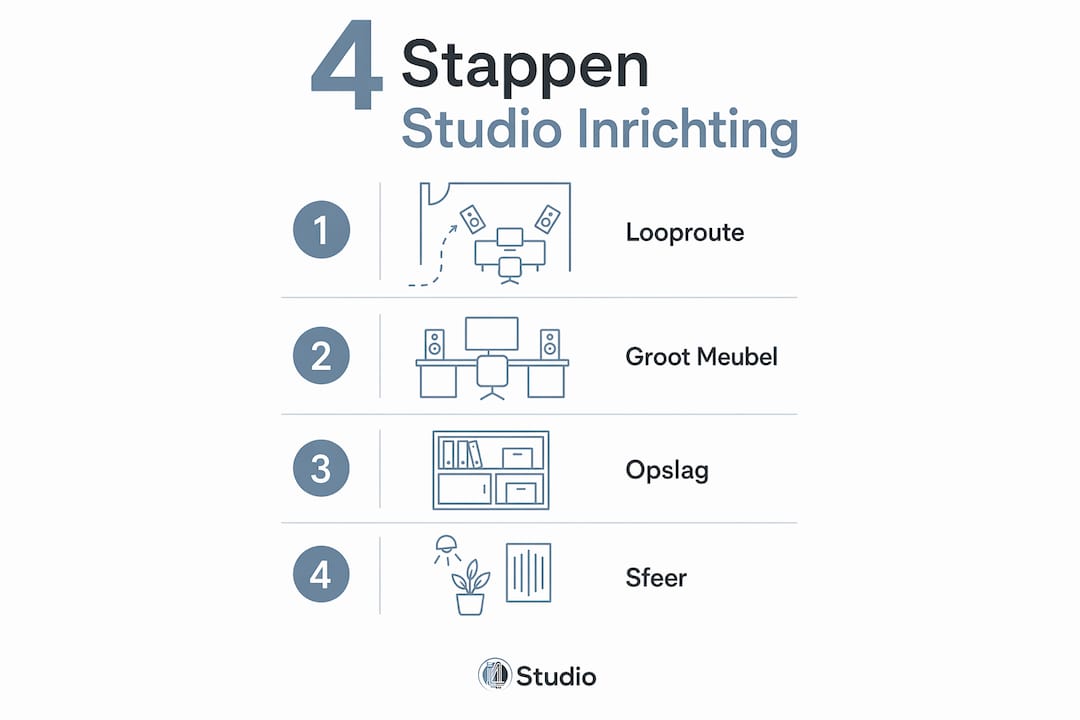
The Four Steps of Studio Planning
Determine the walking route. Map out your daily movements through the space: from the door to your workspace, from your workspace to the kitchen, and from the kitchen to the sleeping area. Keeping the walking path clear provides a sense of openness and prevents the space from feeling cramped.
Position the largest piece of furniture. In a 25m2 studio, the bed—as the largest piece of furniture —immediately sets the tone and determines the layout options. The same applies to a large desk or a mixer rack. Place this piece of furniture first.
Plan the storage. Storage determines whether a studio feels calm or chaotic. Vertical storage along the walls keeps the floor clear. Think of tall cabinets, wall shelves, and open shelving above the workspace.
Add some ambiance and decorations. Only once the functionality is right should you add color, lighting, and decorative elements. Atmosphere without functionality doesn’t work in a compact space.
Pro-tip: First, sketch out the layout on paper or use a free tool like Roomsketcher before moving any furniture. An hour of planning saves a day of lugging things around.
Zoning Without Physical Walls
Zoning is a technique for visually separating different functions without erecting walls. Limiting the color palette to 2–3 primary colors and using soft dividers such as rugs, lighting, or open shelving works best. An IKEA KALLAX unit used as a room divider provides storage on both sides and lets light through. This creates a sense of calm without making the space feel smaller.
For music producers, the work zone is the heart of the studio. That zone deserves the best lighting, the least amount of reverberation, and the most ergonomic setup. All other zones are planned around it.
Which furniture and storage solutions work best?
Multifunctional furniture is the key to a functional studio. Pieces such as beds with drawers, ottomans with storage, and tall, narrow cabinets make efficient use of space without reducing floor area.
Living effectively in a small space doesn’t mean making sacrifices—it means designing more intelligently. A common mistake is buying too many small pieces of furniture that, when combined, take up more space than a single large, multifunctional piece. It’s better to choose one good desk with built-in cable management than three separate tables.
Smart Storage Solutions for the Creative Workspace
- Beds with drawers or a fold-up system keep the sleeping area compact and provide storage space for cables, accessories, and equipment
- Wall-mounted shelves above the desk keep the workspace clear and position monitors, speakers, and controllers at eye level
- Open shelving used as room dividers separates the work area from the living area without putting up walls
- Mobile racks or trolleys for equipment provide flexibility when changing the setup
- Lightweight and open furniture, such as glass or thin metal frames, visually enhance the sense of space
Pro tip: Invest in one high-quality piece of furniture instead of several cheap accessories. Quality has a greater impact on the look and functionality of your studio than a room full of random items.
Cable management deserves a special mention. Using cable trays and Velcro keeps equipment flexible and prevents clutter. Professionals recommend using cable trays under desks and securing bundles with Velcro. Tie wraps are too permanent and make swapping out equipment unnecessarily difficult. A tidy cable setup isn’t a luxury—it’s essential for a functional studio.
How can you improve the acoustics and ergonomics in your studio?
Acoustics and ergonomics are the two pillars of a functional studio for music producers and video editors. Poor acoustics lead to poor mixing decisions. Poor ergonomics lead to physical discomfort and reduced productivity.
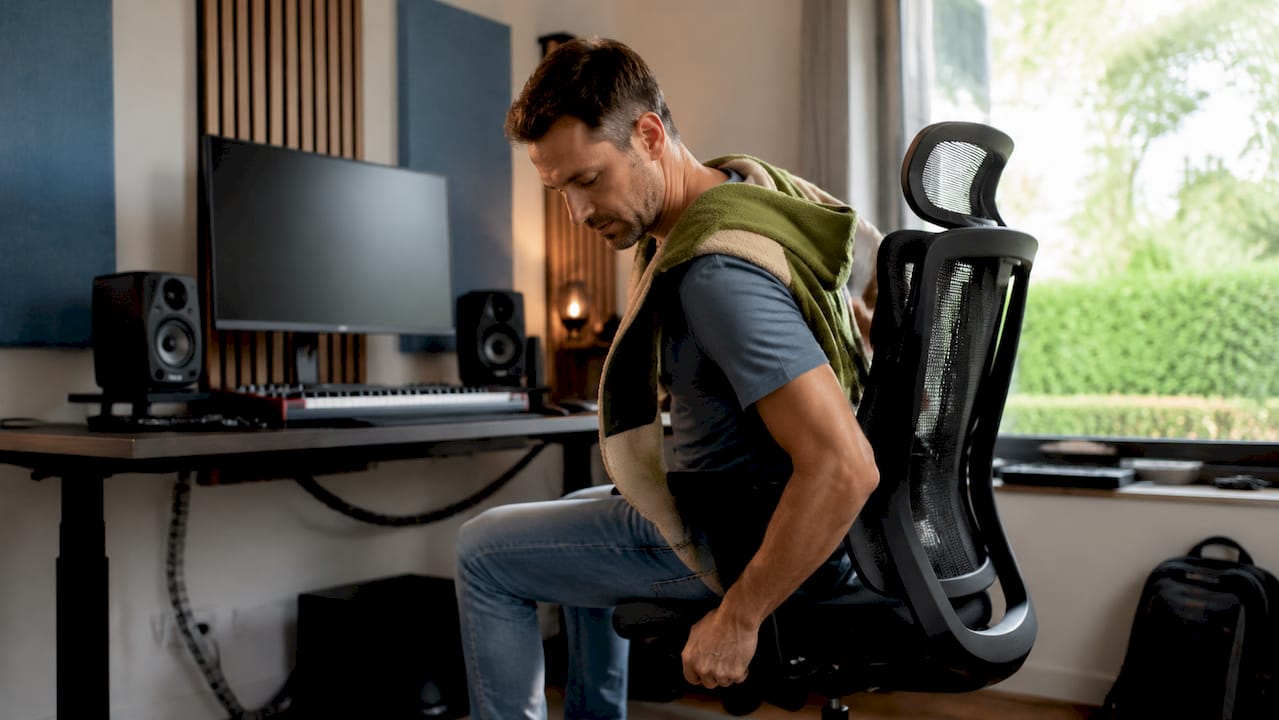
Acoustics improve significantly with the use of heavy curtains, wall-to-wall carpeting, and bookshelves filled with books, which act as effective sound diffusers and absorbers. These solutions are inexpensive and have an immediate, measurable effect on sound quality. Those willing to invest more should consider professional acoustic wall panels or diffusers designed specifically for studios.
Practical Acoustic Solutions
- Heavy curtains absorb high frequencies and reduce flutter echoes near windows
- Wall-to-wall carpet or a large rug reduces reflections from the floor, the most overlooked acoustic surface
- Filled bookshelves act as broadband diffusers and absorb mid- and low-frequency sounds
- Acoustic panels placed at the first reflection points (the side walls next to the monitor) provide the greatest improvement per euro invested
- Curtains behind the screen reduce direct glare from the screen toward the listening position
For video editors, the visual environment is also important. Daylight simulation via LED panels with adjustable color temperature provides consistent lighting for color correction. A monitor positioned at the correct height and distance helps prevent neck strain during long work sessions.
In practical terms, ergonomics in the studio means: an adjustable chair with lumbar support, a desk at the correct height (elbows at a 90-degree angle), and monitors at eye level. A sit-stand desk is an investment that pays off in fewer back problems and more energy at the end of a long session. For more in-depth information on sound quality and setup, check out the features of a professional studio.
What studio design ideas work for professional creatives?
The best studio setups for music producers and video editors combine functionality with a personal atmosphere that stimulates creativity. Here are some concrete examples and comparisons to help you make your choice.
| Situation | Approach | Benefit |
|---|---|---|
| Home studio up to 25 m² | Wall-mounted desk, fold-out bed, acoustic curtains | Maximum floor space, flexible use |
| Home Studio 25 m²–50 m² | Dedicated workspace with KALLAX room divider, ergonomic desk | Clear zoning, professional look |
| Professional studio | Custom furniture, acoustic panels, dedicated cable management | Optimal sound quality, durable setup |
| Shared Creative Space | Rolling shelves, modular furniture, shared storage | Flexibility for multiple users |
Scaffold tube furniture is a popular choice for creative studios. It can be custom-made, has an industrial look, and is easy to adjust as the layout changes. A scaffold tube desk with an integrated cable tray and wall-mounted shelves gives a professional look without the cost of custom cabinetry.
Color plays a bigger role than many producers realize. Neutral tones such as gray, white, and dark blue help keep the focus on work. Bold accents on a single wall add character without overwhelming the space. Two-tier lighting—a task light above the desk and indirect ambient lighting—visually clarifies the transition from work to relaxation.
For home studio design ideas tailored to musicians and producers, I4studio offers concrete examples of practical layouts that you can implement right away.
Interior design professionals recommend paying attention to how the space is actually used and not simply choosing furniture without first critically evaluating its functions. That sounds logical, but in practice, most people choose furniture based on aesthetics and then adjust the layout accordingly. The best design studios do it the other way around.
Key insights
Effective studio design always starts with the traffic flow and the largest piece of furniture, and only then does it build up the atmosphere and decoration.
| Item | Details |
|---|---|
| Definition of Studio Design | The systematic layout of a multifunctional space with attention to function, zoning, and acoustics. |
| Order of Arrangement | Start with the traffic flow, position the largest piece of furniture, plan storage, and then add ambiance. |
| Multifunctional Furniture | Choose beds with drawers, wall shelves, and open cabinets as room dividers to maximize space. |
| Acoustics Without a Major Investment | Heavy curtains, carpeting, and bookshelves filled with books improve sound quality immediately and affordably. |
| Cable Management | Use cable channels and Velcro strips under desks to create a flexible and tidy workspace. |
My Honest Take on Studio Design After Years of Hands-On Experience
I’ve seen dozens of studios grow from an empty room into a fully functional production environment. The most common mistake isn’t buying the wrong piece of furniture. It’s starting to buy things before the layout is finalized.
The second mistake is treating acoustics as an afterthought. Producers first buy expensive monitors, then a good desk, then a controller, and only when there’s money left over do they think about acoustic treatment. That’s the wrong order. A good monitor in a room with poor acoustics sounds worse than an average monitor in a well-treated room. Acoustics aren’t a luxury. They’re the foundation.
What I’ve learned myself: creating a single strong zone works better than trying to optimize the entire space. Choose the workspace as the core, treat that zone acoustically, set it up ergonomically, and let the rest of the space take shape around it. That provides focus and tranquility—two things every producer and editor needs.
Personal needs are the guiding factor. A video editor has different priorities than a beat producer. The former benefits from consistent lighting and a large screen at the right height. The latter benefits from a quiet environment and a good monitor setup. Don’t just copy a studio you see online. First, analyze what you do on a daily basis, and then set up your space accordingly.
– harold
Build your studio on the right foundation with I4studio
A well-designed studio requires the right equipment in the right place. I4studio provides studio equipment and acoustic solutions tailored to the needs of music producers and video editors, from home studios to professional recording spaces.
Are you just getting started, or do you want to improve your current setup? Check out this overview of essential studio gear for beginners and discover what you really need for a functional studio. For those who want to tackle the acoustics, I4studio offers a wide range of acoustic diffusers that have an immediate impact on the sound quality of your space. Professional setup starts with making the right choices.
Frequently Asked Questions
What is the definition of studio interior design?
Studio design involves the systematic planning of a multifunctional space that integrates function, zoning, acoustics, and ergonomics. It differs from ordinary interior design in that every choice must serve multiple purposes simultaneously.
How do you start furnishing a studio apartment?
Start by sketching out the layout, then position the largest piece of furniture, plan the storage, and finally add ambiance and decorations. This order prevents you from having to rearrange everything later.
How can you improve acoustics without expensive panels?
Heavy curtains, wall-to-wall carpeting, and well-stocked bookshelves act as effective sound diffusers and absorbers. These solutions immediately improve sound quality without requiring a major investment.
What kind of furniture is best for a small studio?
Multifunctional furniture, such as beds with drawers, ottomans with storage, and tall, narrow cabinets, makes the most efficient use of space. Vertical storage along the walls keeps the floor clear and makes the room feel more spacious.
What is the difference between zoning and room layout?
Zoning uses visual elements such as rugs, lighting, and open shelving to separate functions without physical walls. Room partitioning involves installing actual partition walls, which reduces the size of the space and blocks light in a studio.