
Briefly:
- Multifunctional furniture, such as sofa beds and extendable tables, saves space in small home studios. Visual zoning using textiles, lighting, and furniture creates a sense of organization without physical partitions. Smart material choices and proper acoustic planning result in a larger and more functional workspace.
Smart studio furniture ideas are the foundation of any functional home studio, especially if you’re working in a space of 20–35 m². Musicians and studio owners face a unique challenge: the space must serve as a recording studio, mixing station, and sometimes even a bedroom. Multifunctional furniture such as sofa beds, Murphy beds, and pull-out tables are the standard solution in professional interior design. Brands like IKEA and Swissflex offer affordable options, but the choice goes beyond budget alone. This article gives you concrete, tried-and-true ideas for every square meter.
1. What studio furniture ideas work best in a home studio?
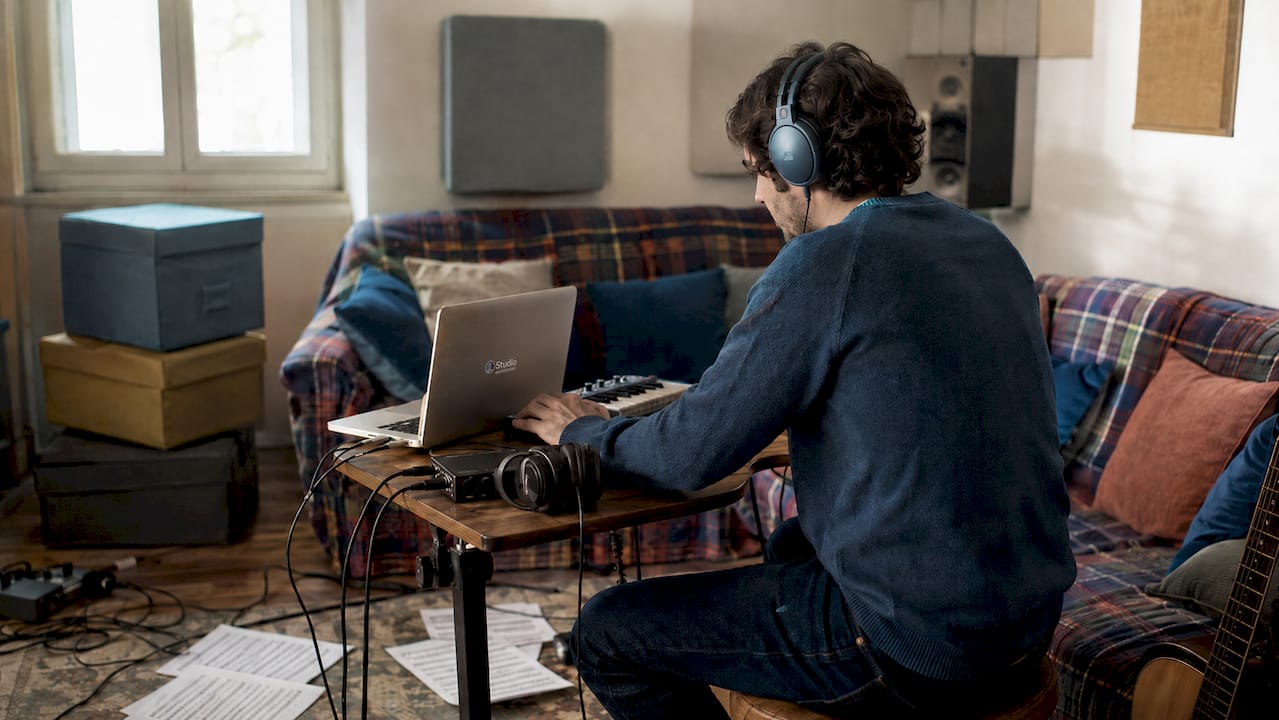
Multifunctional furniture is essential for saving space in a compact studio. The four most effective types are sofa beds, Murphy beds, pull-out tables, and storage ottomans. Each type solves a different problem, depending on how you use your space.
The choice between a sofa bed and a Murphy bed depends on how often you need the sleeping function. A sofa bed can be converted quickly and is suitable for daily use. A Murphy bed frees up more floor space during the day, which makes a big difference for a musician with a keyboard or drum pad.
Extendable tables work great as a work surface for your DAW setup and can be folded away when you’re recording and need more room to move around. Storage ottomans combine seating comfort with storage space for cables, headphones, and accessories.
- Sofa bed: Quick to set up, takes up less floor space during the day, suitable for daily use
- Murphy bed: Maximum floor space during the day, ideal for larger instruments
- Extendable table: Flexible work surface, compact when folded
- Storage ottoman: Serves a dual purpose as both a seat and storage space for studio accessories
Pro-tip: Always test multifunctional furniture with all parts fully extended. A table that’s hard to unfold or a bed that creaks with every movement defeats the purpose, even if it saves space on paper.
2. How do you divide a small studio into functional zones?
Using fabric and lighting to create visual zones is more effective than solid walls in small studios for maintaining a sense of calm and keeping things organized. You don’t need to build walls to separate a recording area from your mixing station. Curtains, rugs, and task lighting do the same job without taking up any extra space.
Walkways are non-negotiable in this context. Walkways in studios measuring 20–35 m² must be at least 60–80 cm wide to allow for adequate freedom of movement. That may sound spacious, but with a studio desk, monitors on stands, and a keyboard stand, that space quickly disappears.
Arrange furniture as islands in the room instead of pushing everything against the wall. Placing furniture as islands creates zones without forming separate rooms. A bookshelf serving as a backrest for your workspace visually separates the recording area from the living area.
Draw walking paths on a floor plan before placing furniture. If you skip this step, you won’t realize the problems until everything is already in place.
Practical tips for smart zoning:
- Use a rug to visually define the listening area
- Hang floor-to-ceiling curtains to create a soft division between the sleeping and working areas
- Position your monitor stands so that your studio monitors are set up correctly without blocking walkways
- Leave 90 cm of headroom on one side of the sleeping area for comfortable use
3. Materials and lighting that make your studio look bigger
Furniture with legs and transparent materials create a more spacious feel in small studios. The explanation is simple: when you can see the floor beneath a piece of furniture, your brain perceives the space as larger. A glass side table or a chair on slender metal legs does more for the sense of space than any color palette ever could.
Lighting is just as important as choosing furniture. Multiple light sources instead of a single ceiling light enhance the atmosphere and create a sense of space. A single central light casts harsh shadows and makes a small room appear even smaller. Use desk lamps, floor lamps, and indirect lighting behind your monitor setup to create a pleasant working environment.
Tall cabinets are great for storage, but place them in the wrong spot and your studio will feel like a hallway. Placing tall cabinets selectively in alcoves or next to doors keeps sightlines and natural light unobstructed. Never place them in front of a window or across from your listening position.
Pro-tip: Choose light wood-toned or white furniture as your base color and add pops of color with accessories like throw pillows and acoustic panels. This will keep the space airy without making it feel dull.
Dutch suppliers such as Flinders and BoConcept offer designer furniture with sleek lines that fit well in a compact studio. For acoustic wall panels that are also decorative, I4studio offers a wide range that combines function and style.
4. Choosing studio furniture within your budget
The budget for studio furniture varies widely: for under €500, you’ll find basic options at IKEA and in secondhand stores, while €500–€2,000 is the price range for quality furniture and custom pieces. The choice depends on how long you plan to stay in the space and how heavily you’ll use the furniture.
| Budget class | Options | Quality | Functionality |
|---|---|---|---|
| Under $500 | IKEA NORSBORG, BRIMNES, used | Basic | Sufficient for first-time buyers |
| €500–€2,000 | Flinders, BoConcept, local furniture makers | Good | Better finish and durability |
| Over €2,000 | Custom-made, Swissflex, design studios | Excellent | Fully tailored to your space |
IKEA NORSBORG and BRIMNES are ideal for first-time buyers on a tight budget who need a versatile piece of furniture. The BRIMNES sofa bed has a built-in storage drawer and is easy to assemble. The NORSBORG is a sturdy basic sofa that can also be used as a place to sleep.
Secondhand furniture from Marktplaats or Facebook Marketplace is a great option for the basic setup of your studio. Instead, invest the money you save in a good office chair or a high-quality monitor stand. You’ll use those two items every day and notice the difference right away.
Local furniture makers offer custom pieces that fit perfectly into your nooks and crannies. It costs more, but a custom-made studio desk with built-in cable channels and monitor mounts is an investment that will last for years.
5. Practical tips for avoiding frustration
The biggest problem with multifunctional furniture is that people only check the dimensions when it’s folded up. Testing studio furniture in its fully extended position prevents issues with walkways and daily use. Always measure the largest dimensions of extendable tables and sofa beds in their extended position, not when they’re folded away.
Multifunctional furniture is only truly smart if both functions work well and are practical for everyday use. A sofa bed that’s uncomfortable to sleep on or a table that’s difficult to unfold is frustrating, even if it saves space. Don’t buy a piece of furniture just because it’s compact.
Here are the five most practical things to check before buying a multifunctional piece of furniture:
- Check the operating mode. Unfold everything completely and check to see if there is still 60–80 cm of space left to walk through.
- Test the mechanism. Pull out the table, fold down the bed, and do this ten times. If it’s already a struggle in the store, it won’t get any easier at home.
- Check the storage area. Is the drawer or compartment big enough for what you actually want to put in it?
- Assess the stability. A pull-out table that wobbles when you’re typing is unusable as a workspace for music production.
- Ask about the warranty. Multifunctional mechanisms wear out faster than fixed furniture. A two-year warranty is the minimum.
Pro-tip: Visit a furniture showroom and simulate your daily routine right there. Sit down, fold out the bed, extend the table. Five minutes of testing in the store can save you months of frustration at home.
For musicians, easy access to storage space is especially important. Cables, headphones, and external hard drives should be readily accessible, not tucked away in the back of a deep cabinet. Use open shelves or drawers at eye level for items used daily. Store seasonal items in closed cabinets.
6. Creative space planning for musicians
A smart studio layout for musicians starts with determining your primary activity. Do you mainly record, or do you mostly mix and master? That choice determines which piece of furniture deserves the most space.
Recording studios benefit from a central open floor plan for microphone placement and freedom of movement. Place your studio desk along one wall and keep the center clear. Mixing and mastering studios revolve around the listening position: your desk is centered, the monitors are at the correct distance and angle, and the rest of the space fills in around that core.
Vertical space is consistently underutilized in small studios. Wall shelves above your desk keep your work surface clear and provide space for external hard drives, controllers, and reference materials. Use the space above doors for lightweight storage baskets. Every inch counts.
For musicians looking for home studio design ideas to create a complete workflow, the combination of a good studio desk, an ergonomic chair, and acoustic wall panels is the most effective basic setup. These three elements account for 80% of your daily comfort while working.
7. Acoustics as part of your furniture plan
Acoustic treatment isn’t just an accessory—it’s a design decision. Where you place your acoustic panels helps determine how you arrange the rest of your furniture. Designing a studio for sound quality starts with identifying the primary reflection points: the side walls next to your monitors and the back wall behind your listening position.
Bookshelves filled with books and vinyl records act as diffusers. They break up standing waves without requiring expensive acoustic materials. This is a classic trick from professional studios that works exceptionally well in small home studios, too.
Soft furnishings such as sofas, upholstered chairs, and rugs absorb higher frequencies. A bare studio with hard floors and bare walls sounds like a bathroom. Add some textiles, and your listening position improves immediately—even before you’ve hung a single acoustic panel.
Key insights
Smart studio furniture ideas combine multifunctional pieces, thoughtful zoning, and thoughtful use of materials to make the most of every square foot of a home studio.
| Item | Details |
|---|---|
| Test in the fully extended position | Always measure the fully extended dimensions of tables and beds before you buy. |
| Walking paths are sacred | Keep at least 60–80 cm of space free for freedom of movement in your studio. |
| Furniture as islands | Place furniture away from the wall to create zones without separate rooms. |
| Allocate Your Budget Wisely | Spend under €500 on basic frames, but choose quality for items used daily. |
| Planning Acoustics and Furniture Together | Upholstered furniture and bookshelves improve sound quality at no extra cost. |
What I’ve learned about style and function in a small studio
After years of working with musicians and studio owners, one thing stands out to me: the most beautiful studios are rarely the most functional. And the most functional studios are rarely the most beautiful. The best setups are those where the owner has consciously decided what he is willing to sacrifice.
I see too often that people buy a Murphy bed because it looks good on Instagram, but never use it because the mechanism is too cumbersome. Or a glass desk that looks sleek but ends up covered in fingerprints after every session, which is distracting. Functionality always trumps aesthetics when you’re working in that space every day.
Here’s what I always recommend to musicians: start with the walking route. Sketch it out on paper first. Anything that blocks that route has to go—no matter how beautiful it is. A studio where you can move freely feels bigger, works better, and inspires more than a room full of designer furniture that you constantly have to weave around.
Lesson two: buy less, but buy better. One good studio desk, one ergonomic chair, and two sturdy monitor stands are worth more than five cheap pieces of furniture that you’ll have to replace in two years. Space is limited. Don’t fill it with compromises.
– harold
I4studio can help you with your studio design
A well-equipped studio starts with the right furniture, but ends with the right equipment. I4studio specializes in studio acoustics and custom-built studio PCs that fit seamlessly into a compact home studio setup.
Whether you’re just starting out or looking to upgrade your existing setup, I4studio has everything you need. From acoustic wall panels that enhance your studio’s acoustics and aesthetics to complete studio gear packages for beginners that are ready to use right away. Browse our selection and build your ideal studio based on your space and budget.
Frequently Asked Questions
What kind of furniture is best suited for a small studio apartment?
Sofa beds, Murphy beds, pull-out tables, and storage ottomans are the most practical choices for small studios. They combine two functions into a single piece of furniture, thereby saving valuable floor space.
How wide should walkways be in a studio?
Walkways in studios measuring 20–35 m² should be at least 60–80 cm wide to allow for adequate freedom of movement. Narrow walkways make a studio uncomfortable and unsafe to use.
What is the best budget for studio furniture?
For under €500, IKEA NORSBORG and BRIMNES offer good basic options. For better quality and durability, a budget of €500–€2,000 is realistic, with custom-made furniture being the best choice for budgets over €2,000.
How can you make a small studio look bigger?
Furniture on legs, transparent materials, and multiple light sources enhance the sense of space. Tall cabinets should only be placed in alcoves or next to doors, never in front of windows or opposite the listening position.
Should I factor acoustics into my furniture plan?
Yes. Soft furnishings such as sofas and rugs absorb higher frequencies and immediately improve the sound quality. Bookshelves filled with books and vinyl records act as diffusers and are a cost-effective addition to professional acoustic panels.