
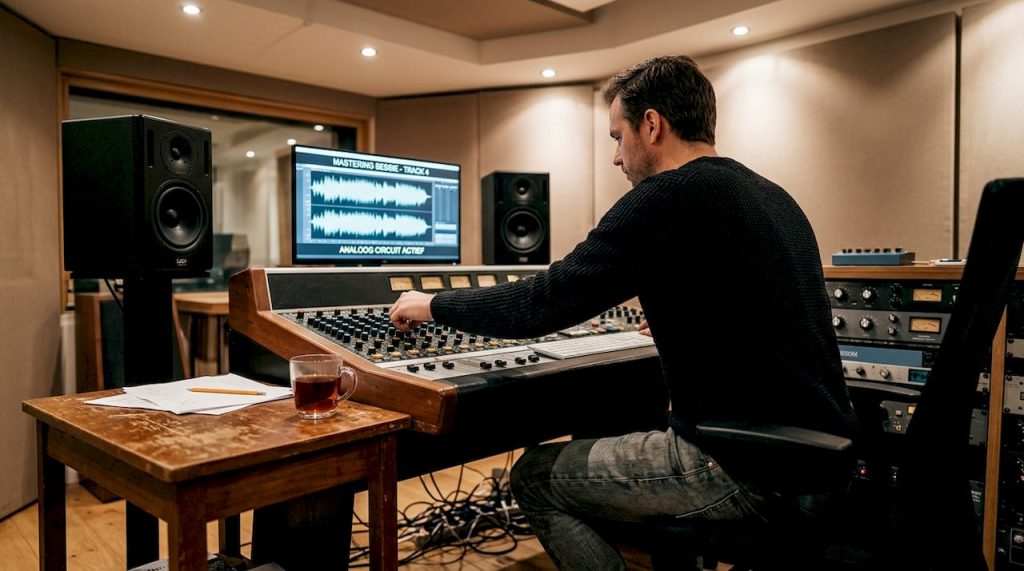
Many music producers and video editors think their track is done as soon as the mix sounds good. That’s an understandable assumption, but mastering is the step that makes the difference between a rough mix and a professional finished product. Without mastering, your track lacks the consistency, volume and clarity needed to sound good on any playback system, from studio monitors to telephone speakers. In this article you’ll learn exactly what mastering entails, what role a mastering studio plays, how the process works step by step, and when it’s better to choose a professional studio over home mastering.
Table of contents
- What is mastering and why is it important?
- The function of a mastering studio: more than just mixing
- The mastering process explained step by step
- Mastering studio versus home mastering: a comparison
- The effect of studio acoustics on final quality
- Your ideal mastering studio: solutions for every situation
- Frequently Asked Questions
Key Insights
| Item | Details |
|---|---|
| Mastering makes professional | The finishing touch of mastering transforms your sound to radio quality. |
| Studio environment is decisive | Properly set up rooms make for accurate listening decisions and better final mix. |
| Home mastering has limits | Without studio acoustics and specialized equipment, results are less predictable. |
| Step-by-step process required | Mastering consists of multiple steps for a balanced, professional whole. |
| Practical solutions available | Suitable products and services help improve your studio immediately. |
What is mastering and why is it important?
Mastering is the final step in the music production process. Whereas mixing is all about balancing individual tracks, such as drums, bass, vocals and guitar, mastering focuses on optimizing the entire stereo file. Think refining frequency balance, adjusting dynamics and setting the right volume for distribution.
The difference between mixing and mastering is greater than many producers realize:
- Mixing: Balancing individual tracks, panning, effects per channel
- Mastering: Optimizing the final result as a whole, loudness, EQ and width
- Purpose of mastering: Making sure the track sounds consistent on all playback systems
- Distribution: Mastering prepares a track for streaming, vinyl, CD or broadcast
A well-mixed track can still sound too soft, too sharp or too dull on other systems. Mastering solves that. Improving sound quality starts with understanding that mixing and mastering are two separate processes, each with its own purpose.
“Mastering makes the final mix consistent and ready for distribution, and maximizes the listening experience.”
A good computer for music production also plays a role: sufficient computing power ensures that mastering plugins and analysis tools work without latency or dropouts. Want to know more about exactly what audio mastering entails? Wikipedia provides a clear technical overview.
The function of a mastering studio: more than just mixing
A mastering studio is no ordinary recording room. It is a specialized environment designed for one purpose: to review and optimize audio with maximum accuracy. That requires both high-quality equipment and an acoustically treated space.
What sets a mastering studio apart:
- Specialized monitors: Flat-response speakers that do not add color to the sound
- High-quality converters: for the most transparent digital-to-analog conversion possible
- Acoustic treatment: Absorbent and diffusing panels that eliminate reflections and standing waves
- Reference environment: A space that honestly reflects what is really in the audio
- Specialized software and hardware: EQ, compression, limiting and stereo imaging on a professional level
Improving studio acoustics isn’t just relevant for mastering engineers. Even if you set up a home studio professionally, you immediately notice the difference acoustic treatment makes in your decisions. A mastering engineer also has a trained ear and an objective eye, something you may find difficult to have as a producer of your own music.
A mastering studio has specialized equipment and treated rooms for objective sound assessment. This is not a luxury, but a necessity for reliable results.
Pro-tip: Always send your mix to a mastering engineer with some headroom. Make sure the peak is no higher than -3 dBFS to allow room for mastering processing without clipping.
The mastering process explained step by step
The mastering process is structured and methodical. Each step has a specific purpose and contributes to the end result. Professional recording and mixing is the foundation, but mastering is the finishing touch.
- Preparation: The engineer receives the mix, checks the file format and listens without adjustments
- Critical listening: Comparison with reference tracks to identify weaknesses
- EQ corrections: Fix frequency problems, such as excessive bass or harsh highs
- Compression: controlling dynamics so that soft and loud parts are better balanced
- Stereo image optimization: Refine width and depth of stereo image
- Limiting: Setting the maximum volume without clipping, in accordance with streaming standards
- Quality control: comparison with reference tracks and checking for errors or artifacts
The tools used in this process:
| Tool | Function |
|---|---|
| Loudness meter | Measuring LUFS values for streaming |
| Spectrum analyzer | Visually check frequency balance |
| Oscilloscope | Detecting phase problems |
| Reference track | Compare with commercially released music |
| Limiter | Peak volume setting without distortion |
The mastering process includes listening sessions, analog and digital processing and quality control. Want to know which mastering software best suits your workflow? The choice depends on your budget and experience. The basics of music mastering are clearly explained by iZotope for producers who want to start out on their own.
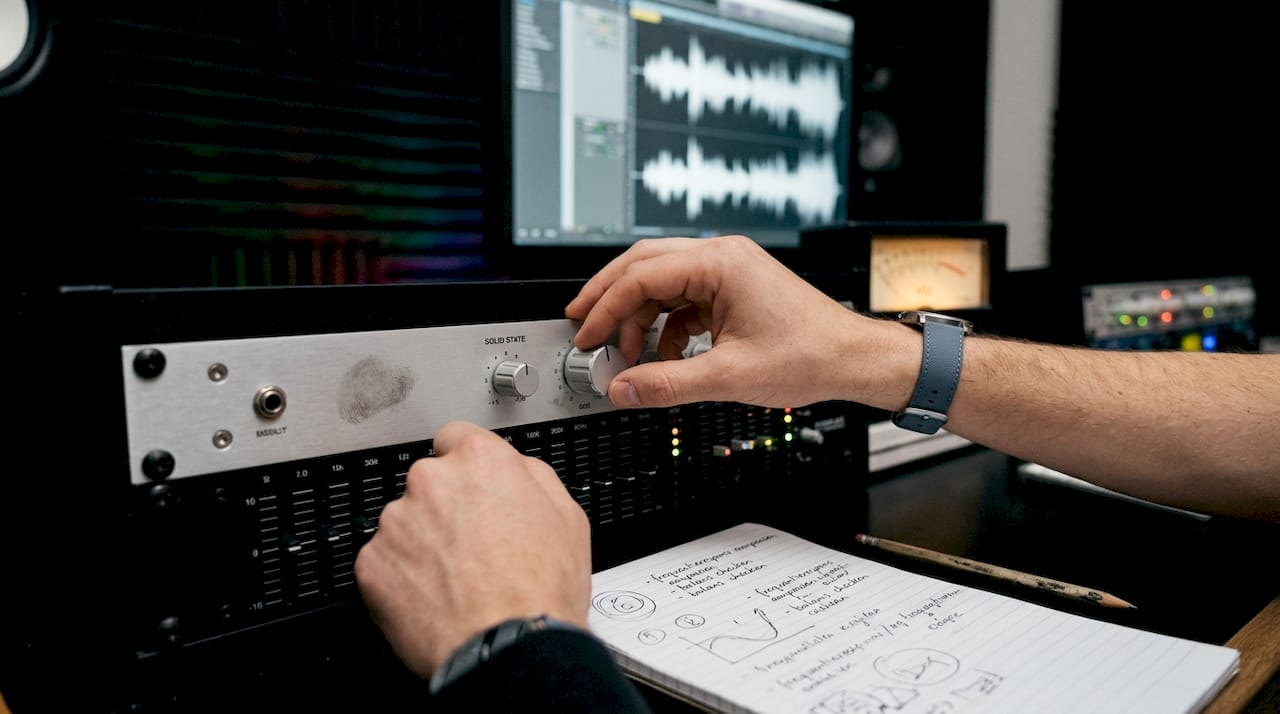
Pro-tip: Always use a loudness meter that measures LUFS, not just dBFS. Spotify normalizes to -14 LUFS, Apple Music to -16 LUFS. Tune your mastering accordingly to avoid volume loss in streaming.
Mastering studio versus home mastering: a comparison
Self-mastering at home is more accessible than ever. Yet there are clear differences in results and reliability. Professional mastering studios deliver consistency, accuracy and more reliable results than home mastering.
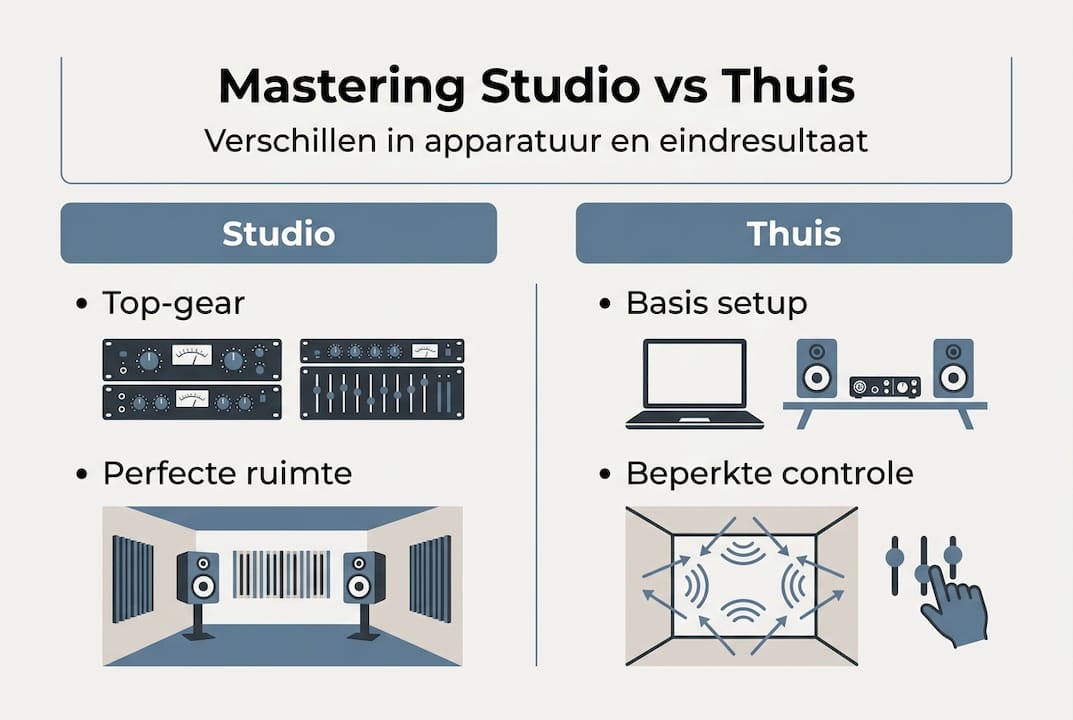
| Aspect | Professional studio | Home mastering |
|---|---|---|
| Acoustics | Treated, neutral | Often untreated, colored |
| Monitors | Flat-response, reference quality | Variable, consumer quality |
| Experience | Specialized engineer | Depending on own knowledge |
| Cost | Higher per track | Lower, but time investment large |
| Objectivity | High, fresh perspective | Low, too close to own work |
| Consistency | High, proven workflow | Changing |
Common mistakes in home mastering:
- Too much bass boost due to untreated space
- Overcompression causing dynamics to disappear
- Wrong loudness settings for streaming
- Phase problems audible only on other systems
When do you choose a professional studio? If you’re planning a release for major platforms, preparing a label pitch or simply want the best results. Want to set up your home studio for better DIY results? Then acoustic treatment is the first priority. The difference between professional and home mastering is vast, but with the right setup you can get a lot further at home.
The effect of studio acoustics on final quality
Acoustics is the foundation of any mastering decision. If the room isn’t right, your decisions won’t be right either. A room that is too gallic will make you think there is too little reverb. A room with too much bass buildup makes you want to turn down the bass, while on other systems it sounds too thin.
What good studio acoustics do:
- Absorption: Reduces reflections and reverberation for clear, direct sound
- Diffusion: Diffuses sound waves so that the room remains alive without echo
- Bass trap: Captures low frequencies that otherwise accumulate in corners
- Symmetry: Provides an even stereo image left and right
- Correct monitor placement: Reduces room modes and improves frequency response
“Good studio acoustics prevent sound bias and make mastering decisions more reliable.”
For your home studio, start with acoustic panels at the first reflection points and a bass trap in the corners. That will have more impact than a more expensive pair of monitors. i4studio’s studio acoustics guide gives concrete steps for both small and larger spaces. Want to know how to improve home studio acoustics? Sound On Sound has a practical guide for any budget size.
Your ideal mastering studio: solutions for every situation
Now that you understand the power and workings of mastering studios, it’s time to turn that knowledge into action. Whether you want to build a professional mastering environment or upgrade your home studio, the right products will make all the difference.
At i4studio, you’ll find everything you need for a serious studio setup. From premium studio acoustics services like absorber panels, bass traps and diffusers to custom-built music production PCs powerful enough for the heaviest mastering plugins. Our studio PCs are specially configured for low latency and maximum stability, so you can focus on the sound instead of technical problems. Take a look and find out which solution best suits your situation and budget.
Frequently Asked Questions
Can I master myself without a studio?
Home mastering is possible, but professional studios provide consistent and reliable masters that sound good on any system. Proper acoustic treatment at home will get you a long way.
What equipment is essential in a mastering studio?
A mastering studio includes sophisticated converters, flat-response monitors, acoustic panels and specialized software and hardware. Specialized equipment is characteristic of any serious mastering environment.
What is the difference between mixing and mastering?
Mixing focuses on balancing individual tracks, while mastering is about optimizing the complete end result. Mixing and mastering are two separate processes, each with its own purpose and approach.
Are studio acoustics really that important in mastering?
Without good acoustics, you miss details and the end result may disappoint on other systems. Good acoustics are crucial for reliable mastering decisions and a consistent end result.
Recommendation
- Studio acoustics: improve sound quality at home in 2026
- Home Studio Sound Recording Tips: From Space to Mix – https://i4studio.nl/
- Studio Acoustics Improvement: Practical Guide For Professional Sound Spaces – https://i4studio.nl/
- Sound attenuation in Studio: Complete Guide For Optimal Acoustic Management – https://i4studio.nl/