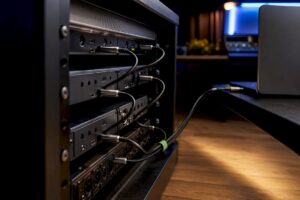
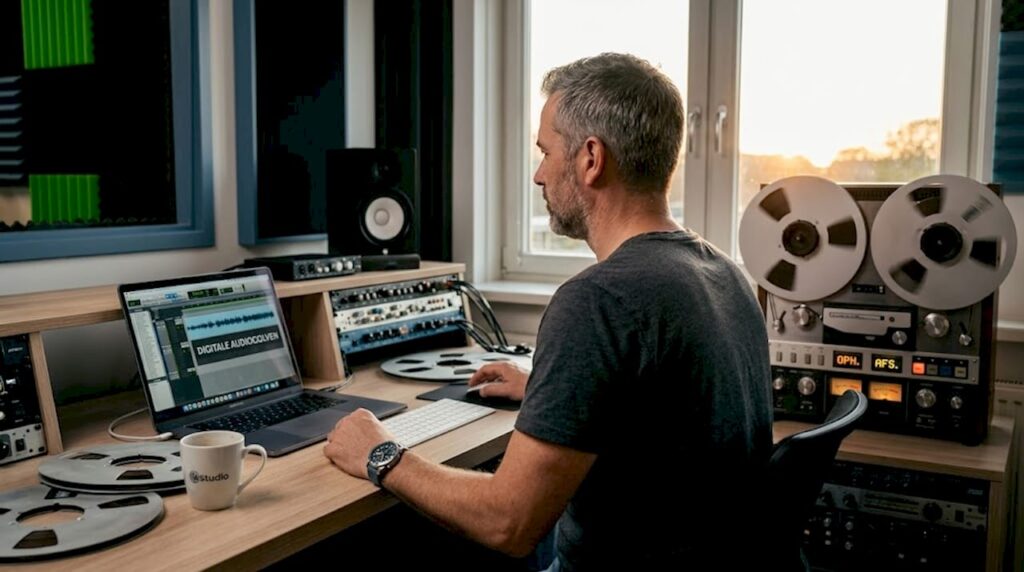
TL;DR:
- Analog recording uses continuous signals on physical media, while digital works through sampling and does not physically wear out.
- The sound character is often perceived as warm or precise, depending on algorithms and equipment, not just by format.
The difference between analog and digital recording is one of the most discussed topics in the world of music production. Yet there are also many misconceptions about it. Analog always sounds warmer, digital always cold and sterile. So the story goes. But the reality is more nuanced, and it is this very nuance that makes all the difference for musicians and sound engineers who want to make conscious choices in the studio. In this article, we thoroughly explain both recording methods: from technical operation to sound character, from storage to workflow.
Table of contents
- Key insights
- How analog and digital recording works technically
- Sound character: warm versus precise
- Durability and storage compared
- Practical workflow and costs
- Choice review: analog or digital?
- My perspective after years in the studio
- Build your studio with the right gear
- FAQ
Key insights
| Item | Details |
|---|---|
| Technical foundation differs greatly | Analog works with continuous signals, digital converts sound into samples via an ADC. |
| Sound character is subjective but measurable | Analog adds harmonic distortion; digital offers precision without inherent distortion. |
| Sustainability requires a different approach | Analog media wears out physically; digital storage is vulnerable to software obsolescence. |
| Workflow and costs vary | Digital recording is more accessible and less expensive for beginners and professional setups. |
| Combining is often the smartest choice | Many professional studios use analog hardware with digital recording as the backbone. |
How analog and digital recording works technically
To fully understand the difference between analog and digital recording, start with the basics: how is sound recorded?
Analog recording: a continuous signal
In analog recording, a sound wave is converted into an electrical signal. That signal is then recorded onto a physical medium, such as magnetic tape or vinyl. In this process, the sound wave is directly represented as a continuous, analog variation in the recording medium. There is no intermediate conversion. What you sing or play is literally in the grooves of the record or on the oxide layer of the tape. That immediacy is exactly what makes analog recording so unique.
Yet this advantage has a downside. Analog recordings wear out with each playback due to physical wear and tear, while digital copies remain perfect. A multitrack tape that has been played ten times already sounds slightly different than it did on day one.
Digital recording: sampling and quantization
Digital recording works through two steps: sampling and quantization. An ADC, the analog-to-digital converter, measures the audio signal thousands of times per second and stores each measurement as a number. The sampling frequency determines how many times per second it measures. 44,100 Hz means 44,100 measurements per second. The bit depth determines how accurate each measurement is.
This has measurable implications for quality:
- 16-bit recording offers a dynamic range of approximately 96 dB
- 24-bit recording offers a dynamic range of 144 dB, which is more than sufficient for the most demanding productions
- A higher sampling frequency (88.2 kHz or 96 kHz) captures more overtones and gives more latitude when editing and mastering
A crucial point for anyone recording digitally: once recorded bit depth cannot be increased afterwards. If you record in 16-bit, you remain bound by that dynamic range. So record in 24-bit by default, even if you deliver the final product in 16-bit.
Pro-tip: Always set your DAW to 24-bit and at least 48 kHz for recordings. This gives you maximum latitude when mixing and mastering, at no extra cost.
Sound character: warm versus precise
The debate about sound quality in analog versus digital is almost always about warmth. But what does that actually mean in technical terms?
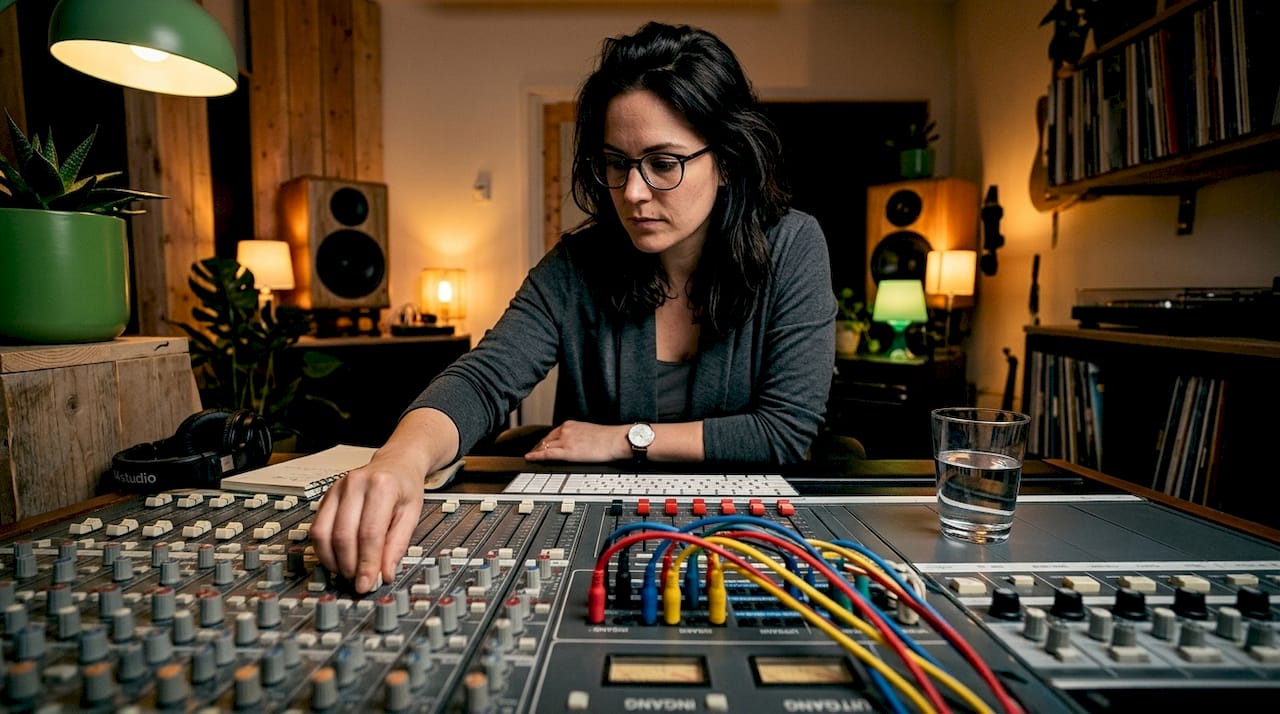
Harmonic distortions in analog
Analog equipment, and certainly magnetic tape, introduces subtle harmonic distortions into the recorded signal. That sounds like a bad thing, but in practice for a moment those distortions add a richness that many listeners find pleasing. Band saturation compresses soft transients and adds second and third harmonics. It makes drums fatter, bass guitars fuller and vocal lines more “present.”
Digital sound does not naturally have that distortion. Early digital recordings sounded harsh because of poor converters, and that defined the picture for a long time. Modern converters, however, are of a very different caliber. The difference today is more in the intention behind the recording than in technical limitations.
“The choice between analog and digital is ultimately an artistic one. Digital precision is not cold. Analog warmth is not fuzzy. Both are tools with their own character.”
Listening fatigue and concentration
There is another dimension rarely discussed when comparing recording techniques: the listening experience itself. The ritual experience of analog listening, turning over a record, placing the needle, requires presence. Digital streaming invites background noise rather than conscious listening.
For recording, this is relevant because it also determines how you listen to your own work. Those accustomed to analog monitoring will hear details differently than someone who works only through headphones in a DAW. Use microphones correctly placed if you want to know more about how recording environment and monitoring affect the end result.
Reproducing analog distortion in digital recordings, by the way, can be done very well via tape saturation plug-ins, tube preamps or outboard gear such as an optical tube compressor. This way you combine the best of both worlds.
Durability and storage compared
One aspect that musicians and engineers often underestimate in the difference between recording formats: how long do you store your recordings, and how reliable is it?
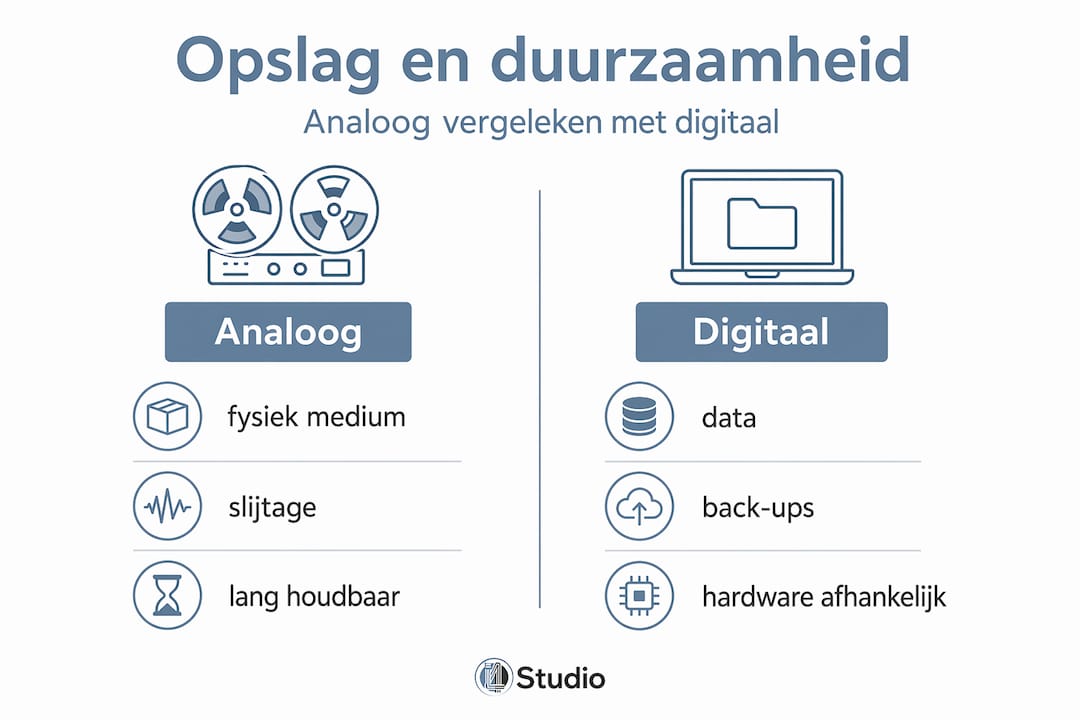
| Aspect | Analog | Digital |
|---|---|---|
| Longevity when properly managed | Decades to hundreds of years | Depending on carrier and software |
| Wear and tear with use | Occurs with each playback | No wear on copying or playback |
| Vulnerability | Physical damage, humidity, heat | Hardware/software aging, bit rot |
| Copy quality | Quality loss per generation | Perfectly copyable without quality loss |
| Cultural value | High, tangible, historical | Growing, depending on format |
Analog media such as LPs and magnetic tapes can survive decades to hundreds of years under proper storage conditions. Digital archives are vulnerable to a different kind of impermanence: hardware that no longer works, software that no longer reads, file formats that no one supports anymore.
A 1994 DAT tape is often unplayable because the devices are no longer there. A vinyl recording from 1964 still runs on a modern turntable. This is not an argument against digital, but a reason to be intentional about digital archiving. Use open file formats like WAV or AIFF, make multiple backups in different locations and check storage regularly.
Practical workflow and costs
Those choosing between analog and digital recording today are also choosing a very different workflow and a very different budget.
- Entry cost: A quality analog tape recorder quickly costs several thousand euros. A solid digital setup with DAW, audio interface and good microphone can be put together for a fraction of that amount.
- Maintenance: Analog equipment requires maintenance and knowledge. Tires must be calibrated, heads cleaned, motors adjusted. Digital equipment does not require this.
- Speed: In a digital environment, you can record, edit, cut and export immediately. Analog requires a sequential approach. Recorded wrong? Re-record or live with it.
- Flexibility: Digital recording and editing offers virtually endless possibilities. Laying tracks on top of each other, correcting rhythm, adjusting pitch. Analog forces you to make firmer decisions with every recording session.
- Creativity: Paradoxically, many musicians find the limitations of analog creatively liberating. Limited tracks and no undo button provide focus and decisiveness.
Digital recording is superior for beginners because of its lower cost and easier workflow. But that doesn’t mean analog is obsolete. For certain genres, especially rock, jazz and folk, analog adds a character that is difficult to replicate without good outboard gear.
Pro-tip: Want the analog feel without the cost? Invest in a good pre-amp with tube technology and a tape saturation plugin in your DAW. You’ll get much of the analog character for a fraction of the price.
Also check out the home recording tips if you want to refine your digital workflow.
Choice review: analog or digital?
It is useful to compare the pros and cons of both methods side by side before making a choice.
| Criterion | Analog | Digital |
|---|---|---|
| Sound Character | Warm, harmonically rich | Precise, clear, transparent |
| Dynamic Range | Up to approximately 70 dB (band) | Up to 144 dB at 24-bit |
| Startup costs | High | Low to medium |
| Workflow speed | Slow, linear | Fast, non-linear |
| Copy quality | Degrades per generation | Lossless |
| Maintenance | Intensive | Minimal |
| Artistic added value | Strong with rock, jazz, folk | Widely applicable |
Situations where analog is preferable:
- Bands that play live and want to capture an organic, spacious sound
- Productions where band saturation is a desired effect
- Artists who use creative constraints as a creative discipline
Situations where digital is superior:
- Home studio setups with limited budget and space
- Productions with many tracks, edits and post-production
- Archiving projects where long-term quality maintenance counts
Subjective preferences often ultimately determine the choice, despite all measurable differences. Listen critically to reference recordings in your genre and let that guide your decision.
Pro-tip: Record the same source in both analog and digital and listen back blind. Your ears will tell you more than any specification.
My perspective after years in the studio
by harold
I grew up with digital recording and for years thought analog was nostalgic sentimentalism. Until I did a session on a Studer A80 tape machine and my mix suddenly lived in a way I couldn’t recreate in my DAW.
What I learned after that: it’s not about the format. It’s about the decisions the format forces you to make. Analog forces you to listen carefully before you record. Digital gives you the freedom to adjust afterwards. Both skills are valuable. Both are also pitfalls if you use them incorrectly.
My honest advice: if you’re just starting out, choose digital. No argument. Accessibility, cost and flexibility are of a different order. But do invest in analog character through your signal routing. A good pre-amp, a compressor with character, a room with good acoustics. Those are the things that make a digital recording warm and alive.
And if you ever get the chance to work on a real band machine, do it. Not because it sounds better, but because it teaches you to listen in a way that no plugin can teach you. Subjective preferences are not a weakness. They are a musician’s compass.
– harold
Build your studio with the right gear
Whether you choose analog, digital or a combination of both, the quality of your recording stands or falls with the equipment and acoustics around you. At I4studio you will find a wide selection of studio gear, from essential recording equipment for the home studio to complete recording bundles for advanced productions.
Are you just starting out and want to know what you really need? Check out the overview of studio gear for beginners for a clear selection of audio interfaces, microphones and acoustic solutions. I4studio thinks with you, from your first recording to a fully equipped studio.
FAQ
What is the biggest technical difference between analog and digital?
Analog captures sound as a continuous electrical signal on a physical medium. Digital converts that signal via an ADC to numerical values based on sampling frequency and bit depth.
Does analog always sound better than digital?
No. Analog adds characteristic harmonic distortions that are perceived as warm, but modern digital systems offer a dynamic range of 144 dB and accuracy that analog does not achieve.
What is the long-term risk of digital storage?
Digital archives are vulnerable to hardware and software obsolescence. Use open file formats, make multiple backups and check carriers regularly to prevent data loss.
What is the best bit depth to use for recording?
Always record in 24-bit. This gives you a dynamic range of 144 dB and plenty of room for mixing and mastering. Once recorded in 16-bit, you cannot recover that information.
Can I achieve analog character with digital equipment?
Yes. Tube-character preamps, analog compressors and tape-saturation plug-ins in your DAW give you much of the analog sound character, without the cost and maintenance of a full analog setup.