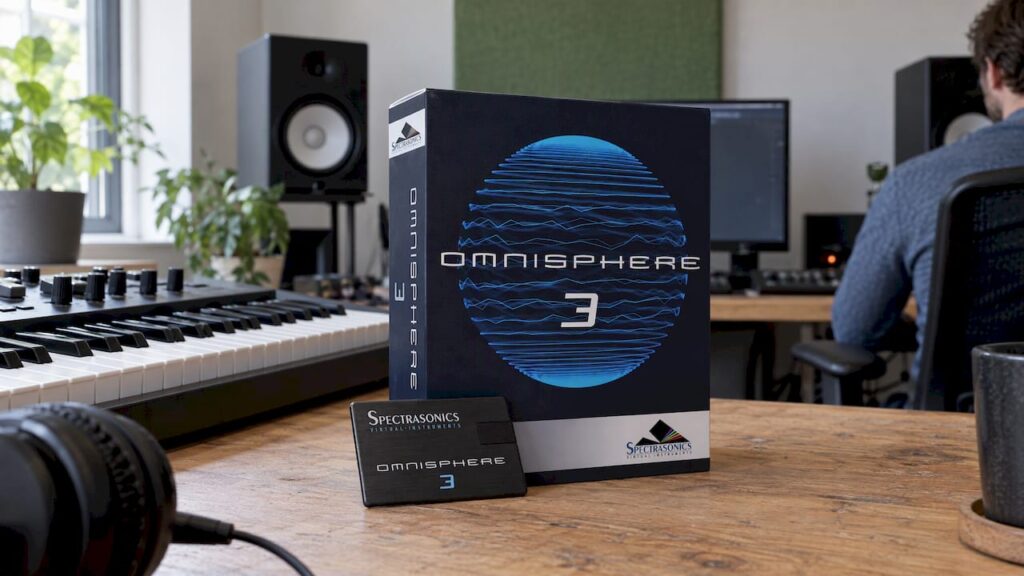
Why do so many producers, composers, and sound designers choose Spectrasonics? The short answer: the brand makes only a few instruments, but they’re incredibly deep, sound great right out of the box in a mix, and are supported for years to come. Omnisphere is the all-around workhorse for synthesis and sound design. Keyscape is a collection of rare keyboard instruments. Trilian is the complete bass instrument. In this article, you’ll learn what each instrument does, who it’s best suited for, what it requires from your studio PC, and how to make the right choice.
In a nutshell
- Few products, great depth: Spectrasonics builds a small line of instruments that continue to work and are supported for years to come.
- Omnisphere 3 is the flagship: over 41,000 patches, more than 600 morphing wavetables, and support for over 300 hardware synths and controllers.
- Keyscape and Trilian round out the lineup: Keyscape for pianos and vintage keyboards, Trilian for every type of bass.
- Your computer matters: Omnisphere 3 requires at least 8 GB of RAM (16 GB or more recommended) and about 64 GB of free disk space.
- At i4studio, you’ll find boxed versions that include a USB flash drive and a studio PC optimized for the software.
Table of Contents
- What Sets Spectrasonics Apart
- Omnisphere 3: The Flagship
- Keyscape and Trilian: the specialists
- Who is Spectrasonics for?
- What are Spectrasonics’ system requirements for your studio PC?
- How much does Spectrasonics cost?
- Spectrasonics and a studio PC at i4studio
- Our take on Spectrasonics
- Frequently Asked Questions
- Sources
What Sets Spectrasonics Apart
Most software developers release new plugins every year. Spectrasonics does the opposite. The brand has a small product line and focuses its investments on further developing those instruments. This offers three specific benefits for you as a user.
One engine across all instruments
According to the manufacturer, Trilian is built on the STEAM Engine, which also powers Omnisphere. That means the controls, the way patches are loaded, and the modulation logic are familiar as soon as you know one instrument. You learn the system once and apply that knowledge to all Spectrasonics instruments.
Long-term support ensures that old projects continue to function
Production Expert describes Spectrasonics as a developer that has built a reputation for tools that continue to work and are supported, in an industry that revolves around constant new releases. You can see this in practice: According to Spectrasonics, Omnisphere 3 is fully backward-compatible with projects from versions 1 and 2. Your own patches and multis will continue to work as usual. For a producer with years’ worth of sessions on their hard drive, that’s a major advantage.
Sounds that can be used right away
Spectrasonics’ patches are designed by the company’s in-house sound design team. MusicTech calls Omnisphere a staple in music production, film and game scoring, and sound design, precisely because of its combination of a powerful synthesis engine and a nearly endless library. You can load a preset and get started right away, or dive deep into the engine and build everything from scratch.
Omnisphere 3: The Flagship
Omnisphere is the instrument most people think of when they hear the name Spectrasonics. Spectrasonics describes it as a synthesizer that brings together many types of synthesis in a single instrument. Version 3 was released on October 21, 2025, and is the first paid upgrade in a long time.
Sounds and Synthesis
The stats for Omnisphere 3 demonstrate just how versatile the instrument is. According to MusicRadar, it contains more than 41,000 patches—over 26,000 of which are new—spread across 18 new collections. In addition, 35 new effect units have been added.
In terms of synthesis, Omnisphere 3 offers, among other things:
- More than 600 morphing wavetables for dynamic, modern sounds.
- 36 new filter types with circuit-modeled saturation.
- Quad-zone modulation to blend four sound zones together.
- A polyphonic dual frequency shifter for metallic and floating textures.
- Granular synthesis and FM/ring modulation for sound design and effects.
- Full MPE support for expressive controllers.
All of these features are listed on Omnisphere’s official product page. In practice, this means you can use a single plugin to create pads, basses, leads, plucks, cinematic textures, and experimental sounds—without having to switch between ten different instruments.
Multitimbral and standalone
Omnisphere is multitimbral. According to the Omnisphere 3 QuickStart guide, you can load up to eight different sounds in a single instance, each on its own MIDI channel. This is useful if you want to set up a complete arrangement with a single plugin or play multiple layers live. You can use Omnisphere as a standalone application or as a plugin in your DAW.
Hardware Synth Integration
This is one of the most underrated features. Hardware Integration connects your hardware synth or MIDI controller to Omnisphere, allowing you to control the software with physical controls. Spectrasonics supports more than 300 hardware profiles for synthesizers and controllers from major manufacturers. When you turn the filter knob on your synth, the filter in Omnisphere moves along with it. Suddenly, a software synth feels just like hardware.
If you want to set this up properly, be sure to read our guide on MIDI in your studio and integrating synthesizers with your DAW. If you don’t have a hardware synth yet, check out our synthesizers.
Using the Effects on Their Own
Version 3 also introduced the Omnisphere FX Rack plugin. Synthtopia points out that this allows you to apply the built-in effects to other sources as well, such as vocals or external gear. This way, you get even more value out of the same purchase.
Keyscape and Trilian: The Specialists
In addition to Omnisphere, Spectrasonics offers two instruments designed for a single purpose. They’re perfect as a complement—or as your first choice if you mainly play keyboards or bass.
Keyscape: Rare Pianos and Vintage Keys
According to Spectrasonics, Keyscape features the world’s largest selection of vintage keyboard instruments. The manual describes 36 rare instruments that were first carefully restored and then extensively sampled. These include grand pianos, electric pianos, clavinets, and instruments you’ll likely never get your hands on yourself.
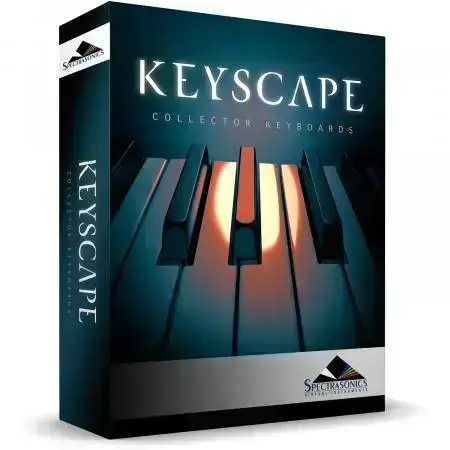
Sound on Sound highlights a convenient installation option: you can install either the full 77 GB collection or a 30 GB Lite version containing the essential instruments for live use. You can then run the full version on your studio PC and the Lite version on a laptop for performances.
Check out Spectrasonics Keyscape as a boxed version with a USB flash drive in our online store.
Trilian: Every Bass in One Instrument
According to the manufacturer, Trilian brings together many different types of bass in a single virtual instrument: acoustic, electric, and synth. Thanks to the shared STEAM Engine, you can also load Trilian sounds into Omnisphere, allowing you to combine bass and synths in a single environment.
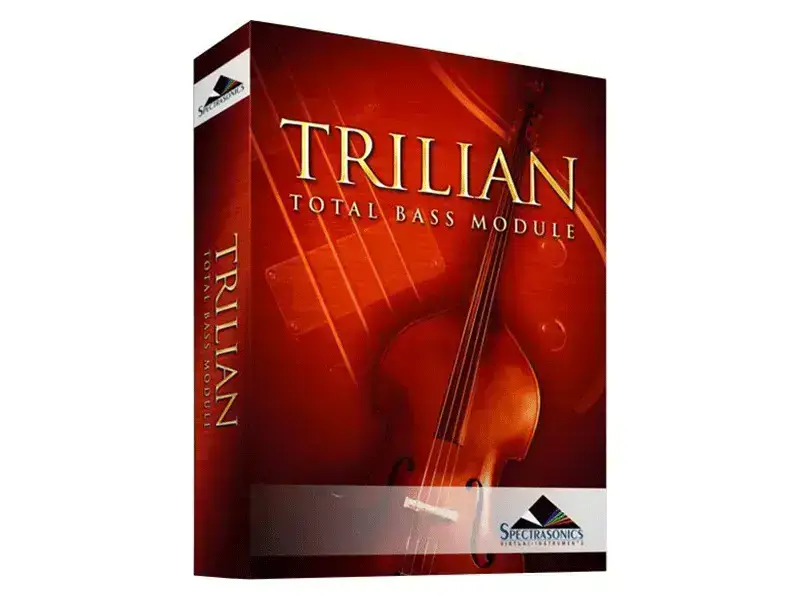
The current version is available from us as Spectrasonics Trilian 1.6.
Comparison at a Glance
| Instrument | What It’s All About | Ideal for | Strongest point |
|---|---|---|---|
| Omnisphere 3 | Synthesis and Sound Design | Producers, composers, sound designers | 41,000+ patches and hardware integration |
| Keyscape | Pianos and Vintage Keyboard Instruments | Keyboardists, songwriters, live performers | 36 restored, deeply sampled instruments |
| Trilian | Acoustic, electric, and synth bass | Producers and arrangers of all genres | All basses in one instrument |
Who is Spectrasonics best suited for?
Spectrasonics isn’t designed for a single genre or type of user. MusicTech describes Omnisphere as a platform for everyone, from bedroom producers to experienced sound designers. Here’s what that looks like in practice:
- Music producers: from pop and hip-hop to EDM and ambient. You’ll quickly find a sound that works and customize it with a few macros.
- Film and game composers: the cinematic textures, pads, and moving sounds are ideal for scoring and building tension.
- Video editors and content creators: With Omnisphere, you can create your own underscores, transitions, and ambient sounds, so you don’t have to keep using the same stock music.
- Home studio owners: One plugin replaces an entire cabinet full of synthesizers. That saves space and money.
- Keyboardists and live musicians: Keyscape and Omnisphere run standalone, and with the Lite version of Keyscape, you can take your sounds with you on a laptop.
Which one will you choose first?
If you’re unsure, use this rule of thumb:
- Do you mainly make electronic music, soundtracks, or sound design? Start with Omnisphere 3.
- Do you mainly play piano or keyboards? Choose Keyscape.
- Do you want tight, realistic bass lines in any genre? Choose Trilian.
- Already have Omnisphere 2? Then the Omnisphere 3 upgrade is the logical next step.
Many users combine the instruments later on. Since they run on the same engine, they work together seamlessly.
What are Spectrasonics’ system requirements for your studio PC?
Large sample-based instruments place greater demands on your computer than a simple synth plugin. The official system requirements for Omnisphere 3 are listed on the Spectrasonics product page:
| Part | Minimum | Recommended or note |
|---|---|---|
| Processor | 2.4 GHz or faster | More cores help with large projects |
| RAM | 8 GB RAM | 16 GB or more recommended |
| Disk Space | 64 GB free | About 128 GB for a download installation |
| Operating System | macOS 13 Ventura or Windows 10 | Or newer |
The QuickStart guide makes an important distinction: if you’re installing from a USB flash drive, you’ll need about 64 GB of free space. For a download installation, that’s about 128 GB. Add Keyscape and Trilian to that, and you’ll quickly exceed 200 GB in libraries.
Our Practical Tips
- Install your libraries on a fast NVMe SSD. This will make patches load faster and reduce wait times when opening a project.
- Go for more RAM than the minimum. If you’re working with multiple instances of Omnisphere, Keyscape, and Trilian at the same time, 32 GB or more will give you plenty of headroom.
- Choose a stable, quiet setup. A studio PC tuned for low latency prevents clicks and dropouts while playing.
- Use a high-quality audio interface. Low latency starts with the driver. Check out our audio interfaces if you’re still using the built-in sound card.
You can find more background information in our recommendations for a DAW computer and in the article on specifications for a studio PC that runs multiple DAWs.
How much does Spectrasonics cost?
According to MusicTech in December 2025, Spectrasonics has a suggested retail price of $499 for Omnisphere 3 and $199 for the upgrade from version 2 in the United States. Sound on Sound also mentions an Atmosphere Upgrade priced at $249 for users switching from the older Atmosphere. These are U.S. dollar prices. For the current price in euros and availability, please check our product pages.
What you get in return is a tool that will last for years. Because projects from earlier versions continue to work and upgrades preserve your existing work, you spread that investment over many years and many productions.
Spectrasonics and a studio PC at i4studio
At i4studio, we sell the boxed versions of Spectrasonics that come with a USB flash drive. They install quickly, and you don’t have to download dozens of gigabytes. We offer Omnisphere 3 with a USB flash drive, the upgrade to Omnisphere 3, Keyscape, and Trilian 1.6. You can find the rest of our selection of instruments and plugins in our software category.
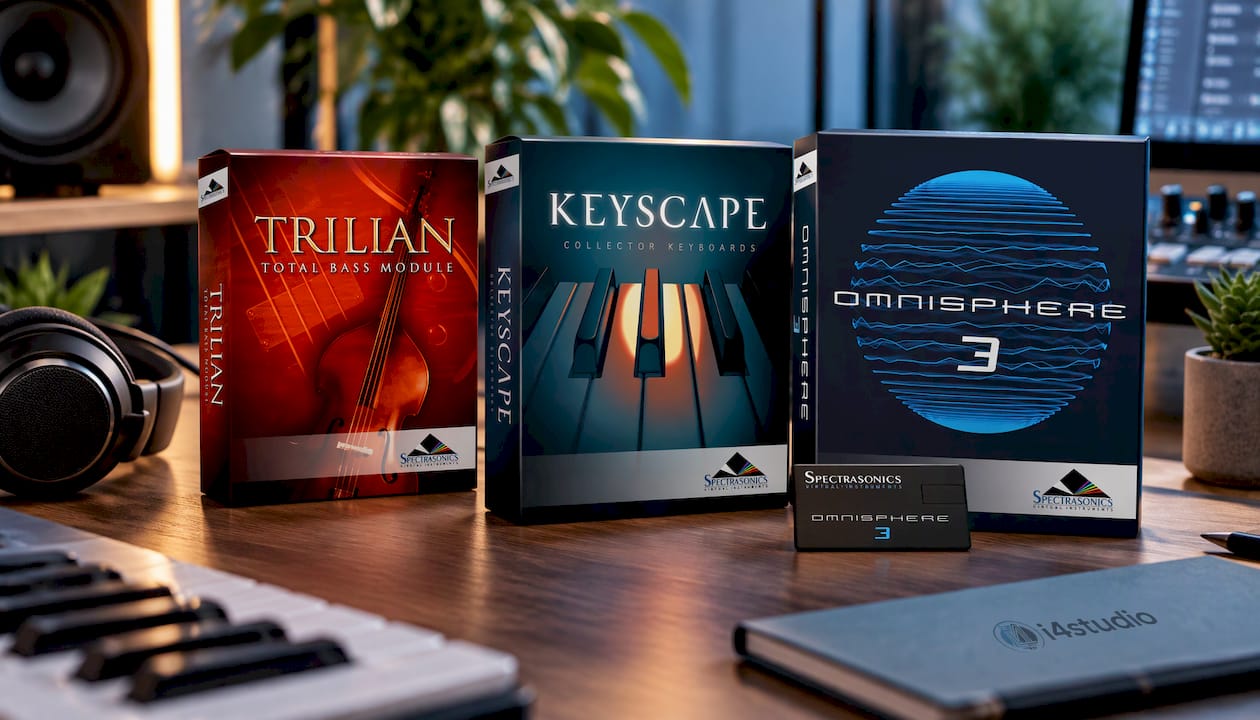
Do you want everything to run smoothly right from the start? Our custom-built studio PCs start at €1,099 and are built with a focus on stability and low latency. Pair them with studio monitors and acoustic panels so you can hear Spectrasonics’ sounds exactly as they were intended.
Our Take on Spectrasonics
We consider Spectrasonics to be one of the few software brands around which you can truly build a studio. Omnisphere, Keyscape, and Trilian aren’t just plugins you’ll forget about after a few months. They’re instruments that will remain in your templates for years to come.
What we often see in practice: customers buy Omnisphere, load a few large multis, and then realize their computer can’t keep up. That’s a shame, because the instrument is capable of so much more. That’s why we always recommend evaluating software and hardware together. A fast SSD for the libraries, plenty of RAM, and a system tuned for low latency make all the difference between struggling and playing freely.
With our custom-built studio PCs, the right audio interface, and a well-treated room, you’ll get the most out of Spectrasonics. Not sure which combination is right for your work? Our experts are happy to help you figure it out—whether it’s about your hardware or your acoustics.
Harold
Frequently Asked Questions
Is Omnisphere suitable for beginners?
Yes. You can get started right away with the presets, and you don’t need to understand the engine to achieve great results. As you gain more experience, you’ll delve deeper into synthesis and modulation. That way, the instrument grows with you.
Do I need Omnisphere 2 to upgrade to version 3?
The upgrade is intended for existing Omnisphere 2 users. If you don’t have Omnisphere yet, choose the full version of Omnisphere 3. Your existing projects and custom patches from versions 1 and 2 will continue to work in version 3.
Does Spectrasonics work on Mac and Windows?
Yes. Omnisphere 3 runs on macOS 13 Ventura or later and on Windows 10 or later. You can use it as a standalone application or as a plugin in your DAW.
How much disk space do I need for all three instruments?
Omnisphere 3 requires about 64 GB when installed from USB. The complete Keyscape collection is about 77 GB. Together with Trilian, that adds up to well over 200 GB, so it’s best to choose a separate, fast SSD for your sample libraries.
Can I use my hardware synth to control Omnisphere?
Yes, through Hardware Synth Integration. Spectrasonics supports more than 300 profiles for synthesizers and MIDI controllers. The buttons on your hardware then directly control the parameters in Omnisphere.
Sources
Spectrasonics: Omnisphere Overview
Spectrasonics: Omnisphere Overview (synthesis)
Spectrasonics: Omnisphere 3 QuickStart
Spectrasonics: Keyscape Overview
Spectrasonics: Keyscape Concepts
Spectrasonics: Trilian Overview
Spectrasonics: Trilian Total Bass Module
MusicTech: Spectrasonics Omnisphere 3 Review
MusicRadar: Spectrasonics Omnisphere 3 Review
Sound on Sound: Spectrasonics Omnisphere 3
Sound on Sound: Spectrasonics Keyscape
Production Expert: What Audio Software Developers Can Learn from Spectrasonics
Sonicstate: Spectrasonics Omnisphere 3.0 is out
Synthtopia: Spectrasonics Omnisphere 3