Yes, you can noticeably improve the acoustics in your rental home without drilling. Sound absorption using panels, textiles, and freestanding screens significantly reduces reverberation and echoes, but is less effective against structural noise from neighbors. Wall panels with tape, ceiling baffles, heavy curtains, and sealing gaps together form the most practical combination for renters.
Briefly:
- To deal with noise from neighbors, start by using weatherstripping, a door brush, and removable sealant around window frames, baseboards, and pipe penetrations, since noise often enters through such gaps.
- To reduce echo, place wall panels at reflection points and add rugs or heavy curtains; test the tape first in an inconspicuous spot.
- In rooms with high ceilings, ceiling baffles reduce reflections without the need for drilling, but first check whether the existing mounting points can safely support the weight of the panels.
- In an open living space, a freestanding screen can help improve privacy; choose a sturdy frame at ear level and casters if you move it around often.
- Absorptive panels reduce reverberation, but they provide little insulation against sound traveling through walls or structures, which requires mass and decoupling.
Table of contents
- Which non-invasive solutions work the fastest?
- Acoustic wall panels: materials, installation, and mounting without drilling
- Freestanding panels and room dividers as an alternative to wall mounting
- Ceiling solutions without chiseling or drilling
- Furniture and textiles: Acoustics through your interior design
- Sealing gaps and surrounding pathways: where sound actually enters
- Step-by-step installation without causing damage
- Which measure will you try first?
- Support with acoustic panels and studio advice
- Realistic expectations regarding acoustics in a rental home
- Professional panels and advice from i4studio
- Frequently Asked Questions
- Sources
Which non-invasive solutions work the fastest?
Before you spend money on panels, it’s a good idea to figure out exactly what your problem is. Reverberation inside your own room requires a different approach than noise coming from the neighbors.
- Wall panels with tape or strips: quick to install, effective against reverberation, but not against sound transmission.
- Freestanding screens: ideal for open spaces or rental properties where you’re not allowed to make many changes to the walls.
- Ceiling baffles: useful for high ceilings where sound lingers for a long time.
- Fabrics and furniture: easy to implement and often already partially present in the home.
- Sealing gaps: the only measure on this list that actually helps reduce noise from neighbors coming through cracks and gaps.
Wall panels and fabric provide the quickest results for reducing reverberation. To prevent noise from bothering neighbors, sealing gaps is often more effective than using thick panels, simply because sound enters through cracks and pipes, not just through the wall itself.
Acoustic wall panels: materials, installation, and mounting without drilling
Most wall panels consist of acoustic foam, felt, or mineral wool covered with fabric. Foam and felt primarily dampen higher frequencies, while thicker mineral wool also addresses lower frequencies, according to research on sound-absorbing materials. For a rental property, the combination of both materials is often the most effective, as it captures a broader range of the sound spectrum.
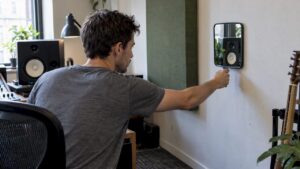
You can mount items without drilling by using heavy-duty double-sided mounting tape, Command strips, or a freestanding frame that leans against the wall. Always test the tape on a small section of the wall first to make sure it won’t damage the paint when you remove it.
- Clean the wall and remove any grease before applying anything.
- Start with one panel in an inconspicuous spot to test the adhesion.
- Place panels at reflection points: the first point where sound from your speakers hits the wall.
- At a listening spot, keep the panel about an arm’s length away from the speaker for the best effect.
- Remove the tape slowly and at an angle to protect the paint.
Pro tip: Always attach panels along the edges, not just in the middle; this prevents the edges from sagging under their own weight.
Choose materials with a fire-retardant certification, especially when installing them near light fixtures or electrical outlets. Minor, reversible modifications like these are generally allowed in a rental property without permission, as long as you can undo them when you move out.
Freestanding panels and room dividers as an alternative to wall-mounted installations
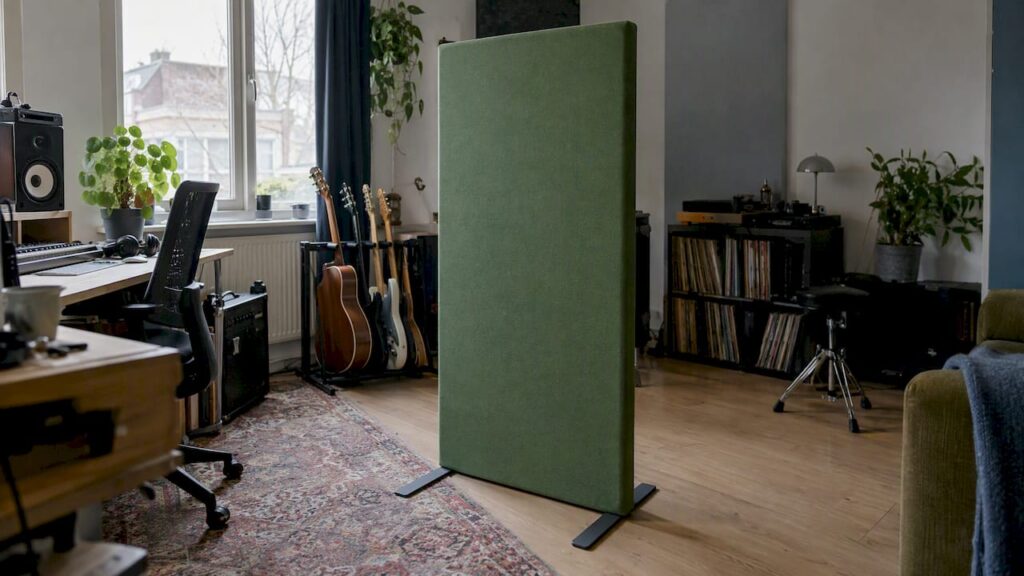
A freestanding panel acts as a combination of sound absorption and a physical barrier. It absorbs sound and breaks the direct sound path between the source and the listener, which is particularly noticeable in open living rooms or studios. For renters who don’t want to mount anything on the wall at all, this is often the most practical interim solution, and freestanding panels appear to be an underrated solution for rental properties on the Dutch market.
When making a purchase, keep a few practical points in mind:
- Choose a height that reaches at least to ear level from your listening position.
- Make sure the frame is sturdy and wide; otherwise, the screen will tip over easily.
- A panel that’s a few centimeters thick absorbs more low-frequency sound than a thin one.
- Choose a panel with wheels or a lightweight design if you plan to move it frequently.
You can set up a screen like this without any mounting hardware and move it around easily—perfect for when you’re moving.
Ceiling solutions that require no chiseling or drilling
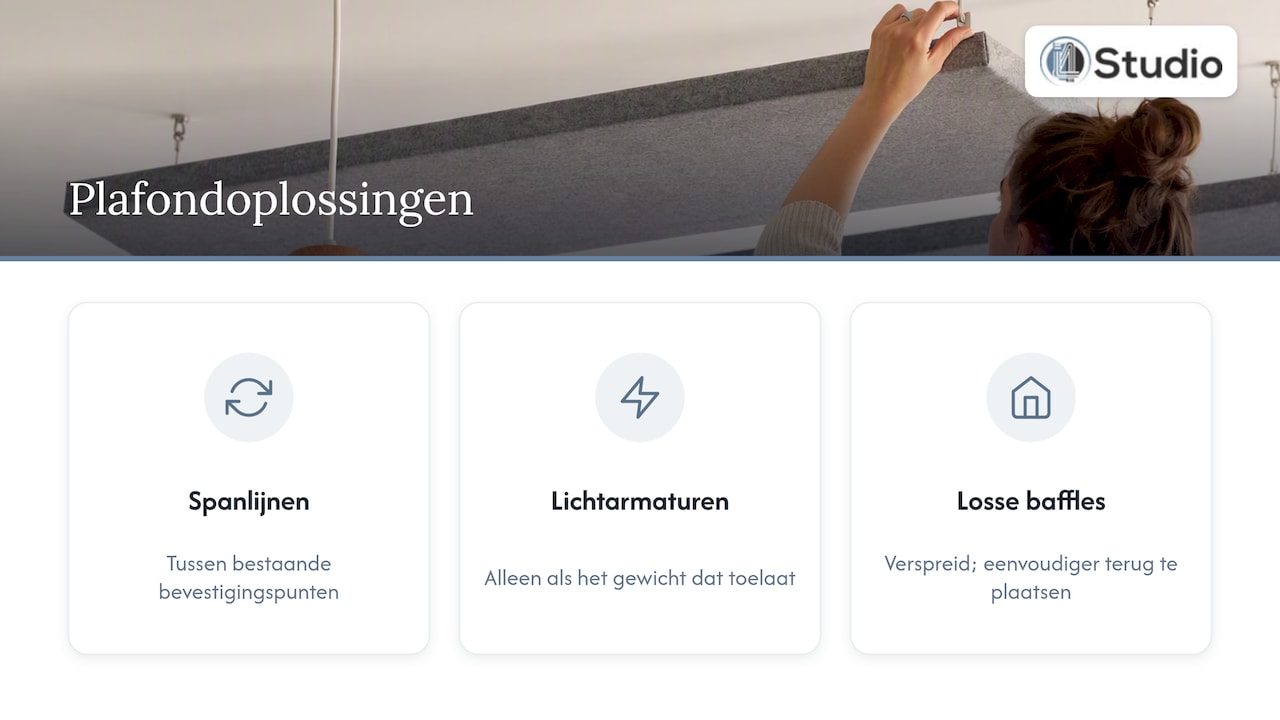
In rooms with high ceilings, sound continues to echo for longer, and you notice this especially in empty rooms or attic studios. Ceiling baffles or hanging panels absorb those reflections, thereby improving the sound without the need for drilling.
Without drilling, you can use tension lines between existing mounting points or hang panels from existing light fixtures, provided the weight allows it. Always check the maximum load capacity of an existing mounting point before attaching anything heavier than a light fixture to prevent damage or accidents. Aesthetically, loose, scattered baffles often look better than a single large ceiling panel, and they’re easier to put back in place when you leave.
Furniture and Textiles: Acoustics Through Your Interior Design
Large, soft furniture, a thick rug, and heavy curtains do more for the acoustics than many renters expect. A room with only bare walls and a wooden floor reflects sound in all directions, whereas fabric and padding actually absorb that energy.
- Place a sofa or cabinet in front of a bare, hard wall to break up reflections.
- Place a rug in areas where the sound of footsteps or speakers echoes the loudest.
- Hang heavy, lined curtains in front of windows; they also help insulate against drafts and cold.
- Fill empty corners with pillows or a bookshelf instead of leaving them empty.
These modifications often cost very little extra, since you can combine them with items you’d want to have in your home anyway.
Sealing gaps and adjacent paths: where sound actually gets in
Noise from neighbors rarely comes through the wall alone. Doors, windows, baseboards, pipe penetrations, and the mailbox often let more noise through than the masonry itself, and sealing those small gaps yields relatively significant results, as a technical explanation of flanking paths shows.
Draft stoppers under the door, a door brush, neutral sealant along baseboards, and rubber seals around window frames can all be removed without leaving a trace.
Pro tip: Use a smartphone app to measure the noise level before and after sealing; while this won’t give you an exact value, it will provide a clear indication of what works.
Step-by-Step Installation Without Damage
A little preparation will prevent you from ending up with adhesive residue or damaged paint later on.
- Clean the surface and remove all dust, then let it dry completely.
- Estimate the weight of the panel and choose tape or strips that can easily support that weight.
- Test it first on a small, inconspicuous section of the wall.
- Only move on to larger panels once the test has held up well for a week.
- When moving, peel the panel off slowly and at an angle, and remove any small adhesive marks with a damp cloth.
Which method will you try first?
Start by listening: do you mainly hear your own voice echoing, or is the sound clearly coming from the neighbors? That distinction determines your order of action.
- First, seal any gaps—that’s the most effective way to reduce noise from your neighbors.
- Next, add sound absorption at reflection points to reduce reverberation in your own room.
- A freestanding screen as an extra step for an open or challenging space.
| Situation | First step | Expected effect |
|---|---|---|
| Reverb and Echo in Your Own Room | Wall panels and textiles | Noticeably less reverberation |
| Noise from neighbors through the wall or ceiling | Seal cracks and surrounding gaps | Limited but real reduction |
| Open living space without a suitable wall | Freestanding screen or room divider | Local improvement around the listening area |
If the situation continues to get out of hand despite these steps, it’s wise to first talk to your landlord, because if the disturbance persists, you can ask the landlord to take action. If the disturbance persists, Legalec outlines the correct sequence of steps to take to address a neighbor dispute legally.
Support with acoustic panels and studio advice
For those looking for more than just fabric and individual panels, we at i4studio offer acoustic panels and acoustic foam that are specifically designed for removable installation. In more complex situations, such as side aisles or a studio setup, a targeted measurement is recommended. Our page on studio acoustics measurement in Amsterdam shows which package is right for you. If you’d like to delve deeper into soundproofing, be sure to read our article on building a soundproof room for studio use.
Realistic Expectations Regarding Acoustics in a Rental Home
Absorption improves the acoustics of your room, but it doesn’t replace sound insulation against noise from neighbors. Start small, measure the difference, and build on what works step by step.
– harold
Professional panels and advice from i4studio
Are you looking for removable panels that also enhance the aesthetic appeal of your room? We combine high-quality acoustic panels with personalized advice, so you’ll know which material and installation method best suits your situation—all without having to use a drill.

Browse our selection of acoustic panels and request advice for your specific space.
Frequently Asked Questions
What’s the quickest way to improve the acoustics in my room?
Start by placing wall panels or a freestanding screen at the reflection points in your room, and complement them with a rug and heavy curtains. This combination will noticeably reduce reverberation within a few days, without requiring any structural changes.
How do I install wall panels without drilling?
Use heavy-duty double-sided mounting tape or Command strips, and always test them first on a small section of the wall. This will ensure that the panels are securely attached and can be removed later without damaging the paint.
How can I block out noise from my neighbors in my apartment?
Noise from neighbors often enters through cracks, pipe penetrations, and baseboards, so sealing them with draft stoppers and neutral sealant is often more effective than using thick panels, as a technical explanation of flanking paths demonstrates. If the disturbance persists, you can ask your landlord to take action.
What exactly is acoustics?
Acoustics describes how sound behaves in a space, including reflections, reverberation, and absorption. Absorbent materials reduce those reflections, but according to Berklee Online, they do little to block sound traveling through structures, which requires mass and decoupling.
As a tenant, can I install acoustic panels without permission?
According to the Rijksoverheid.nl website, you can usually make small, reversible changes—ones that can be undone when you move out—without your landlord’s permission. Adhesive panels and freestanding screens generally fall under this category, unlike structural alterations.
Sources
- National Government
- Acoustics in Music: Outdoor, Indoor, and Isolated Spaces | Berklee Online
- Sound Absorption – All For One