
MADI to DAW
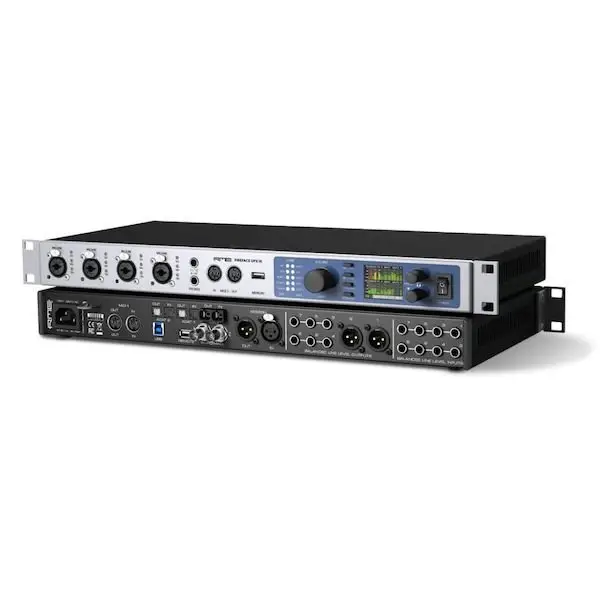
RME’s MADIface XT II is the world’s first USB 3.0 audio interface—and the world’s smallest portable interface that provides access to hundreds of audio channels in such a compact package.
USB 3.0 for maximum number of channels
For maximum usability and connectivity, the XT can also be used with USB 2.0 (computer I/O limited to 70 channels). The unique PCI Express port can be connected to external PCI Express cards and Thunderbolt adapters, making all the fastest interfacing technologies available for the maximum number of channels and the lowest latency in a single device.
To provide the most comprehensive I/O set for live or studio use, the unit includes two digitally controlled high-end mic/line preamps, two balanced line outputs, and a stereo headphone output. Full stand-alone operation with remote control via MADI, plus TotalMix FX for unlimited mixing, routing, and processing, opens up an endless world of possible applications.
The RME MADIface XT II is capable of transferring digital audio data directly to a computer from any device equipped with a MADI interface. Analog sources can be connected to a stereo analog input, and two stereo analog outputs provide full monitoring connectivity. Setup is easy, even for inexperienced users, thanks to the latest Plug and Play technology. Its numerous unique features and well-designed configuration dialogs place the MADIface XT at the top of the digital audio interface market.
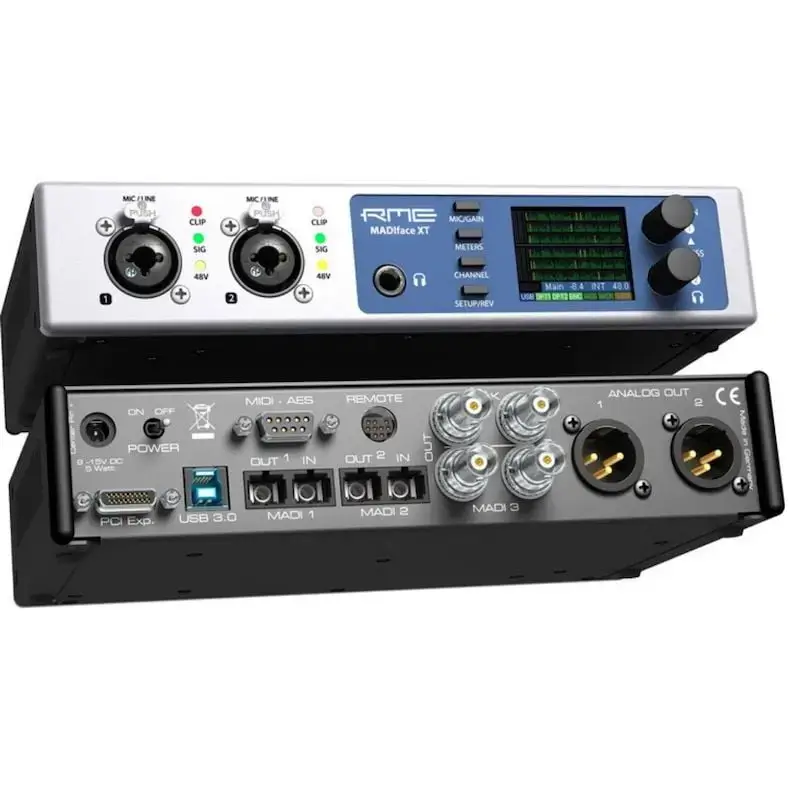
The front panel of the rme MADIface XT II features 2 XLR/TRS line and microphone inputs, a stereo line/headphone output, two rotary knobs with push functionality, four menu buttons, a color graphic display, and six status LEDs.
Mic/Line Inputs
The Neutrik combo jacks on the two Mic/Line inputs feature an XLR connector and a 6.3 mm / 1/4″ TRS connector. They feature LEDs for Signal (SIG), Overload (Clip), and phantom power (48V).
Headphone Output
Channels 3/4 feed the headphone output, which also functions as a high-quality unbalanced line output.
Display
The main screen of the display (Global Level Meters) shows the current interface mode (PCIe orange, USB 2 yellow, USB 3 blue), the synchronization status of the MADI and AES inputs, and the incoming and outgoing MIDI data.