


Looking for a Studio One Workstation
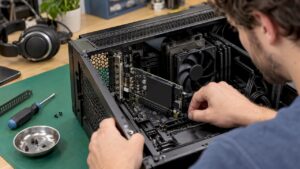
We build computers custom made for you
Need help ?
Get in touch with our technical experts today
Why Professionals have their Studio One Workstation built by i4studio
Studio One places specific demands on your processor and audio drivers, especially when using the powerful “Low Latency Software Monitoring. At i4studio, we have years of experience in fine-tuning Windows systems for PreSonus hardware and software.
We configure our computers with the latest Intel Core Ultra and i9 processors, specifically selected for their single-core power and stability. Thus, we guarantee whisper-quiet operation and unprecedented stability, even on the most demanding projects.
Choose security. Find out which model suits your studio. 📧 Request a free consultation plan immediately: Info@i4studio.nl
Why the Right Computer is Essential for PreSonus Studio One
PreSonus Studio One is a versatile DAW suitable for recording, producing, mixing and mastering. However, the software requires a powerful computer to smoothly run complex projects with multiple tracks, plug-ins and virtual instruments. A well-chosen computer minimizes latency, prevents crashes and ensures an efficient workflow. Below, we discuss the most important factors to consider when choosing a computer for Studio One.
Minimum System Requirements Computer for PreSonus Studio One
According to PreSonus’ official website, these are the minimum system requirements for Studio One 7 (Professional):
- Operating system: Windows 11 (64-bit)
- Processor: Intel Core i7/AMD A10 or better
- RAM: 8 GB (16 GB or more recommended)
- Storage: 40 GB free disk space (SSD strongly recommended)
- Audio Interface: Compatible with ASIO (Windows) or Core Audio (Mac).
- Screen resolution: 1366 x 768 (1920 x 1080 or higher recommended)
While these specifications are sufficient for simple projects, we recommend investing in a computer that far exceeds these requirements, especially if you are working with large projects or heavy plug-ins.
Recommended Specifications for Optimal Performance
For a smooth experience with PreSonus Studio One, especially with complex productions, here are the recommended specifications for both Windows and Mac computers.
Processor (CPU)
A powerful processor is crucial for processing real-time audio and plug-ins. For Windows users, we recommend an Intel Core i7 or AMD Ryzen 7 (or higher). For Mac users, an Apple M1 Pro/Max or Intel Core i9 is ideal. Multi-core processors with high clock speeds (3.5 GHz or higher) perform best for heavy workloads such as mastering and using virtual instruments.
Memory (RAM)
For Studio One, we recommend at least 16 GB of RAM, but 32 GB or even 64 GB is better for large projects with many tracks and effects. More RAM helps virtual instruments run smoothly and prevents delays during mixing.
Storage (SSD vs. HDD)
An NVMe SSD is essential for fast load times and efficient project management. Choose at least 500 GB of storage, but 1 TB or more is ideal if you work with sample libraries and large audio files. SSDs are much faster than traditional HDDs, ensuring shorter load times and a better workflow.
Graphic Card (GPU)
Although Studio One does not have heavy graphics requirements, a dedicated GPU such as an NVIDIA GeForce RTX or AMD Radeon can help in rendering the interface smoothly, especially at high resolutions (4K monitors)….
Operating System
Both Windows and macOS are excellent for Studio One. Windows 11 offers the latest compatibility and performance, while macOS Ventura or higher provides a stable and optimized experience on Apple hardware.
Best Computer for PreSonus Studio One in 2025.
Below is a selection of the best computers suitable for PreSonus Studio One, based on performance, reliability and value for money.
Best Computer for PreSonus Studio One: Custom-Built PC, I4studio
A PC built in-house or assembled and optimized by i4studio offers the best price-performance ratio. A configuration with an AMD Ryzen 9 7900X, 32 GB DDR5 RAM, an NVIDIA RTX 3050 GPU and a 1 TB NVMe SSD delivers top performance for Studio One. This is ideal for users who want complete control over their hardware.
- Pluses: Customizable, cost-effective, powerful performance.
- Cons: Requires technical knowledge to build.
- Price Indication: From €1,800.
Tips for an Optimized Workflow with Studio One
In addition to choosing the right computer, here are some tips to enhance your PreSonus Studio One experience:
Use a High Quality Audio Interface
A good audio interface, such as the PreSonus Quantum, RME, MOTU or Focusrite Scarlett, reduces latency and improves sound quality. Make sure your interface is compatible with Studio One for the best integration.
Optimize your Software Settings
- Buffer Size: Set a lower buffer size (e.g. 128 samples) for recordings to minimize latency.
- Plug-in Management: disable unused plug-ins to reduce CPU load.
- Project Management: Use the “Freeze Track” feature to offload CPU-intensive virtual instruments.
Invest in a Good Monitor
A high-resolution monitor (at least 1920 x 1080) makes working with Studio One’s interface more comfortable. A powerful GPU is recommended for 4K monitors.
Conclusion: Choose the Best Computer for Your Needs
The best computer for PreSonus Studio One depends on your budget, mobility needs and the complexity of your projects. An I4 Studio PC for maximum flexibility. Make sure you invest in a fast processor, sufficient RAM and an SSD to ensure a smooth workflow. With the right hardware, you can unleash your creativity and achieve professional results with Studio One. Also get advice from the specialists at i4studio