



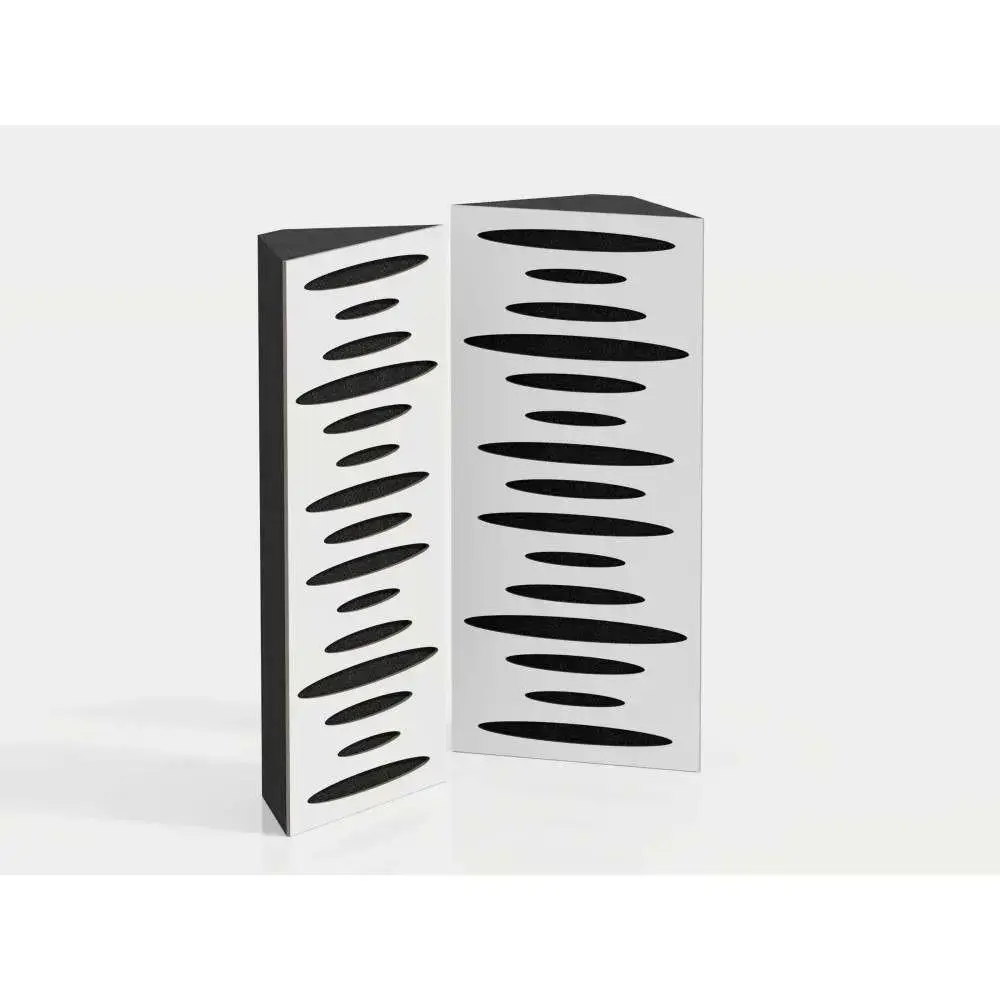


Specific features
- Absorption frequency: Low frequencies;
- Functionality: Absorption and diffusion;
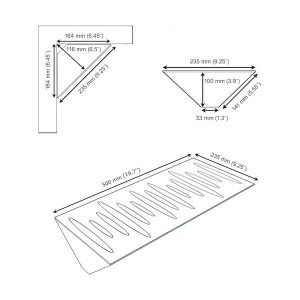
- Dimensions: 500x234mm / (20×9.2 inches);
- Thickness: 100 / (4 inches);
- Material: laminated MDF and foam (type M1);
- Fire class: Euro class E;
- Total NRC: 0.44
Product Description
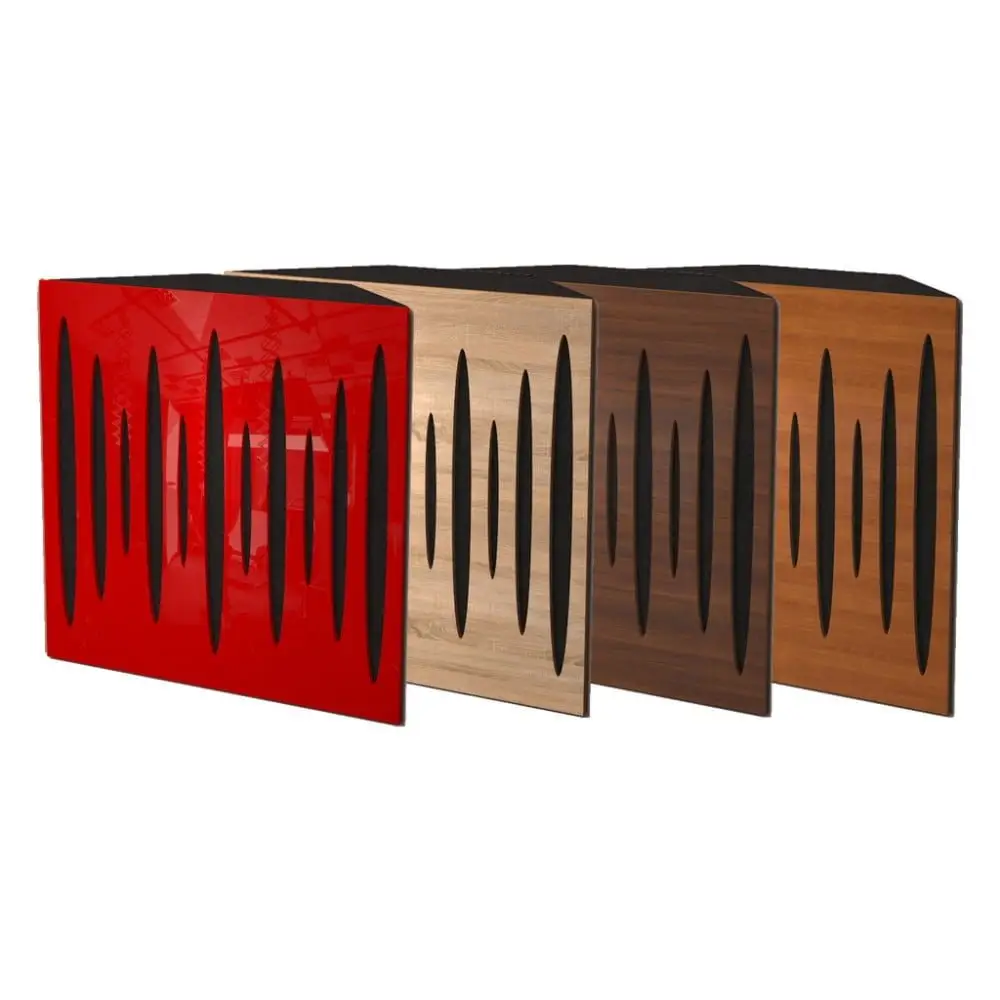
The acoustic corner panels of the “Pulsar mini” bass stage combine the function of absorption in the low frequency range and the reflection of sound using acoustic foam, and a dispersion plate.
These units work perfectly in almost any room where there is a problem with low-frequency reverberation and standing waves. A thick acoustic base of 100 mm acoustic foam provides the necessary efficiency in the low frequency band.
Bass Traps work by capturing the random “omni-directional” bass energy that tends to settle into corners and overwhelm the room. They have the positive effect of reducing smear and giving bass more definition and punch, allowing you to control the energy of the low frequencies and giving your studio tighter, more controlled bass.
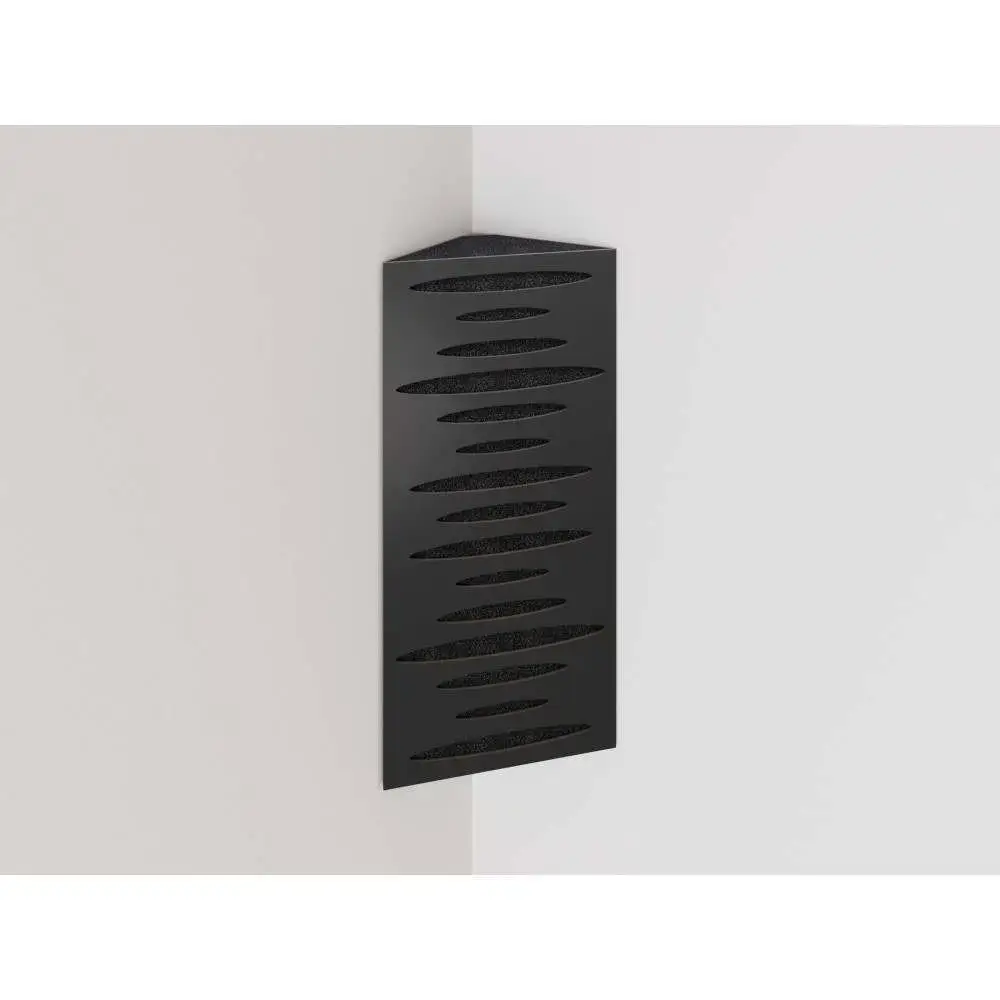
Most acoustical engineers always attach importance to places in the room such as the intersecting corners of walls for acoustic control of sound. This is primarily based on how sound is distributed in the room, with the walls and ceilings acting as sound conductors that direct sound to the corners, where it accumulates in the low frequencies that cause resonances.
Bass traps placed in the corners of the room significantly reduce the time of natural reverberation, which is especially noticeable in how low frequencies lose their dirty and unnecessary “tails.” Even if there are no other sound-absorbing surfaces in the room, bass traps alone significantly improve the sound characteristics of the room in the lower part of the frequency spectrum.
Applications:
- Recording studios;
- Home cinemas;
- Music Rooms;
- Office environments;
- Rehearsal spaces;
- Auditoria;
- Conference rooms;
- etc.
Intended use:
- Absorbs low, high and
- frequencies in the mid-range;
- Slap-echo;
- other disturbing noise
Please note
Wall mounting hardware (FoamFix) is not included.
Acoustic polyurethane foam has what are known as pores. These pores are formed when the material is foamed to the desired density and can vary in size. This is a normal characteristic of acoustic foam. The number of pores can account for up to 1% of the total surface area.
The color of the product in the photo may differ from the color of the actual product. This is due to color distortion caused by your monitor, camera settings, and other factors.

Reviews
There are no reviews yet